28 objects on this chartobjets sur cette carteobjetos en esta cartaObjekte auf dieser Karte
Easiest firstLes plus faciles d'abordLos más fáciles primeroDie einfachsten zuerst
What this chart shows, in the order you should try: start where success is certain, work toward the hard ones.Ce que montre cette carte, dans l'ordre où l'essayer : commencez là où le succès est certain, avancez vers le difficile.Lo que muestra esta carta, en el orden en que conviene intentarlo: empiece donde el éxito es seguro y avance hacia lo difícil.Was diese Karte zeigt, in der Reihenfolge, in der man es versuchen sollte: Beginnen Sie, wo der Erfolg sicher ist, und arbeiten Sie sich vor.
Surface brightnessBrillance de surfaceBrillo superficialFlächenhelligkeit
20.2 mag/arcsec²
DistanceDistanceDistanciaEntfernung
about 15 000 light-yearsenviron 15 000 années-lumièreunos 15 000 años luzetwa 15 000 Lichtjahre
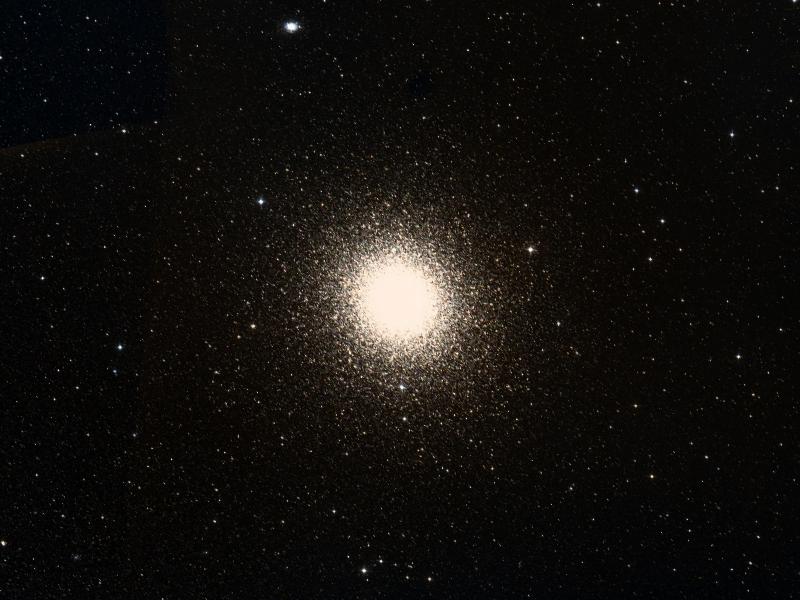
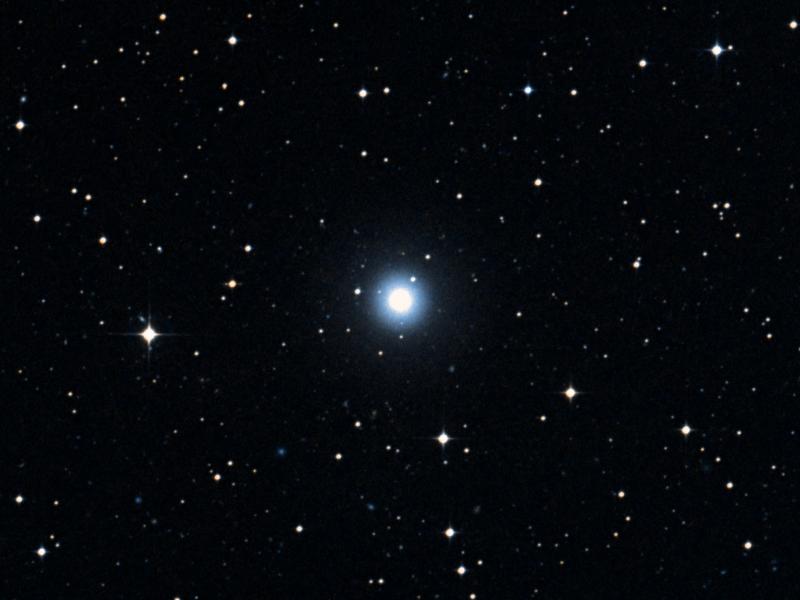
47 Tucanae: the second globular of the sky, and to many eyes the most beautiful — a blazing, tiny core inside halos of stars that resolve outward like frost. A naked-eye "star" beside the Small Magellanic Cloud; from 150 mm the core region is unforgettable.47 Tucanae : le deuxième globulaire du ciel, et pour bien des yeux le plus beau — un cœur minuscule et éclatant dans des halos d'étoiles qui se résolvent vers l'extérieur comme du givre. Une « étoile » à l'œil nu près du Petit Nuage de Magellan ; dès 150 mm, la région du cœur est inoubliable.47 Tucanae: el segundo globular del cielo, y para muchos ojos el más hermoso — un núcleo diminuto y deslumbrante dentro de halos de estrellas que se resuelven hacia fuera como escarcha. Una "estrella" a simple vista junto a la Pequeña Nube de Magallanes; desde 150 mm la región del núcleo es inolvidable.47 Tucanae: der zweite Kugelhaufen des Himmels, und für viele Augen der schönste — ein gleißender, winziger Kern in Sternhalos, die sich nach außen wie Raureif auflösen. Ein freiäugiger "Stern" neben der Kleinen Magellanschen Wolke; ab 150 mm ist die Kernregion unvergesslich.
Surface brightnessBrillance de surfaceBrillo superficialFlächenhelligkeit
20.5 mag/arcsec²
DistanceDistanceDistanciaEntfernung
about 13 000 light-yearsenviron 13 000 années-lumièreunos 13 000 años luzetwa 13 000 Lichtjahre
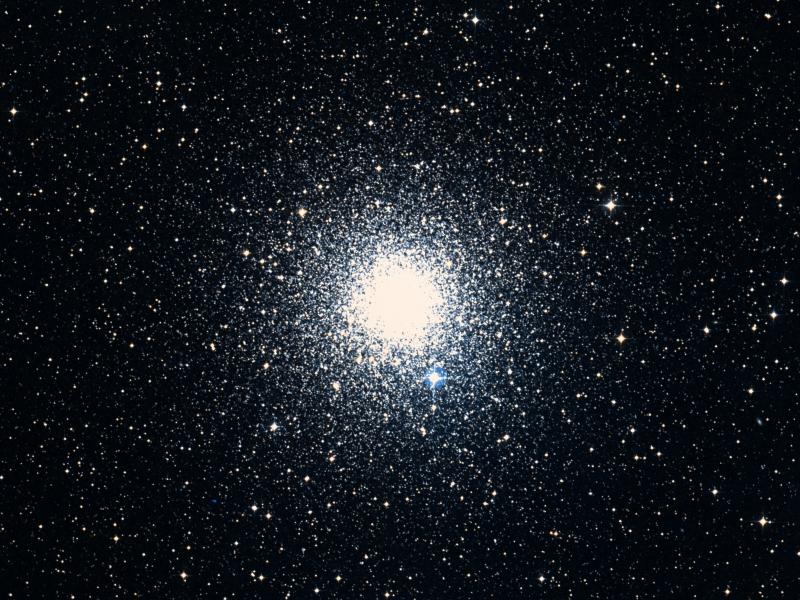
The third-finest globular in the sky after Omega Centauri and 47 Tucanae: bright, close, and wide open — strings of resolved stars radiate from a compact core like a firework caught mid-burst. Superb at 150 mm from any southern site.Le troisième plus beau globulaire du ciel après Omega Centauri et 47 Tucanae : brillant, proche et grand ouvert — des chapelets d'étoiles résolues rayonnent d'un cœur compact comme un feu d'artifice saisi en plein éclat. Superbe à 150 mm depuis tout site austral.El tercer globular más hermoso del cielo tras Omega Centauri y 47 Tucanae: brillante, cercano y abierto de par en par — rosarios de estrellas resueltas irradian de un núcleo compacto como fuegos artificiales a medio estallar. Soberbio a 150 mm desde cualquier sitio austral.Der drittschönste Kugelhaufen des Himmels nach Omega Centauri und 47 Tucanae: hell, nah und weit offen — Schnüre aufgelöster Sterne strahlen aus einem kompakten Kern wie ein Feuerwerk mitten im Zerplatzen. Großartig bei 150 mm von jedem südlichen Standort.
large scope, dark skygrand diamètre, ciel noirgran abertura, cielo oscurogroße Öffnung, dunkler HimmelDSS2 — STScI/NASA · CDS
TypeTypeTipoTyp
galaxygalaxiegalaxiaGalaxie
ConstellationConstellationConstelaciónSternbild
Pavo
MagnitudeMagnitudeMagnitudHelligkeit
9.2
SizeTailleTamañoGröße
15.67′ × 9.75′
Surface brightnessBrillance de surfaceBrillo superficialFlächenhelligkeit
23.3 mag/arcsec²
DistanceDistanceDistanciaEntfernung
about 30 million light-yearsenviron 30 millions d'années-lumièreunos 30 millones de años luzetwa 30 Millionen Lichtjahre
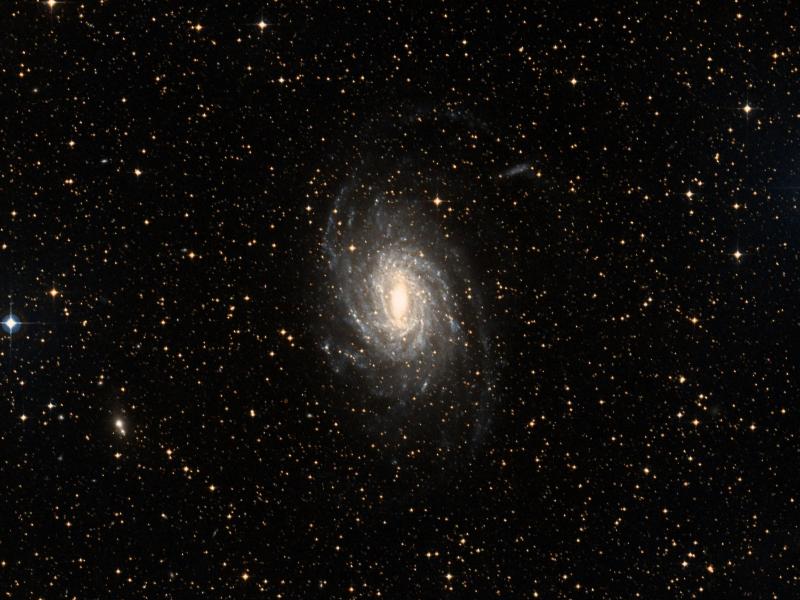
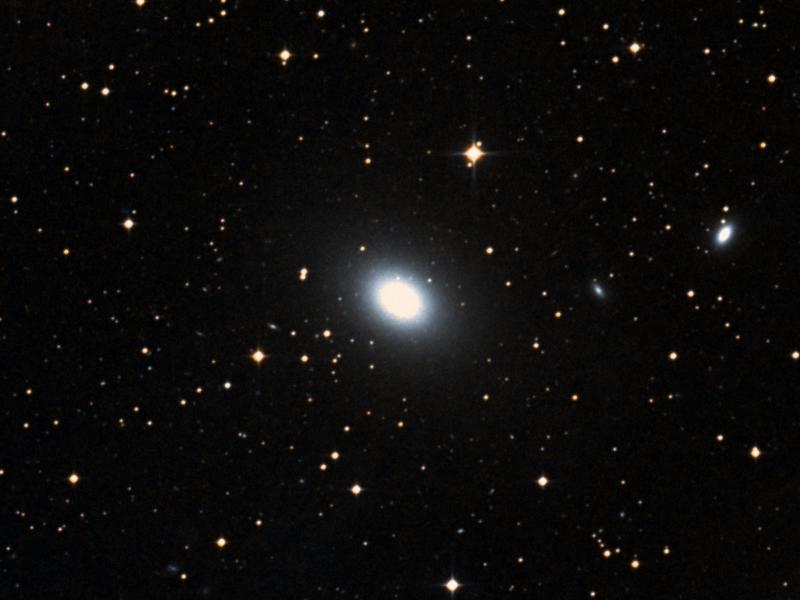
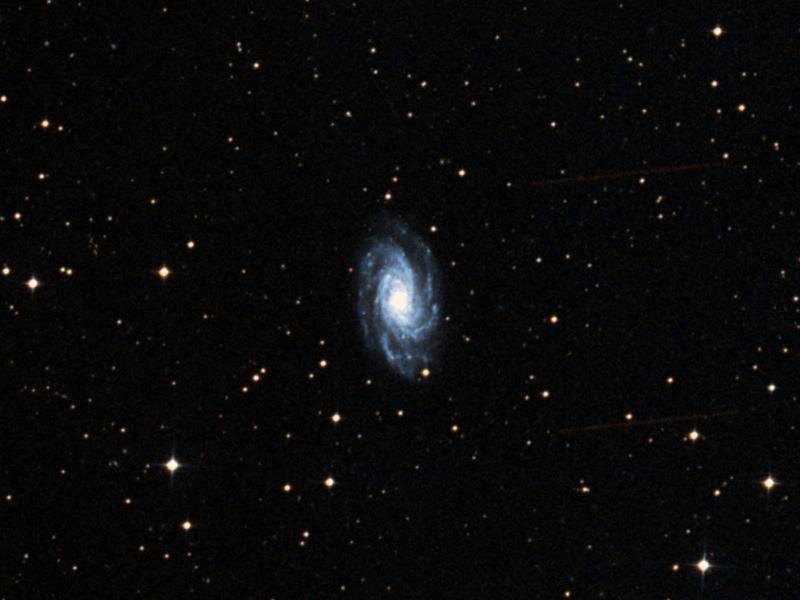
Perhaps the most Milky-Way-like galaxy known, seen not quite face-on in Pavo: a bright oval core in a huge dim disc that only dark skies unroll. What our galaxy would look like from thirty million light-years — which is exactly the observation.Peut-être la galaxie la plus semblable à la Voie lactée connue, vue presque de face dans le Paon : un cœur ovale brillant dans un immense disque pâle que seuls les ciels noirs déroulent. Ce à quoi notre galaxie ressemblerait depuis trente millions d'années-lumière — ce qui est exactement l'observation.Quizá la galaxia más parecida a la Vía Láctea que se conoce, vista casi de frente en el Pavo: un núcleo oval brillante en un disco enorme y tenue que sólo los cielos oscuros despliegan. Lo que nuestra galaxia parecería desde treinta millones de años luz — que es exactamente la observación.Vielleicht die milchstraßenähnlichste bekannte Galaxie, fast in Draufsicht im Pfau: ein heller ovaler Kern in einer riesigen matten Scheibe, die nur dunkle Himmel entrollen. Wie unsere Galaxis aus dreißig Millionen Lichtjahren aussähe — und genau das ist die Beobachtung.
large scope, dark skygrand diamètre, ciel noirgran abertura, cielo oscurogroße Öffnung, dunkler HimmelDSS2 — STScI/NASA · CDS
TypeTypeTipoTyp
galaxygalaxiegalaxiaGalaxie
ConstellationConstellationConstelaciónSternbild
Pavo
MagnitudeMagnitudeMagnitudHelligkeit
10.5
SizeTailleTamañoGröße
4.19′ × 2.96′
Surface brightnessBrillance de surfaceBrillo superficialFlächenhelligkeit
21.9 mag/arcsec²
DistanceDistanceDistanciaEntfernung
about 45 million light-yearsenviron 45 millions d'années-lumièreunos 45 millones de años luzetwa 45 Millionen Lichtjahre
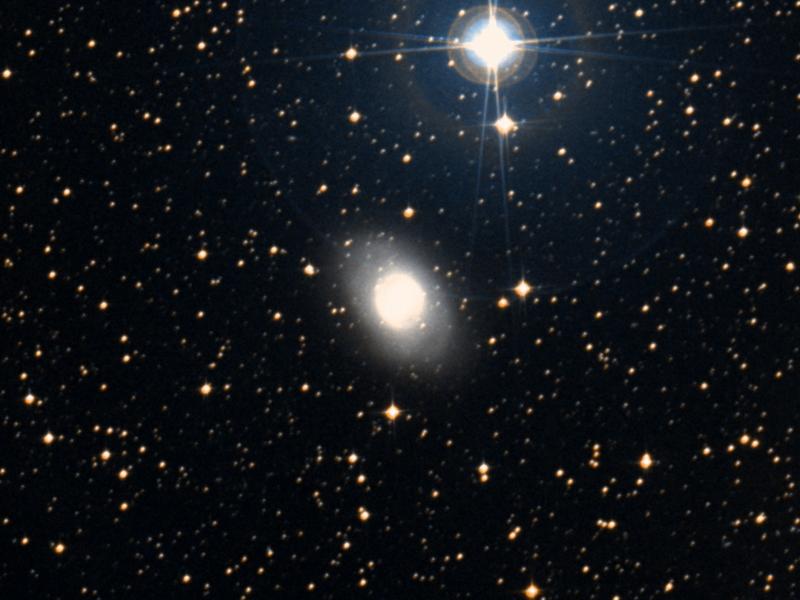
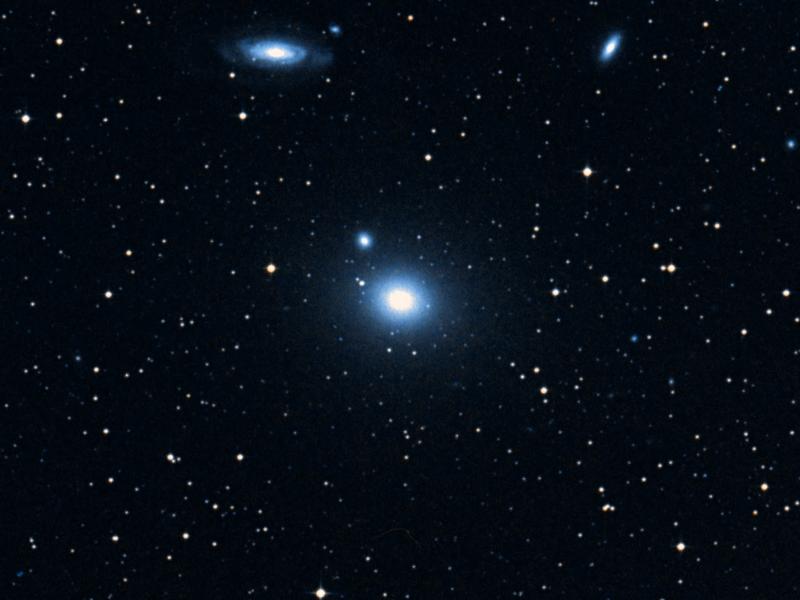
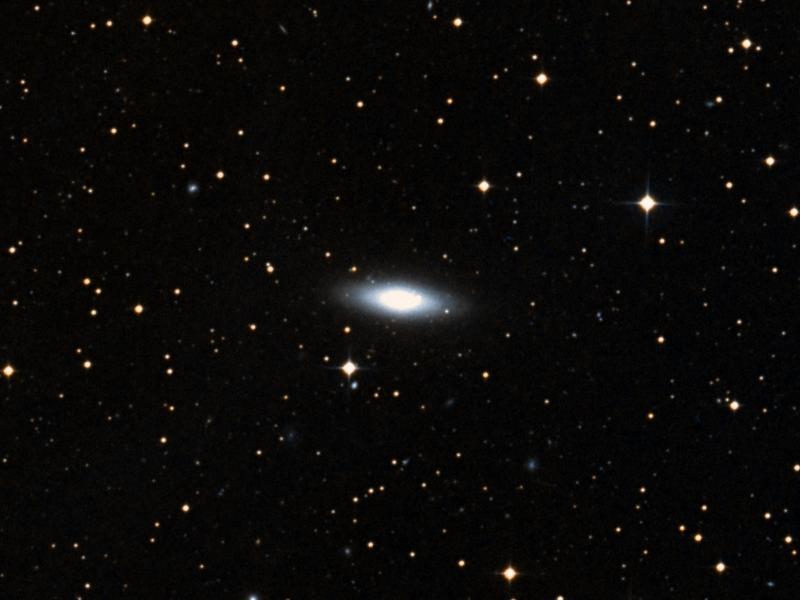
A bright barred lenticular beside Theta Pavonis — the Peacock's easiest galaxy, a condensed glow at 200 mm.Une lenticulaire barrée brillante près de Theta Pavonis — la galaxie la plus facile du Paon, une lueur condensée à 200 mm.Una lenticular barrada brillante junto a Theta Pavonis — la galaxia más fácil del Pavo, un resplandor condensado a 200 mm.Eine helle Balken-Linsengalaxie neben Theta Pavonis — die leichteste Galaxie des Pfaus, ein verdichtetes Glimmen bei 200 mm.
large scope, dark skygrand diamètre, ciel noirgran abertura, cielo oscurogroße Öffnung, dunkler HimmelDSS2 — STScI/NASA · CDS
TypeTypeTipoTyp
galaxygalaxiegalaxiaGalaxie
ConstellationConstellationConstelaciónSternbild
Indus
MagnitudeMagnitudeMagnitudHelligkeit
10.6
SizeTailleTamañoGröße
3.94′ × 2.69′
Surface brightnessBrillance de surfaceBrillo superficialFlächenhelligkeit
21.7 mag/arcsec²
DistanceDistanceDistanciaEntfernung
about 100 million light-yearsenviron 100 millions d'années-lumièreunos 100 millones de años luzetwa 100 Millionen Lichtjahre
A giant lenticular in Indus ringed by a photogenic dust lace — a bright condensed glow at 250 mm.Une lenticulaire géante de l'Indien cerclée d'une dentelle de poussière photogénique — une lueur condensée brillante à 250 mm.Una lenticular gigante del Indio anillada por un encaje de polvo fotogénico — un resplandor condensado brillante a 250 mm.Eine riesige Linsengalaxie im Inder, umringt von fotogener Staubspitze — ein helles verdichtetes Glimmen bei 250 mm.
large scope, dark skygrand diamètre, ciel noirgran abertura, cielo oscurogroße Öffnung, dunkler HimmelDSS2 — STScI/NASA · CDS
TypeTypeTipoTyp
galaxygalaxiegalaxiaGalaxie
ConstellationConstellationConstelaciónSternbild
Telescopium
MagnitudeMagnitudeMagnitudHelligkeit
10.6
SizeTailleTamañoGröße
3.58′ × 3.13′
Surface brightnessBrillance de surfaceBrillo superficialFlächenhelligkeit
21.8 mag/arcsec²
DistanceDistanceDistanciaEntfernung
about 90 million light-yearsenviron 90 millions d'années-lumièreunos 90 millones de años luzetwa 90 Millionen Lichtjahre
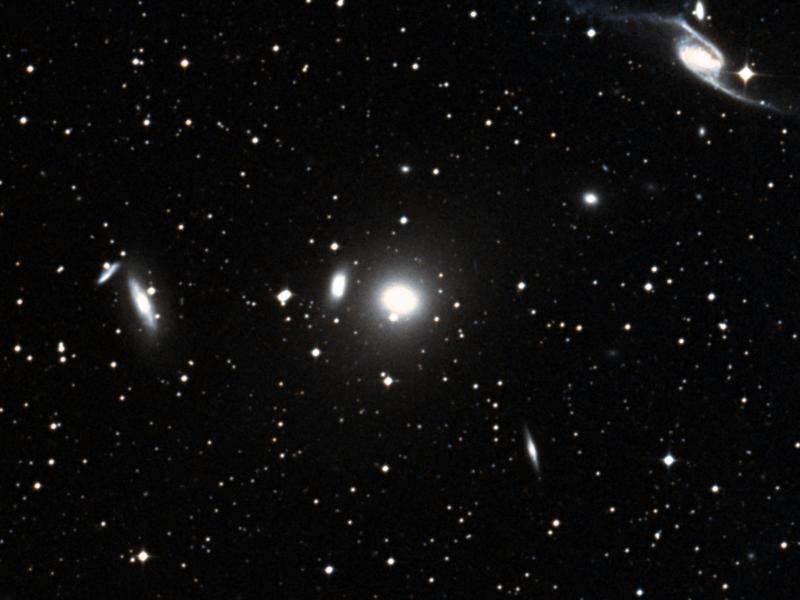
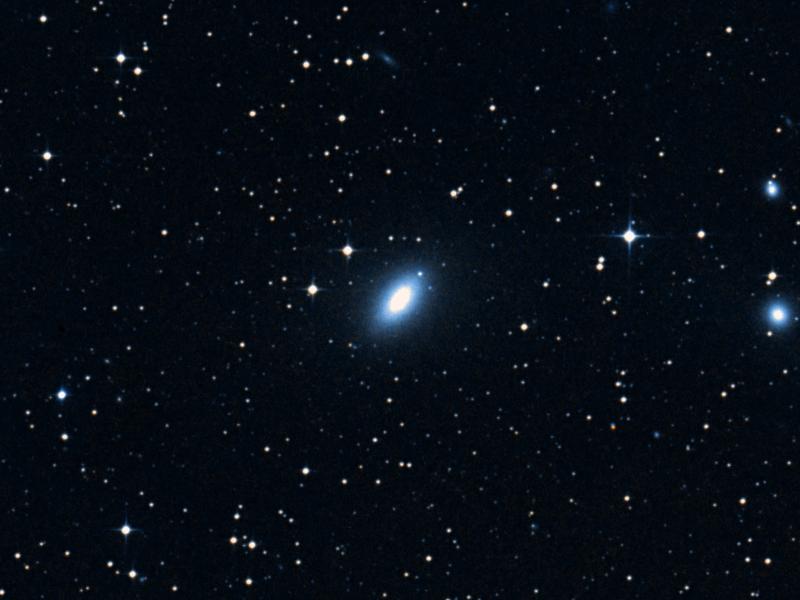
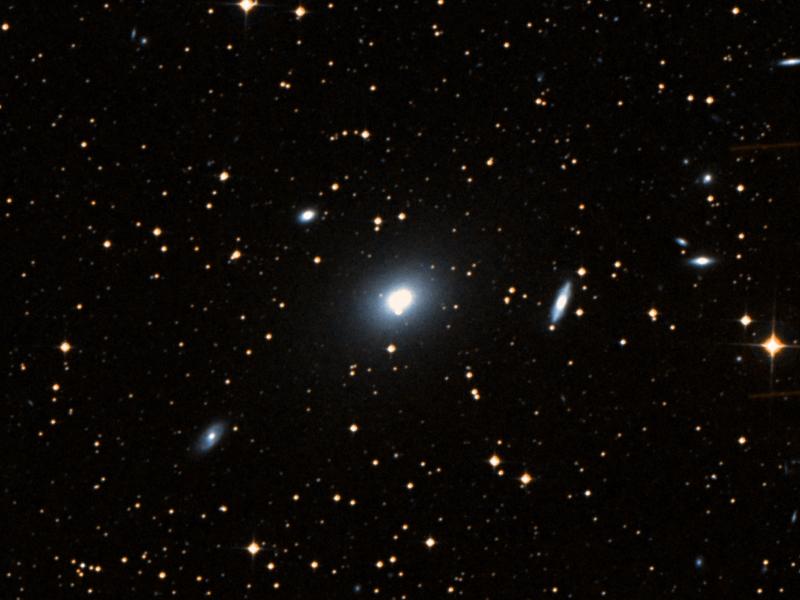
The giant elliptical of the Telescopium group — the region's brightest glow at 250 mm, gathering its court before the merger to come.L'elliptique géante du groupe du Télescope — la lueur la plus brillante de la région à 250 mm, rassemblant sa cour avant la fusion à venir.La elíptica gigante del grupo del Telescopio — el resplandor más brillante de la región a 250 mm, reuniendo su corte antes de la fusión por venir.Die Riesenelliptische der Teleskop-Gruppe — das hellste Glimmen der Gegend bei 250 mm, den Hofstaat sammelnd vor der kommenden Verschmelzung.
large scope, dark skygrand diamètre, ciel noirgran abertura, cielo oscurogroße Öffnung, dunkler HimmelDSS2 — STScI/NASA · CDS
TypeTypeTipoTyp
galaxygalaxiegalaxiaGalaxie
ConstellationConstellationConstelaciónSternbild
Pavo
MagnitudeMagnitudeMagnitudHelligkeit
10.8
SizeTailleTamañoGröße
3.46′ × 3′
Surface brightnessBrillance de surfaceBrillo superficialFlächenhelligkeit
22.0 mag/arcsec²
DistanceDistanceDistanciaEntfernung
about 180 million light-yearsenviron 180 millions d'années-lumièreunos 180 millones de años luzetwa 180 Millionen Lichtjahre
The giant elliptical of the Pavo group — a condensed glow at 250 mm leading a chain of companions across the field.L'elliptique géante du groupe du Paon — une lueur condensée à 250 mm menant une chaîne de compagnes à travers le champ.La elíptica gigante del grupo del Pavo — un resplandor condensado a 250 mm al frente de una cadena de compañeras por el campo.Die Riesenelliptische der Pavo-Gruppe — ein verdichtetes Glimmen bei 250 mm an der Spitze einer Begleiterkette durchs Feld.
large scope, dark skygrand diamètre, ciel noirgran abertura, cielo oscurogroße Öffnung, dunkler HimmelDSS2 — STScI/NASA · CDS
TypeTypeTipoTyp
galaxygalaxiegalaxiaGalaxie
ConstellationConstellationConstelaciónSternbild
Indus
MagnitudeMagnitudeMagnitudHelligkeit
10.7
SizeTailleTamañoGröße
5.13′ × 3.6′
Surface brightnessBrillance de surfaceBrillo superficialFlächenhelligkeit
22.5 mag/arcsec²
DistanceDistanceDistanciaEntfernung
about 5.8 million light-yearsenviron 5.8 millions d'années-lumièreunos 5.8 millones de años luzetwa 5.8 Millionen Lichtjahre
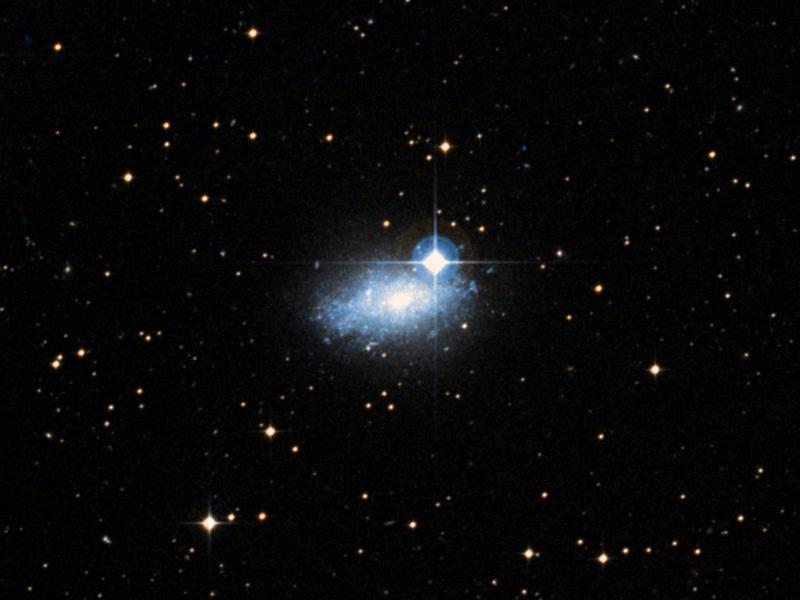
A nearby dwarf irregular on the Local Group's doorstep in Indus — a faint oval at 250 mm with a bright foreground star at its tip; one of the closest galaxies almost nobody has heard of.Une naine irrégulière proche, au seuil du Groupe local, dans l'Indien — un ovale pâle à 250 mm, une brillante étoile d'avant-plan à sa pointe ; l'une des galaxies les plus proches dont presque personne n'a entendu parler.Una enana irregular cercana, en el umbral del Grupo Local, en el Indio — un óvalo pálido a 250 mm con una brillante estrella en primer plano en su punta; una de las galaxias más cercanas de las que casi nadie ha oído hablar.Eine nahe irreguläre Zwergin an der Schwelle der Lokalen Gruppe im Inder — ein blasses Oval bei 250 mm mit hellem Vordergrundstern an der Spitze; eine der nächsten Galaxien, von der fast niemand gehört hat.
large scope, dark skygrand diamètre, ciel noirgran abertura, cielo oscurogroße Öffnung, dunkler HimmelDSS2 — STScI/NASA · CDS
TypeTypeTipoTyp
galaxygalaxiegalaxiaGalaxie
ConstellationConstellationConstelaciónSternbild
Tucana
MagnitudeMagnitudeMagnitudHelligkeit
11.0
SizeTailleTamañoGröße
3.7′ × 1.71′
Surface brightnessBrillance de surfaceBrillo superficialFlächenhelligkeit
21.6 mag/arcsec²
DistanceDistanceDistanciaEntfernung
about 70 million light-yearsenviron 70 millions d'années-lumièreunos 70 millones de años luzetwa 70 Millionen Lichtjahre
A tilted spiral in Tucana — a soft oval at 250 mm in the far-southern spring.Une spirale inclinée du Toucan — un ovale doux à 250 mm dans le printemps austral profond.Una espiral inclinada del Tucán — un óvalo suave a 250 mm en la primavera austral profunda.Eine geneigte Spirale im Tukan — ein weiches Oval bei 250 mm im tiefen Südfrühling.
large scope, dark skygrand diamètre, ciel noirgran abertura, cielo oscurogroße Öffnung, dunkler HimmelDSS2 — STScI/NASA · CDS
TypeTypeTipoTyp
galaxygalaxiegalaxiaGalaxie
ConstellationConstellationConstelaciónSternbild
Indus
MagnitudeMagnitudeMagnitudHelligkeit
10.9
SizeTailleTamañoGröße
8.15′ × 1.63′
Surface brightnessBrillance de surfaceBrillo superficialFlächenhelligkeit
22.3 mag/arcsec²
DistanceDistanceDistanciaEntfernung
about 30 million light-yearsenviron 30 millions d'années-lumièreunos 30 millones de años luzetwa 30 Millionen Lichtjahre
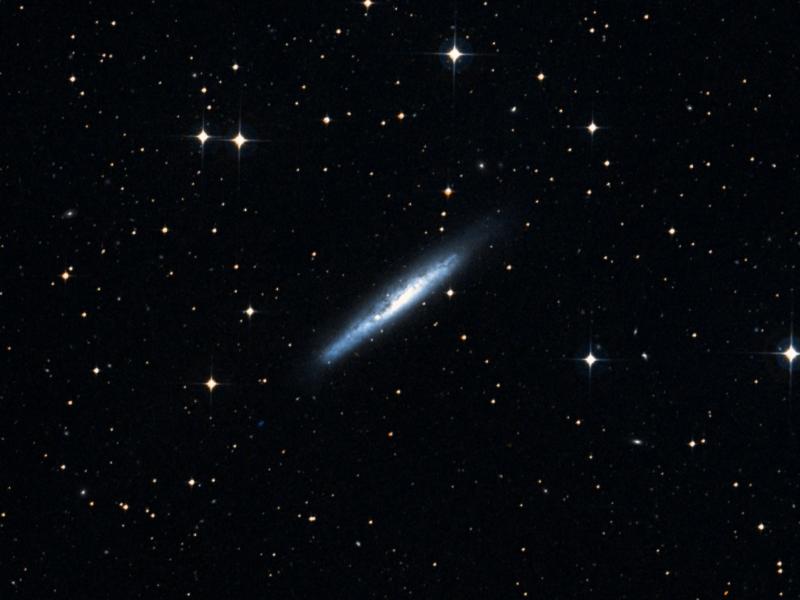
A nearly edge-on spiral in Indus — a fine bright sliver at 250 mm, a southern splinter for the collection.Une spirale presque par la tranche de l'Indien — un bel éclat brillant à 250 mm, une écharde australe pour la collection.Una espiral casi de canto del Indio — una bella esquirla brillante a 250 mm, una astilla austral para la colección.Eine fast kantenständige Spirale im Inder — ein feiner heller Splitter bei 250 mm, ein Südsplitter für die Sammlung.
large scope, dark skygrand diamètre, ciel noirgran abertura, cielo oscurogroße Öffnung, dunkler HimmelDSS2 — STScI/NASA · CDS
TypeTypeTipoTyp
galaxygalaxiegalaxiaGalaxie
ConstellationConstellationConstelaciónSternbild
Pavo
MagnitudeMagnitudeMagnitudHelligkeit
11.0
SizeTailleTamañoGröße
2.97′ × 2.6′
Surface brightnessBrillance de surfaceBrillo superficialFlächenhelligkeit
21.9 mag/arcsec²
DistanceDistanceDistanciaEntfernung
about 150 million light-yearsenviron 150 millions d'années-lumièreunos 150 millones de años luzetwa 150 Millionen Lichtjahre
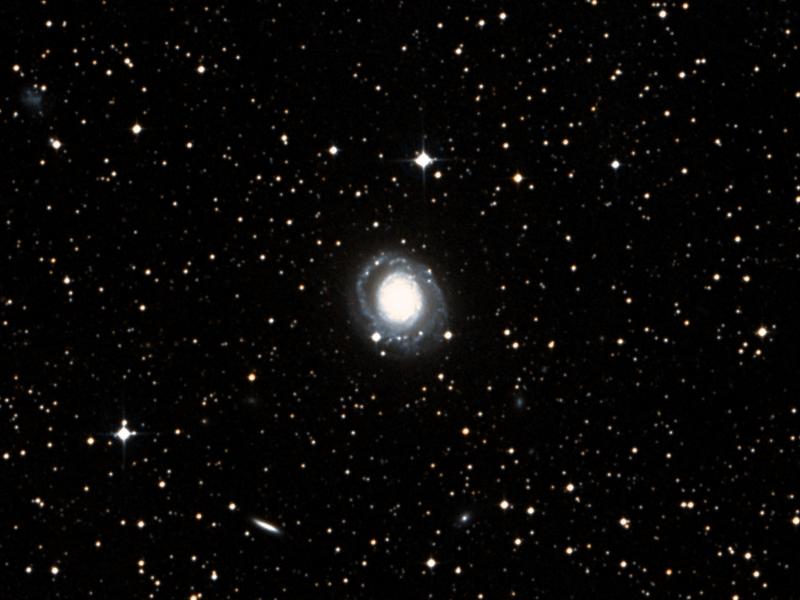
A ringed face-on spiral in Pavo — a small round glow at 250 mm, its tightly-wound perfection photographic.Une spirale de face à anneau du Paon — une petite lueur ronde à 250 mm, sa perfection serrée étant photographique.Una espiral de frente anillada del Pavo — un pequeño resplandor redondo a 250 mm, con su perfección apretada fotográfica.Eine geringte Spirale in Draufsicht im Pfau — ein kleines rundes Glimmen bei 250 mm, die eng gewundene Perfektion fotografisch.
large scope, dark skygrand diamètre, ciel noirgran abertura, cielo oscurogroße Öffnung, dunkler HimmelDSS2 — STScI/NASA · CDS
TypeTypeTipoTyp
galaxygalaxiegalaxiaGalaxie
ConstellationConstellationConstelaciónSternbild
Telescopium
MagnitudeMagnitudeMagnitudHelligkeit
11.0
SizeTailleTamañoGröße
3.18′ × 2.36′
Surface brightnessBrillance de surfaceBrillo superficialFlächenhelligkeit
21.9 mag/arcsec²
DistanceDistanceDistanciaEntfernung
about 90 million light-yearsenviron 90 millions d'années-lumièreunos 90 millones de años luzetwa 90 Millionen Lichtjahre
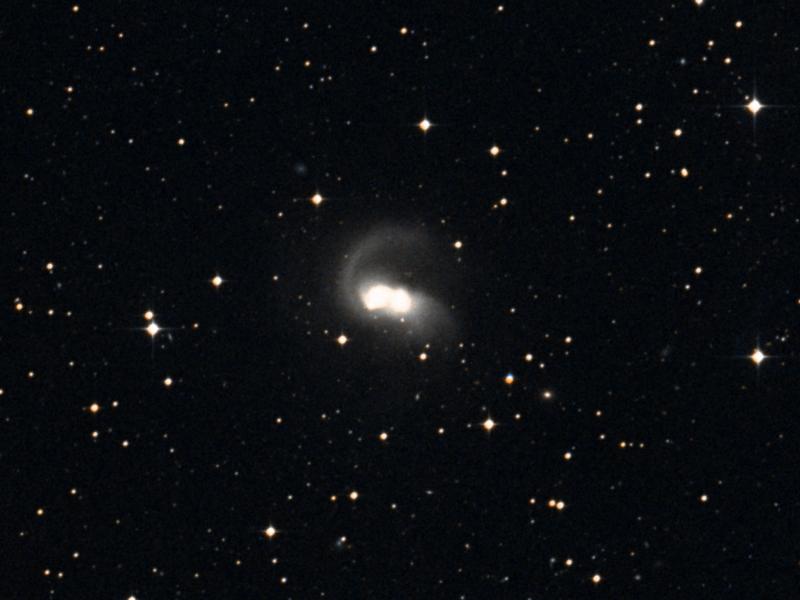
A ringed lenticular of the Telescopium group, on collision course with its giant neighbour NGC 6868 — two condensed glows a field apart, a merger scheduled for the far future.Une lenticulaire à anneau du groupe du Télescope, en route de collision avec sa voisine géante NGC 6868 — deux lueurs condensées à un champ l'une de l'autre, une fusion programmée pour un futur lointain.Una lenticular anillada del grupo del Telescopio, en rumbo de colisión con su vecina gigante NGC 6868 — dos resplandores condensados a un campo, una fusión programada para el futuro lejano.Eine geringte Linsengalaxie der Teleskop-Gruppe, auf Kollisionskurs mit der riesigen Nachbarin NGC 6868 — zwei verdichtete Lichter ein Feld auseinander, eine Verschmelzung für die ferne Zukunft angesetzt.
large scope, dark skygrand diamètre, ciel noirgran abertura, cielo oscurogroße Öffnung, dunkler HimmelDSS2 — STScI/NASA · CDS
TypeTypeTipoTyp
galaxygalaxiegalaxiaGalaxie
ConstellationConstellationConstelaciónSternbild
Tucana
MagnitudeMagnitudeMagnitudHelligkeit
11.1
SizeTailleTamañoGröße
1.51′ × 1.31′
Surface brightnessBrillance de surfaceBrillo superficialFlächenhelligkeit
20.5 mag/arcsec²
DistanceDistanceDistanciaEntfernung
about 140 million light-yearsenviron 140 millions d'années-lumièreunos 140 millones de años luzetwa 140 Millionen Lichtjahre
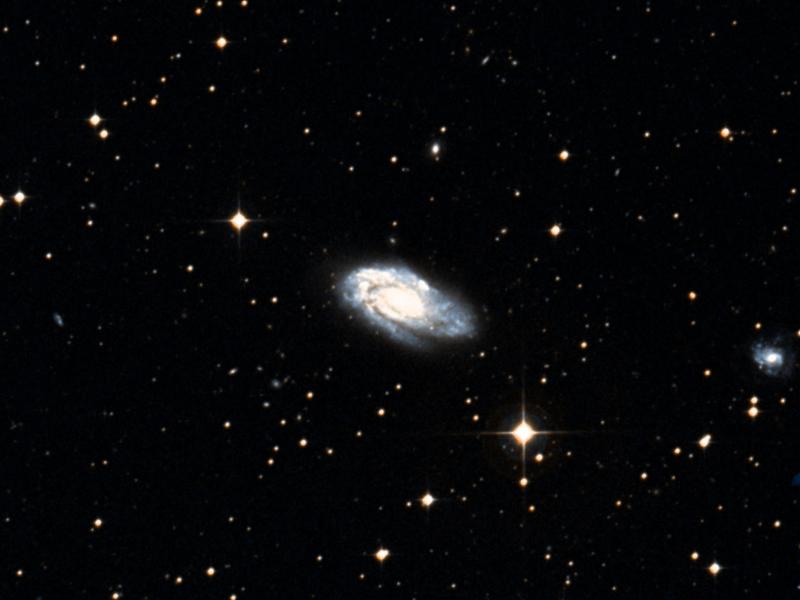
Half of a superposed galaxy pair in Tucana — two lenticulars stacked almost exactly, a single 250 mm glow hiding a double truth.La moitié d'une paire de galaxies superposées dans le Toucan — deux lenticulaires empilées presque exactement, une seule lueur à 250 mm cachant une vérité double.La mitad de una pareja de galaxias superpuestas en el Tucán — dos lenticulares apiladas casi exactamente, un solo resplandor a 250 mm escondiendo una verdad doble.Die Hälfte eines überlagerten Galaxienpaares im Tukan — zwei fast exakt gestapelte Linsengalaxien, ein einziges 250-mm-Glimmen, das eine doppelte Wahrheit verbirgt.
large scope, dark skygrand diamètre, ciel noirgran abertura, cielo oscurogroße Öffnung, dunkler HimmelDSS2 — STScI/NASA · CDS
TypeTypeTipoTyp
galaxygalaxiegalaxiaGalaxie
ConstellationConstellationConstelaciónSternbild
Grus
MagnitudeMagnitudeMagnitudHelligkeit
11.0
SizeTailleTamañoGröße
3.41′ × 3.2′
Surface brightnessBrillance de surfaceBrillo superficialFlächenhelligkeit
22.2 mag/arcsec²
DistanceDistanceDistanciaEntfernung
about 80 million light-yearsenviron 80 millions d'années-lumièreunos 80 millones de años luzetwa 80 Millionen Lichtjahre
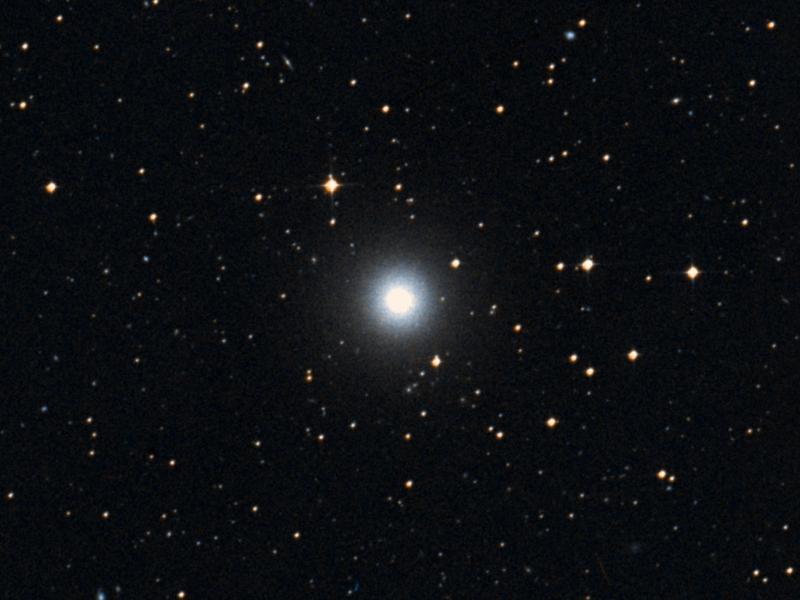
A round elliptical in Grus — a condensed even glow at 250 mm, twin to NGC 7145 one field away.Une elliptique ronde de la Grue — une lueur condensée et égale à 250 mm, jumelle de NGC 7145 à un champ.Una elíptica redonda de la Grulla — un resplandor condensado y parejo a 250 mm, gemela de NGC 7145 a un campo.Eine runde Elliptische im Kranich — ein verdichtetes, gleichmäßiges Glimmen bei 250 mm, Zwilling von NGC 7145 ein Feld weiter.
large scope, dark skygrand diamètre, ciel noirgran abertura, cielo oscurogroße Öffnung, dunkler HimmelDSS2 — STScI/NASA · CDS
TypeTypeTipoTyp
galaxygalaxiegalaxiaGalaxie
ConstellationConstellationConstelaciónSternbild
Grus
MagnitudeMagnitudeMagnitudHelligkeit
11.1
SizeTailleTamañoGröße
2.95′ × 0.76′
Surface brightnessBrillance de surfaceBrillo superficialFlächenhelligkeit
20.6 mag/arcsec²
DistanceDistanceDistanciaEntfernung
about 80 million light-yearsenviron 80 millions d'années-lumièreunos 80 millones de años luzetwa 80 Millionen Lichtjahre
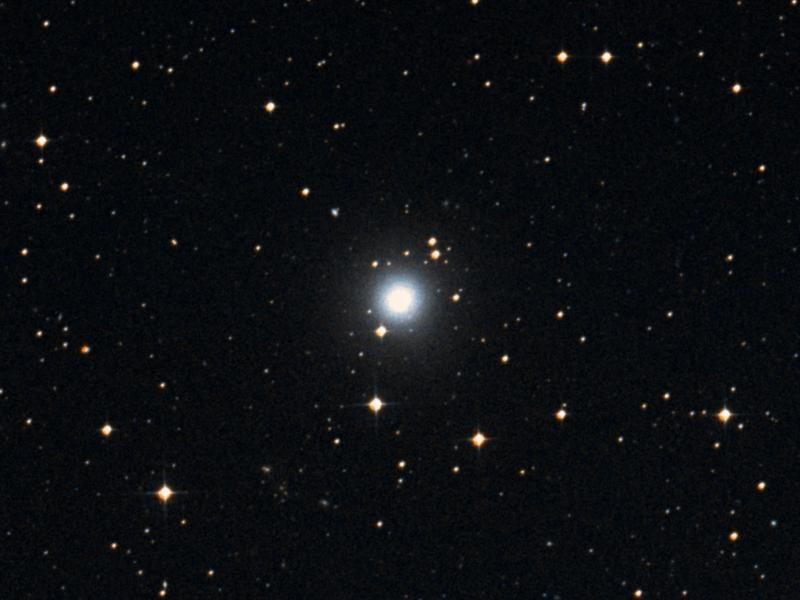
The second of the Grus elliptical twins — a matching condensed glow, worth comparing with its sibling in one sweep.La seconde des jumelles elliptiques de la Grue — une lueur condensée assortie, à comparer avec sa sœur en un seul balayage.La segunda de las gemelas elípticas de la Grulla — un resplandor condensado a juego, digno de comparar con su hermana en un solo barrido.Die zweite der elliptischen Zwillinge im Kranich — ein passendes verdichtetes Glimmen, in einem Schwenk mit der Schwester zu vergleichen.
large scope, dark skygrand diamètre, ciel noirgran abertura, cielo oscurogroße Öffnung, dunkler HimmelDSS2 — STScI/NASA · CDS
TypeTypeTipoTyp
galaxygalaxiegalaxiaGalaxie
ConstellationConstellationConstelaciónSternbild
Telescopium
MagnitudeMagnitudeMagnitudHelligkeit
11.2
SizeTailleTamañoGröße
2.99′ × 2.49′
Surface brightnessBrillance de surfaceBrillo superficialFlächenhelligkeit
22.0 mag/arcsec²
DistanceDistanceDistanciaEntfernung
about 110 million light-yearsenviron 110 millions d'années-lumièreunos 110 millones de años luzetwa 110 Millionen Lichtjahre
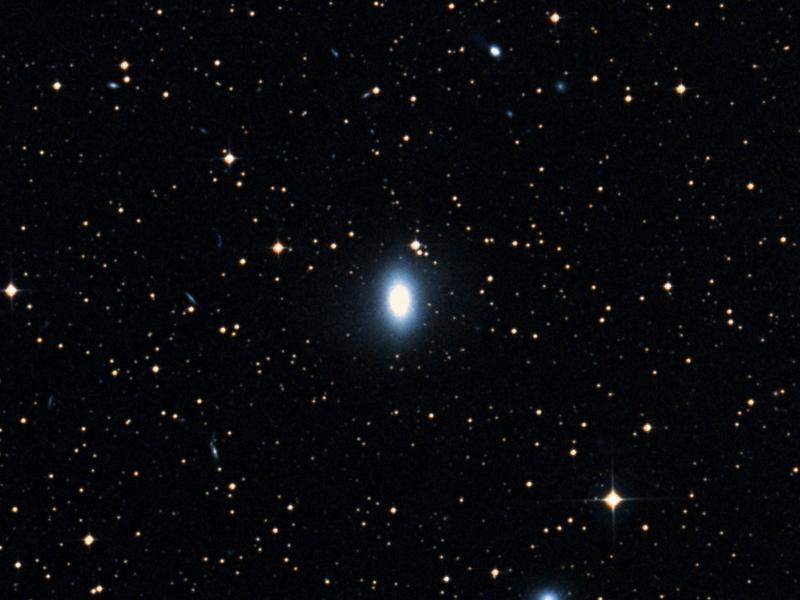
An elliptical in Telescopium — a condensed glow at 250 mm in the southern winter's galaxy fields.Une elliptique du Télescope — une lueur condensée à 250 mm dans les champs galactiques de l'hiver austral.Una elíptica del Telescopio — un resplandor condensado a 250 mm en los campos galácticos del invierno austral.Eine Elliptische im Teleskop — ein verdichtetes Glimmen bei 250 mm in den Galaxienfeldern des Südwinters.
large scope, dark skygrand diamètre, ciel noirgran abertura, cielo oscurogroße Öffnung, dunkler Himmel
ESO 185-054
DSS2 — STScI/NASA · CDS
TypeTypeTipoTyp
galaxygalaxiegalaxiaGalaxie
ConstellationConstellationConstelaciónSternbild
Telescopium
MagnitudeMagnitudeMagnitudHelligkeit
11.2
SizeTailleTamañoGröße
2.09′ × 0.87′
Surface brightnessBrillance de surfaceBrillo superficialFlächenhelligkeit
20.5 mag/arcsec²
A southern survey galaxy in Telescopium — an ESO-plate discovery, a faint 250 mm oval in a constellation named for the instrument that finds such things.Une galaxie de relevé austral dans le Télescope — une découverte des plaques ESO, un ovale pâle à 250 mm dans une constellation nommée d'après l'instrument qui trouve ces choses-là.Una galaxia de rastreo austral en el Telescopio — un descubrimiento de las placas ESO, un óvalo pálido a 250 mm en una constelación llamada como el instrumento que halla estas cosas.Eine südliche Durchmusterungsgalaxie im Teleskop — eine Entdeckung der ESO-Platten, ein blasses 250-mm-Oval in einem Sternbild, benannt nach dem Instrument, das solche Dinge findet.
large scope, dark skygrand diamètre, ciel noirgran abertura, cielo oscurogroße Öffnung, dunkler HimmelDSS2 — STScI/NASA · CDS
TypeTypeTipoTyp
galaxygalaxiegalaxiaGalaxie
ConstellationConstellationConstelaciónSternbild
Indus
MagnitudeMagnitudeMagnitudHelligkeit
11.2
SizeTailleTamañoGröße
3.56′ × 1.98′
Surface brightnessBrillance de surfaceBrillo superficialFlächenhelligkeit
22.0 mag/arcsec²
DistanceDistanceDistanciaEntfernung
about 130 million light-yearsenviron 130 millions d'années-lumièreunos 130 millones de años luzetwa 130 Millionen Lichtjahre
A graceful tilted spiral in Indus — a soft oval at 250 mm, its layered arms photographic.Une gracieuse spirale inclinée de l'Indien — un ovale doux à 250 mm, ses bras feuilletés photographiques.Una grácil espiral inclinada del Indio — un óvalo suave a 250 mm, con sus brazos estratificados fotográficos.Eine anmutige geneigte Spirale im Inder — ein weiches Oval bei 250 mm, die geschichteten Arme fotografisch.
large scope, dark skygrand diamètre, ciel noirgran abertura, cielo oscurogroße Öffnung, dunkler HimmelDSS2 — STScI/NASA · CDS
TypeTypeTipoTyp
galaxygalaxiegalaxiaGalaxie
ConstellationConstellationConstelaciónSternbild
Indus
MagnitudeMagnitudeMagnitudHelligkeit
11.3
SizeTailleTamañoGröße
2.42′ × 2.31′
Surface brightnessBrillance de surfaceBrillo superficialFlächenhelligkeit
21.8 mag/arcsec²
DistanceDistanceDistanciaEntfernung
about 120 million light-yearsenviron 120 millions d'années-lumièreunos 120 millones de años luzetwa 120 Millionen Lichtjahre
A round elliptical in Indus — a condensed even glow at 250 mm near the far-southern horizon of most maps.Une elliptique ronde de l'Indien — une lueur condensée et égale à 250 mm, près de l'horizon austral de la plupart des cartes.Una elíptica redonda del Indio — un resplandor condensado y parejo a 250 mm, cerca del horizonte austral de la mayoría de los mapas.Eine runde Elliptische im Inder — ein verdichtetes, gleichmäßiges Glimmen bei 250 mm nahe dem Südhorizont der meisten Karten.
large scope, dark skygrand diamètre, ciel noirgran abertura, cielo oscurogroße Öffnung, dunkler HimmelDSS2 — STScI/NASA · CDS
TypeTypeTipoTyp
galaxygalaxiegalaxiaGalaxie
ConstellationConstellationConstelaciónSternbild
Indus
MagnitudeMagnitudeMagnitudHelligkeit
11.3
SizeTailleTamañoGröße
3.46′ × 1.47′
Surface brightnessBrillance de surfaceBrillo superficialFlächenhelligkeit
21.7 mag/arcsec²
DistanceDistanceDistanciaEntfernung
about 90 million light-yearsenviron 90 millions d'années-lumièreunos 90 millones de años luzetwa 90 Millionen Lichtjahre
A lenticular in Indus — a modest spindle at 250 mm in far-southern spring skies.Une lenticulaire de l'Indien — un fuseau modeste à 250 mm dans les ciels de printemps du sud profond.Una lenticular del Indio — un huso modesto a 250 mm en los cielos de primavera del sur profundo.Eine Linsengalaxie im Inder — eine bescheidene Spindel bei 250 mm am Frühlingshimmel des tiefen Südens.
Both stars bright enough for a small telescope, wide enough to split.Deux composantes assez brillantes pour un petit télescope, assez écartées pour être séparées.Ambas componentes lo bastante brillantes para un telescopio pequeño y separables.Beide Komponenten hell genug für ein kleines Teleskop und weit genug zum Trennen.
Sep.Sép.Sep.Abstand
PAAPAPPW
MagsMagsMagsHelligkeiten
θ Ind
7.3″
269°
4.5 / 6.9
HD 187420
23″
148°
5.8 / 6.4
HD 198160
2.4″
78°
6.2 / 6.6
μ² Oct
16.7″
20°
6.5 / 7.1
Also on this chartAussi sur cette carteTambién en esta cartaEbenfalls auf dieser Karte
8 · Everything else the chart plots, easiest first where a rank exists.Tout le reste de la carte, du plus facile au plus difficile quand un classement existe.Todo lo demás que traza la carta, de lo más fácil a lo más difícil cuando hay clasificación.Alles Übrige auf der Karte, wo möglich nach Schwierigkeit geordnet.