ChartCarteCartaKarte 1 · Cepheus · Camelopardalis · Ursa Minor
24 objects on this chartobjets sur cette carteobjetos en esta cartaObjekte auf dieser Karte
Easiest firstLes plus faciles d'abordLos más fáciles primeroDie einfachsten zuerst
What this chart shows, in the order you should try: start where success is certain, work toward the hard ones.Ce que montre cette carte, dans l'ordre où l'essayer : commencez là où le succès est certain, avancez vers le difficile.Lo que muestra esta carta, en el orden en que conviene intentarlo: empiece donde el éxito es seguro y avance hacia lo difícil.Was diese Karte zeigt, in der Reihenfolge, in der man es versuchen sollte: Beginnen Sie, wo der Erfolg sicher ist, und arbeiten Sie sich vor.
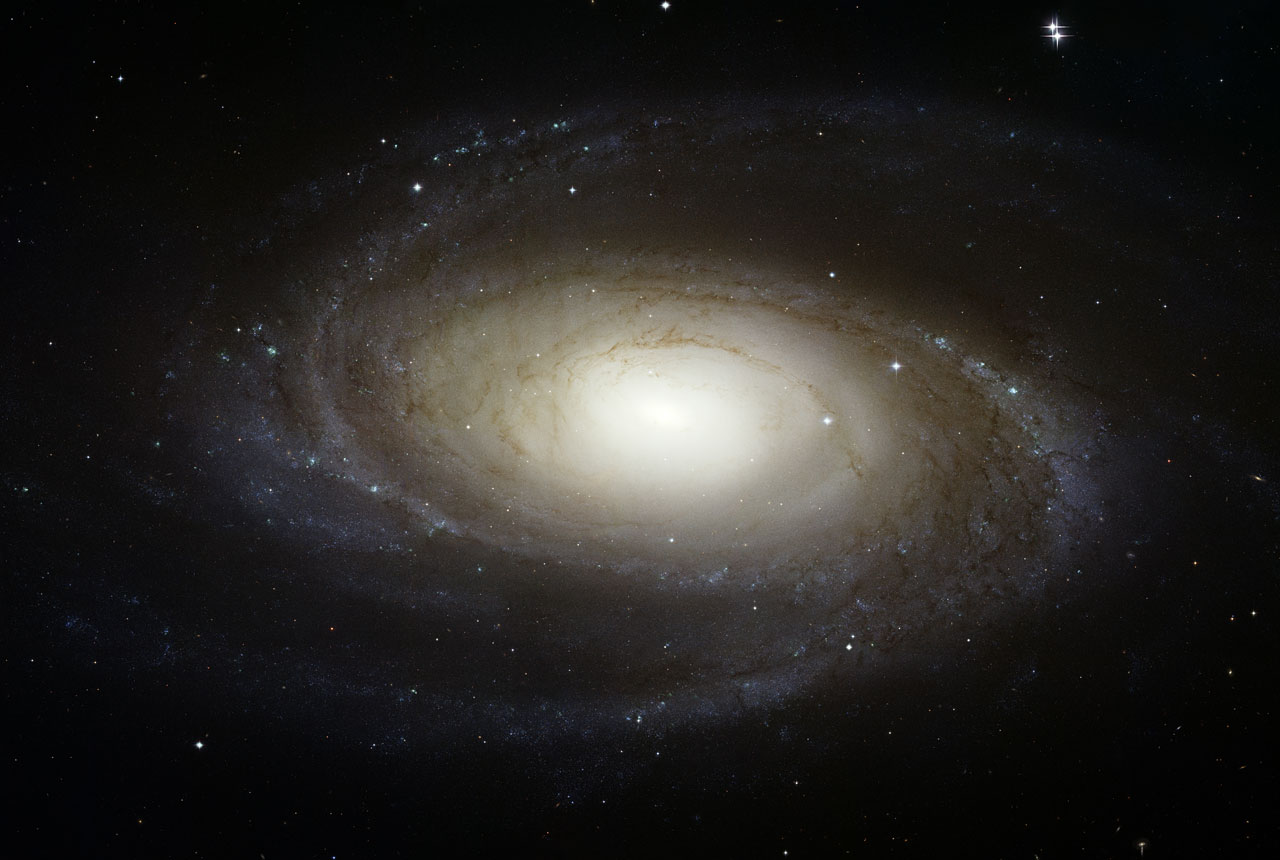
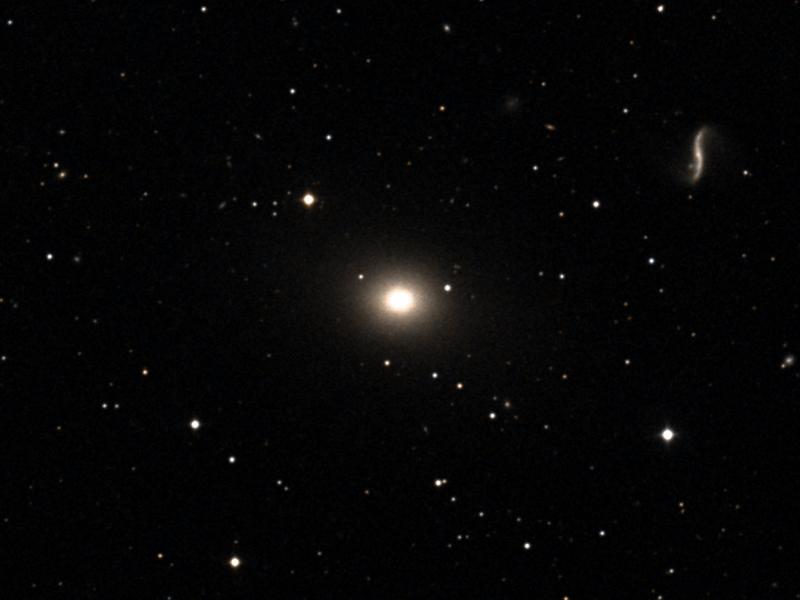
M 81
small telescopepetit télescopetelescopio pequeñokleines Teleskop
Bode's Galaxy
NASA, ESA and the Hubble Heritage Team (STScI/AURA) · CC BY 4.0
TypeTypeTipoTyp
galaxygalaxiegalaxiaGalaxie
ConstellationConstellationConstelaciónSternbild
Ursa Major
MagnitudeMagnitudeMagnitudHelligkeit
6.9
SizeTailleTamañoGröße
21.63′ × 11.25′
Surface brightnessBrillance de surfaceBrillo superficialFlächenhelligkeit
21.5 mag/arcsec²
DistanceDistanceDistanciaEntfernung
about 11.8 million light-yearsenviron 11.8 millions d'années-lumièreunos 11.8 millones de años luzetwa 11.8 Millionen Lichtjahre
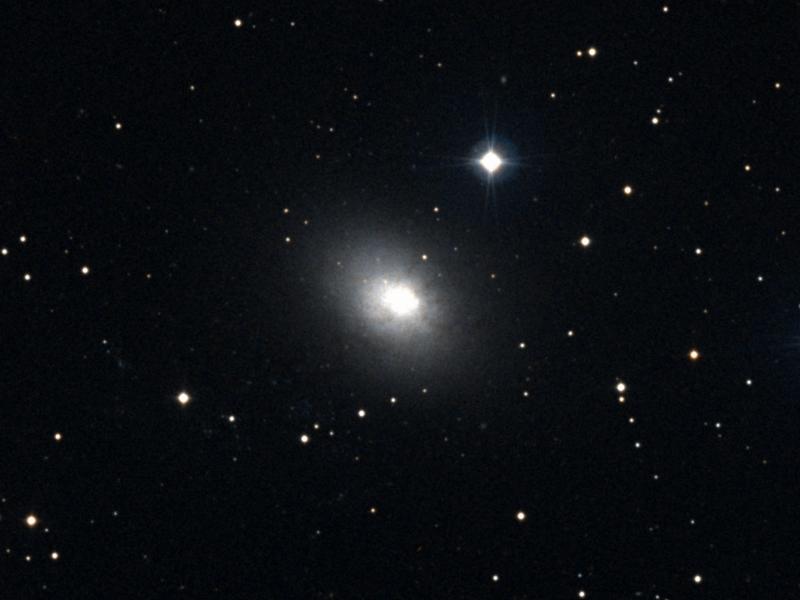
The brightest spiral of the northern sky after Andromeda, and with M 82 a marvel: two utterly different galaxies in one field. M 81 is a serene bright oval, visible in binoculars off the Big Dipper's bowl; 250 mm under dark skies suggest the arms. Keep both in view and compare.La spirale la plus brillante du ciel boréal après Andromède, et avec M 82 une merveille : deux galaxies radicalement différentes dans le même champ. M 81 est un ovale brillant et serein, visible aux jumelles près du bol de la Grande Casserole ; 250 mm sous un ciel noir suggèrent les bras. Gardez les deux en vue, et comparez.La espiral más brillante del cielo boreal después de Andrómeda, y con M 82 una maravilla: dos galaxias totalmente distintas en un mismo campo. M 81 es un óvalo brillante y sereno, visible en prismáticos junto al cazo del Carro; 250 mm bajo cielo oscuro sugieren los brazos. Mantenga ambas a la vista y compare.Die hellste Spirale des Nordhimmels nach Andromeda, und mit M 82 ein Wunder: zwei völlig verschiedene Galaxien in einem Feld. M 81 ist ein ruhiges, helles Oval, im Fernglas nahe der Schüssel des Großen Wagens sichtbar; 250 mm unter dunklem Himmel deuten die Arme an. Beide im Blick behalten und vergleichen.
small telescopepetit télescopetelescopio pequeñokleines TeleskopDSS2 — STScI/NASA · CDS
TypeTypeTipoTyp
open clusteramas ouvertcúmulo abiertoOffener Sternhaufen
ConstellationConstellationConstelaciónSternbild
Cepheus
MagnitudeMagnitudeMagnitudHelligkeit
8.1
SizeTailleTamañoGröße
17.7′
Surface brightnessBrillance de surfaceBrillo superficialFlächenhelligkeit
23.0 mag/arcsec²
DistanceDistanceDistanciaEntfernung
about 5 500 light-yearsenviron 5 500 années-lumièreunos 5 500 años luzetwa 5 500 Lichtjahre
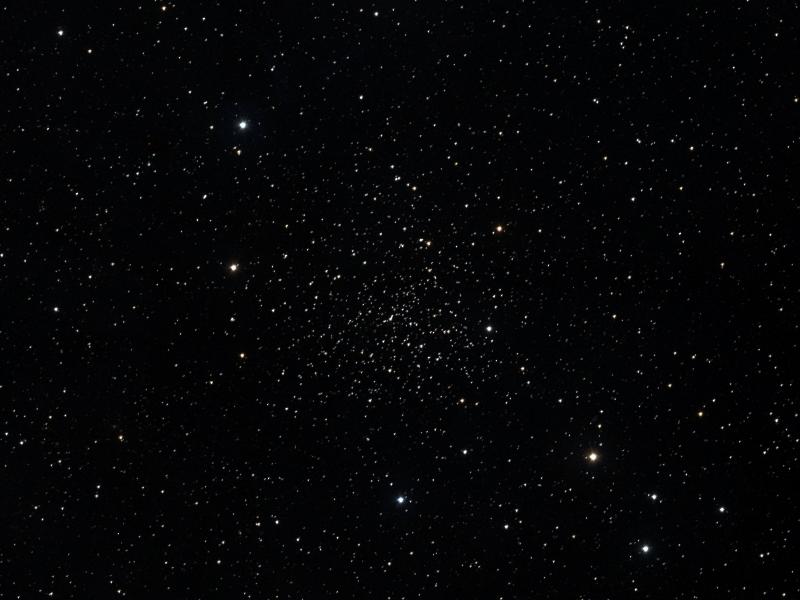
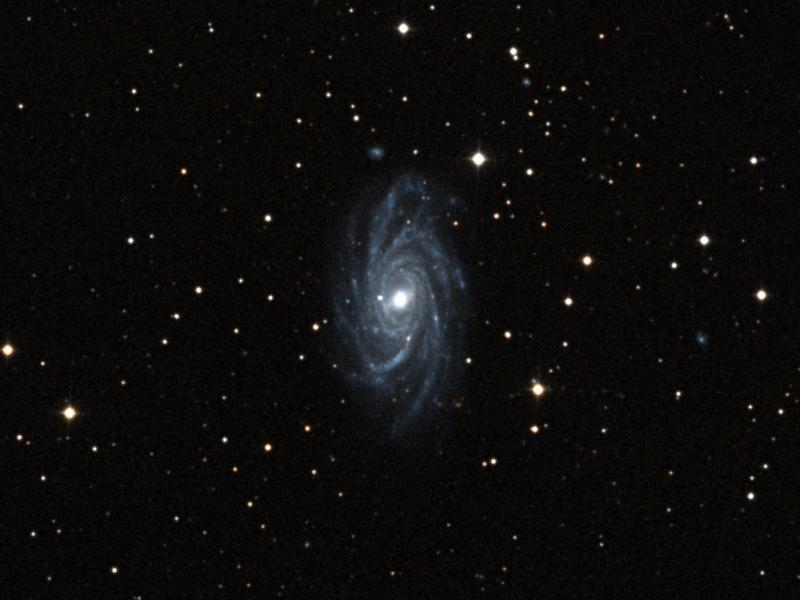
The closest cluster to the celestial pole and one of the oldest known — almost seven billion years, kept together by orbiting far above the galactic disc. A subtle, rich sprinkle of faint stars for a 150 mm telescope; circumpolar from all mid-northern latitudes.L'amas le plus proche du pôle céleste et l'un des plus vieux connus — près de sept milliards d'années, préservé par une orbite loin au-dessus du disque galactique. Un semis subtil et riche d'étoiles faibles pour un 150 mm ; circumpolaire depuis toutes les latitudes moyennes.El cúmulo más cercano al polo celeste y uno de los más viejos conocidos — casi siete mil millones de años, preservado por una órbita muy por encima del disco galáctico. Un rocío sutil y rico de estrellas débiles para un 150 mm; circumpolar desde todas las latitudes medias boreales.Der polnächste Sternhaufen und einer der ältesten bekannten — fast sieben Milliarden Jahre, bewahrt durch eine Bahn weit über der galaktischen Scheibe. Ein zartes, reiches Gesprenkel schwacher Sterne für ein 150-mm-Teleskop; von allen mittleren nördlichen Breiten zirkumpolar.
small telescopepetit télescopetelescopio pequeñokleines Teleskop
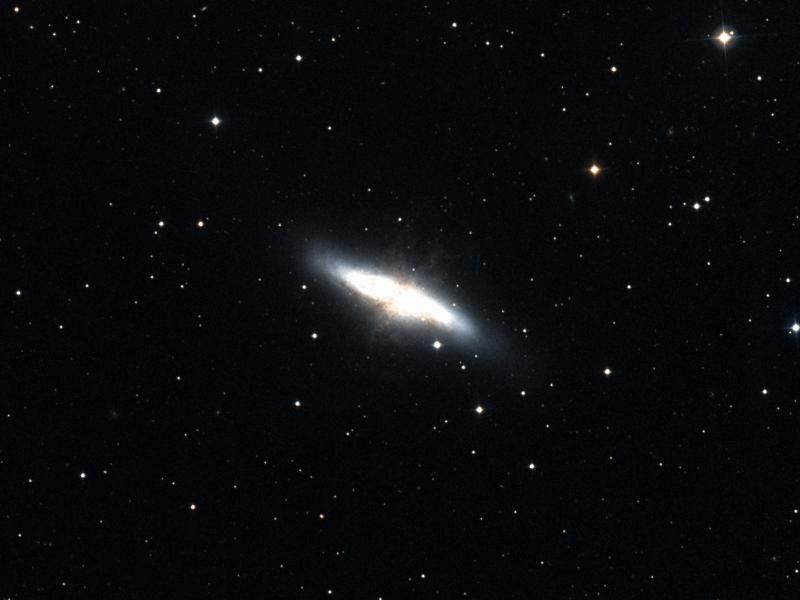
Cigar Galaxy
DSS2 — STScI/NASA · CDS
TypeTypeTipoTyp
galaxygalaxiegalaxiaGalaxie
ConstellationConstellationConstelaciónSternbild
Ursa Major
MagnitudeMagnitudeMagnitudHelligkeit
8.3
SizeTailleTamañoGröße
10.99′ × 5.11′
Surface brightnessBrillance de surfaceBrillo superficialFlächenhelligkeit
21.3 mag/arcsec²
DistanceDistanceDistanciaEntfernung
about 12 million light-yearsenviron 12 millions d'années-lumièreunos 12 millones de años luzetwa 12 Millionen Lichtjahre
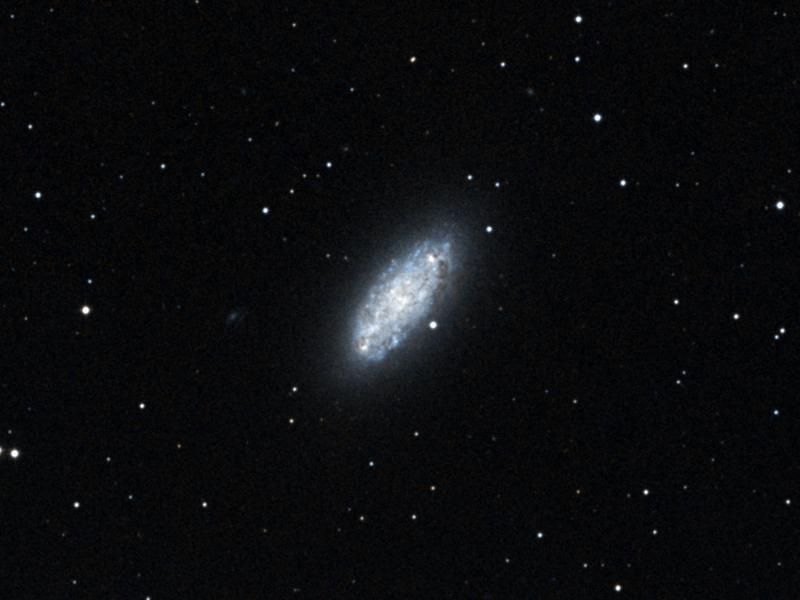
The Cigar: a thin silver splinter beside serene M 81, and the nearest starburst galaxy — a close pass of its neighbour lit a firestorm of star formation. 200 mm show the splinter broken by dark notches; larger apertures cut it into ragged thirds. The pair is the finest galaxy duo in the northern sky.Le Cigare : une fine écharde d'argent près du serein M 81, et la galaxie à flambée d'étoiles la plus proche — un passage rapproché de sa voisine y a allumé une tempête de formation stellaire. 200 mm montrent l'écharde brisée d'encoches sombres ; les grands diamètres la coupent en tiers déchiquetés. La paire est le plus beau duo de galaxies du ciel boréal.El Puro: una esquirla fina y plateada junto al sereno M 81, y la galaxia con brote estelar más cercana — un paso cercano de su vecina encendió una tormenta de formación de estrellas. 200 mm muestran la esquirla rota por muescas oscuras; las aberturas mayores la parten en tercios desgarrados. La pareja es el mejor dúo de galaxias del cielo boreal.Die Zigarre: ein dünner Silbersplitter neben der ruhigen M 81, und die nächste Starburst-Galaxie — eine nahe Passage der Nachbarin entfachte einen Feuersturm der Sternentstehung. 200 mm zeigen den Splitter von dunklen Kerben zerbrochen; größere Öffnungen schneiden ihn in zerfetzte Drittel. Das Paar ist das schönste Galaxien-Duo des Nordhimmels.
Surface brightnessBrillance de surfaceBrillo superficialFlächenhelligkeit
17.1 mag/arcsec²
DistanceDistanceDistanciaEntfernung
about 9 000 light-yearsenviron 9 000 années-lumièreunos 9 000 años luzetwa 9 000 Lichtjahre
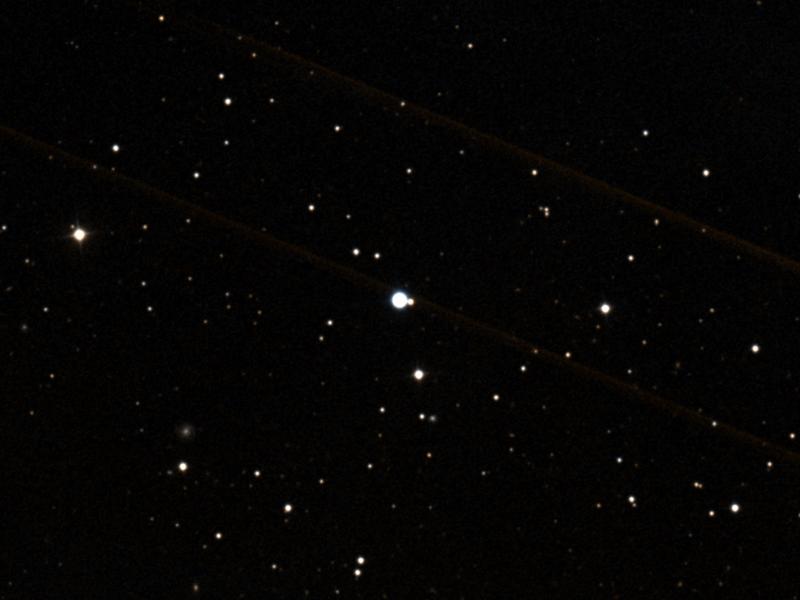
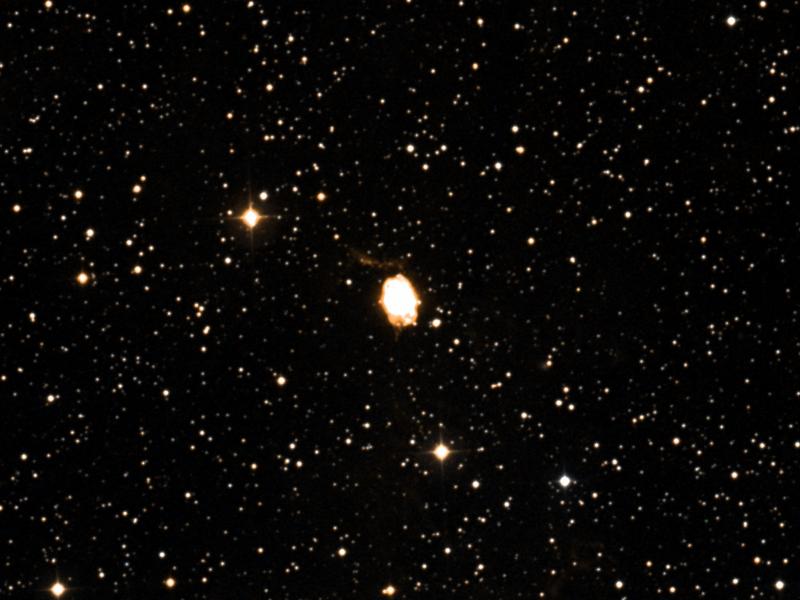
The Lemon Slice: a small, perfectly round planetary near the pole in Camelopardalis — one of the most symmetrical objects known, a soft disc with a bright core at 250×, circumpolar all year.La Tranche de citron : une petite planétaire parfaitement ronde près du pôle dans la Girafe — l'un des objets les plus symétriques connus, un disque doux au cœur brillant à 250×, circumpolaire toute l'année.La Rodaja de Limón: una pequeña planetaria perfectamente redonda cerca del polo en la Jirafa — uno de los objetos más simétricos conocidos, un disco suave de núcleo brillante a 250×, circumpolar todo el año.Die Zitronenscheibe: ein kleiner, vollkommen runder Planetarischer nahe dem Pol in der Giraffe — eines der symmetrischsten bekannten Objekte, eine weiche Scheibe mit hellem Kern bei 250×, das ganze Jahr zirkumpolar.
large scope, dark skygrand diamètre, ciel noirgran abertura, cielo oscurogroße Öffnung, dunkler HimmelDSS2 — STScI/NASA · CDS
TypeTypeTipoTyp
galaxygalaxiegalaxiaGalaxie
ConstellationConstellationConstelaciónSternbild
Ursa Major
MagnitudeMagnitudeMagnitudHelligkeit
9.9
SizeTailleTamañoGröße
5.21′ × 4.32′
Surface brightnessBrillance de surfaceBrillo superficialFlächenhelligkeit
21.9 mag/arcsec²
DistanceDistanceDistanciaEntfernung
about 12.8 million light-yearsenviron 12.8 millions d'années-lumièreunos 12.8 millones de años luzetwa 12.8 Millionen Lichtjahre
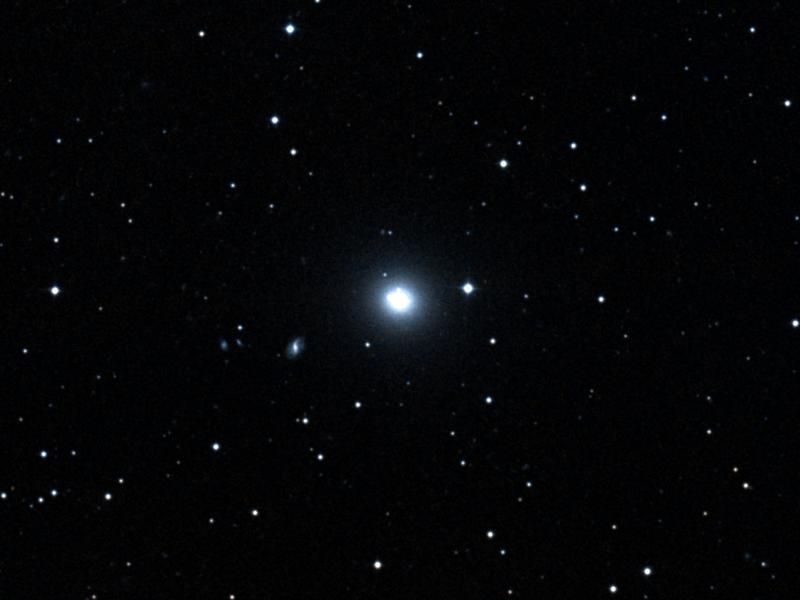
The third member of the M 81 group's inner trio — a small, bright, fuzzy oval east of the famous pair, its edges frayed by their tides. Take all three in one low-power sweep.Le troisième membre du trio interne du groupe de M 81 — un petit ovale flou et brillant à l'est de la paire célèbre, ses bords effilochés par leurs marées. Prenez les trois en un seul balayage à faible grossissement.El tercer miembro del trío interno del grupo de M 81 — un pequeño óvalo borroso y brillante al este de la pareja famosa, con los bordes deshilachados por sus mareas. Tome los tres en un solo barrido a pocos aumentos.Das dritte Mitglied des inneren Trios der M-81-Gruppe — ein kleines, helles, verwaschenes Oval östlich des berühmten Paares, die Ränder von deren Gezeiten ausgefranst. Alle drei in einem Schwenk bei schwacher Vergrößerung mitnehmen.
large scope, dark skygrand diamètre, ciel noirgran abertura, cielo oscurogroße Öffnung, dunkler HimmelDSS2 — STScI/NASA · CDS
TypeTypeTipoTyp
galaxygalaxiegalaxiaGalaxie
ConstellationConstellationConstelaciónSternbild
Ursa Major
MagnitudeMagnitudeMagnitudHelligkeit
10.2
SizeTailleTamañoGröße
5.77′ × 3.01′
Surface brightnessBrillance de surfaceBrillo superficialFlächenhelligkeit
21.9 mag/arcsec²
DistanceDistanceDistanciaEntfernung
about 11.6 million light-yearsenviron 11.6 millions d'années-lumièreunos 11.6 millones de años luzetwa 11.6 Millionen Lichtjahre
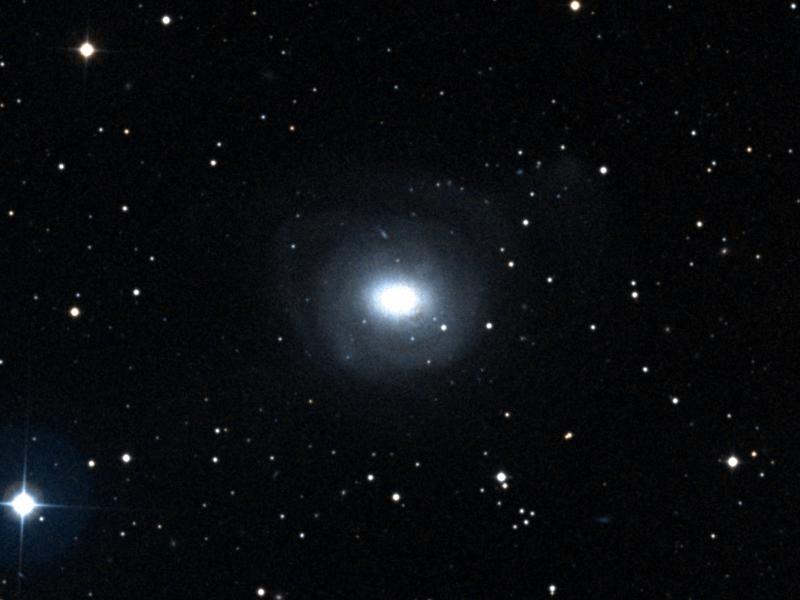
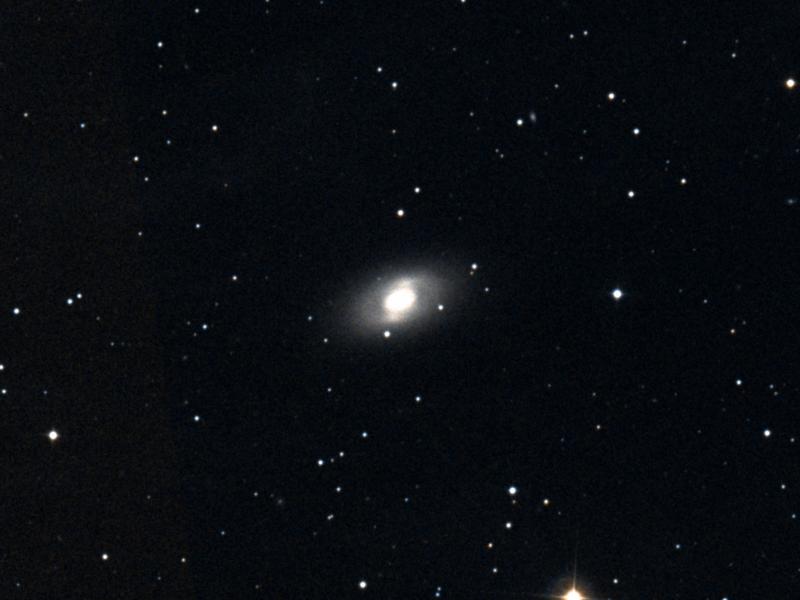
The M 81 group's quiet fourth: a featureless oval of even light, a disc stripped of arms by its big neighbours' tides — soft but not difficult at 150 mm, one field south-west of the famous pair.Le discret quatrième du groupe de M 81 : un ovale sans traits de lumière égale, un disque dépouillé de ses bras par les marées des grandes voisines — doux mais pas difficile à 150 mm, à un champ au sud-ouest de la paire célèbre.El discreto cuarto del grupo de M 81: un óvalo sin rasgos de luz pareja, un disco despojado de brazos por las mareas de sus grandes vecinas — suave pero no difícil a 150 mm, a un campo al suroeste de la pareja famosa.Das stille vierte Mitglied der M-81-Gruppe: ein merkmalloses Oval gleichmäßigen Lichts, eine von den Gezeiten der großen Nachbarn ihrer Arme beraubte Scheibe — weich, aber nicht schwierig bei 150 mm, ein Feld südwestlich des berühmten Paares.
large scope, dark skygrand diamètre, ciel noirgran abertura, cielo oscurogroße Öffnung, dunkler HimmelDSS2 — STScI/NASA · CDS
TypeTypeTipoTyp
galaxygalaxiegalaxiaGalaxie
ConstellationConstellationConstelaciónSternbild
Camelopardalis
MagnitudeMagnitudeMagnitudHelligkeit
10.4
SizeTailleTamañoGröße
3.93′ × 2.06′
Surface brightnessBrillance de surfaceBrillo superficialFlächenhelligkeit
21.3 mag/arcsec²
DistanceDistanceDistanciaEntfernung
about 65 million light-yearsenviron 65 millions d'années-lumièreunos 65 millones de años luzetwa 65 Millionen Lichtjahre
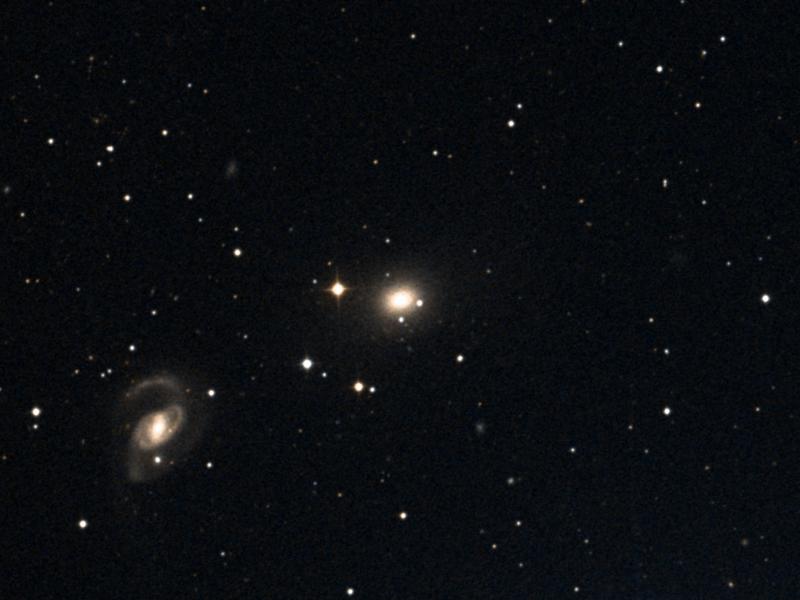
A bright lenticular anchoring dim Camelopardalis — an easy condensed glow at 150 mm with a Seyfert nucleus and, in deep images, shells from a recent merger. The best galaxy in a constellation famous for having nothing.Une lenticulaire brillante ancrant la discrète Girafe — une lueur condensée facile à 150 mm, au noyau de Seyfert et, sur les images profondes, aux coquilles d'une fusion récente. La meilleure galaxie d'une constellation célèbre pour n'avoir rien.Una lenticular brillante que ancla a la tenue Jirafa — un resplandor condensado fácil a 150 mm, con núcleo Seyfert y, en imágenes profundas, capas de una fusión reciente. La mejor galaxia de una constelación famosa por no tener nada.Eine helle Linsengalaxie als Anker der unscheinbaren Giraffe — ein leichtes, verdichtetes Glimmen bei 150 mm mit Seyfert-Kern und auf tiefen Aufnahmen Schalen einer jungen Verschmelzung. Die beste Galaxie eines Sternbilds, das dafür berühmt ist, nichts zu haben.
large scope, dark skygrand diamètre, ciel noirgran abertura, cielo oscurogroße Öffnung, dunkler HimmelDSS2 — STScI/NASA · CDS
TypeTypeTipoTyp
galaxygalaxiegalaxiaGalaxie
ConstellationConstellationConstelaciónSternbild
Ursa Major
MagnitudeMagnitudeMagnitudHelligkeit
10.5
SizeTailleTamañoGröße
3.61′ × 2.92′
Surface brightnessBrillance de surfaceBrillo superficialFlächenhelligkeit
21.7 mag/arcsec²
DistanceDistanceDistanciaEntfernung
about 70 million light-yearsenviron 70 millions d'années-lumièreunos 70 millones de años luzetwa 70 Millionen Lichtjahre
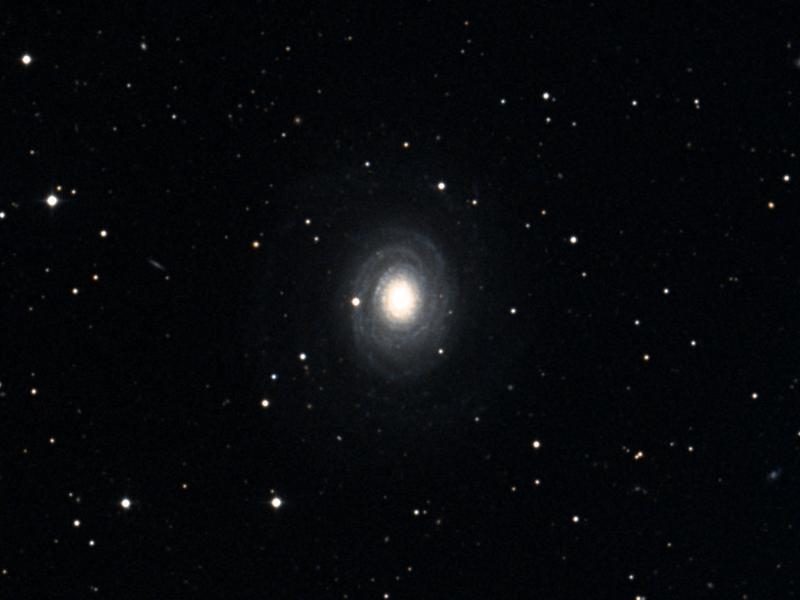
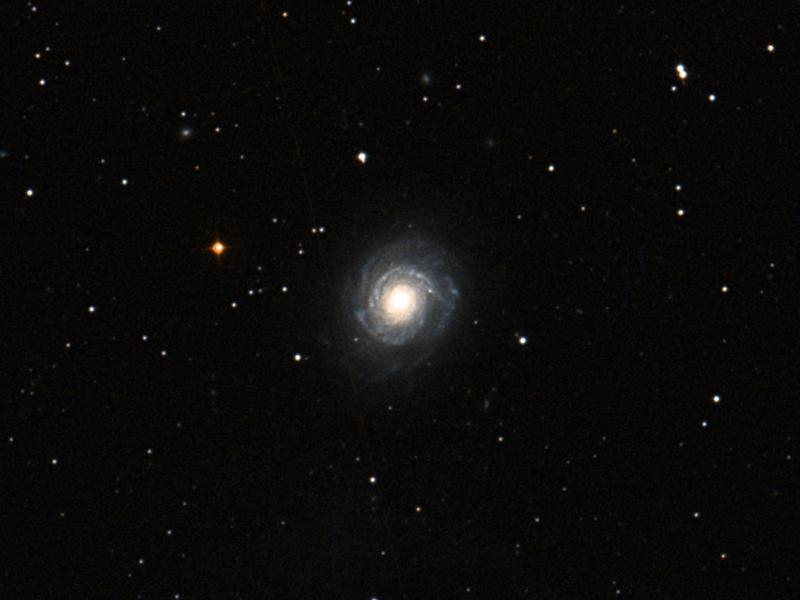
A tightly wound spiral in the Great Bear's far north — a small round glow with a bright core at 200 mm, circumpolar and available any clear night of the year.Une spirale serrée dans le grand nord de la Grande Ourse — une petite lueur ronde au cœur brillant à 200 mm, circumpolaire et disponible chaque nuit claire de l'année.Una espiral apretada en el extremo norte de la Osa Mayor — un pequeño resplandor redondo de núcleo brillante a 200 mm, circumpolar y disponible cualquier noche clara del año.Eine eng gewundene Spirale im hohen Norden des Großen Bären — ein kleines rundes Glimmen mit hellem Kern bei 200 mm, zirkumpolar und in jeder klaren Nacht des Jahres verfügbar.
large scope, dark skygrand diamètre, ciel noirgran abertura, cielo oscurogroße Öffnung, dunkler HimmelDSS2 — STScI/NASA · CDS
TypeTypeTipoTyp
galaxygalaxiegalaxiaGalaxie
ConstellationConstellationConstelaciónSternbild
Draco
MagnitudeMagnitudeMagnitudHelligkeit
10.7
SizeTailleTamañoGröße
2.93′ × 2.31′
Surface brightnessBrillance de surfaceBrillo superficialFlächenhelligkeit
21.4 mag/arcsec²
DistanceDistanceDistanciaEntfernung
about 105 million light-yearsenviron 105 millions d'années-lumièreunos 105 millones de años luzetwa 105 Millionen Lichtjahre
A merger-marked elliptical in Draco with a minor-axis dust lane — a small round glow at 250 mm; it hosted a strangely energetic supernova in 2005.Une elliptique marquée de fusion dans le Dragon, une bande de poussière sur le petit axe — une petite lueur ronde à 250 mm ; elle accueillit une supernova étrangement énergique en 2005.Una elíptica marcada por fusión en el Dragón con banda de polvo en el eje menor — un pequeño resplandor redondo a 250 mm; albergó una supernova extrañamente enérgica en 2005.Eine verschmelzungsgezeichnete Elliptische im Drachen mit Staubband auf der Nebenachse — ein kleines rundes Glimmen bei 250 mm; 2005 Schauplatz einer seltsam energischen Supernova.
large scope, dark skygrand diamètre, ciel noirgran abertura, cielo oscurogroße Öffnung, dunkler HimmelDSS2 — STScI/NASA · CDS
TypeTypeTipoTyp
galaxygalaxiegalaxiaGalaxie
ConstellationConstellationConstelaciónSternbild
Camelopardalis
MagnitudeMagnitudeMagnitudHelligkeit
10.7
SizeTailleTamañoGröße
5.01′ × 2.81′
Surface brightnessBrillance de surfaceBrillo superficialFlächenhelligkeit
22.2 mag/arcsec²
DistanceDistanceDistanciaEntfernung
about 100 million light-yearsenviron 100 millions d'années-lumièreunos 100 millones de años luzetwa 100 Millionen Lichtjahre
A serene barred spiral near the pole in Camelopardalis — a soft oval at 250 mm, circumpolar and elegant in photographs.Une spirale barrée sereine près du pôle dans la Girafe — un ovale doux à 250 mm, circumpolaire et élégante en photographie.Una espiral barrada serena cerca del polo en la Jirafa — un óvalo suave a 250 mm, circumpolar y elegante en fotografía.Eine ruhige Balkenspirale nahe dem Pol in der Giraffe — ein weiches Oval bei 250 mm, zirkumpolar und elegant auf Fotos.
Surface brightnessBrillance de surfaceBrillo superficialFlächenhelligkeit
20.0 mag/arcsec²
DistanceDistanceDistanciaEntfernung
about 3 500 light-yearsenviron 3 500 années-lumièreunos 3 500 años luzetwa 3 500 Lichtjahre
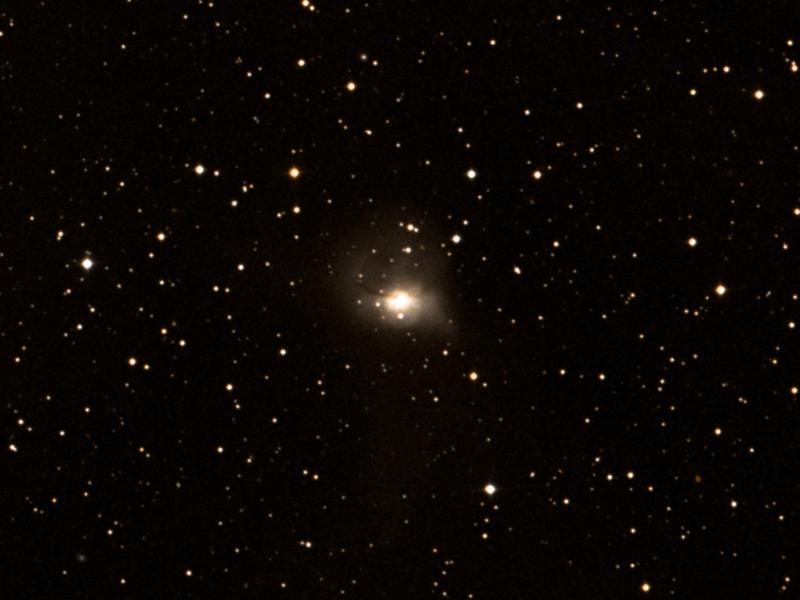
A small planetary in Cepheus with an unusually bright central star for its class — visible at any power, wrapped in a faint oval shell that 200 mm and high magnification turn into the bow-tie. One of the few planetaries where the star outshines its nebula.Une petite planétaire de Céphée à l'étoile centrale exceptionnellement brillante pour sa classe — visible à tout grossissement, enveloppée d'une coquille ovale pâle que 200 mm et un fort grossissement changent en nœud papillon. L'une des rares planétaires où l'étoile surpasse sa nébuleuse.Una pequeña planetaria de Cefeo con una estrella central inusualmente brillante para su clase — visible a cualquier aumento, envuelta en una tenue capa oval que 200 mm y muchos aumentos convierten en la pajarita. Una de las pocas planetarias donde la estrella supera a su nebulosa.Ein kleiner Planetarischer im Kepheus mit einem für seine Klasse ungewöhnlich hellen Zentralstern — bei jeder Vergrößerung sichtbar, in eine blasse ovale Hülle gewickelt, die 200 mm und hohe Vergrößerung zur Fliege machen. Einer der wenigen Planetarischen, deren Stern den Nebel überstrahlt.
large scope, dark skygrand diamètre, ciel noirgran abertura, cielo oscurogroße Öffnung, dunkler HimmelDSS2 — STScI/NASA · CDS
TypeTypeTipoTyp
galaxygalaxiegalaxiaGalaxie
ConstellationConstellationConstelaciónSternbild
Ursa Major
MagnitudeMagnitudeMagnitudHelligkeit
10.9
SizeTailleTamañoGröße
2.13′
Surface brightnessBrillance de surfaceBrillo superficialFlächenhelligkeit
21.2 mag/arcsec²
DistanceDistanceDistanciaEntfernung
about 130 million light-yearsenviron 130 millions d'années-lumièreunos 130 millones de años luzetwa 130 Millionen Lichtjahre
A round elliptical in the Bear's polar reaches — a condensed even glow at 250 mm, available every clear night of the year.Une elliptique ronde aux confins polaires de l'Ourse — une lueur condensée et égale à 250 mm, disponible chaque nuit claire de l'année.Una elíptica redonda en los confines polares de la Osa — un resplandor condensado y parejo a 250 mm, disponible cada noche clara del año.Eine runde Elliptische in den Polarbereichen des Bären — ein verdichtetes, gleichmäßiges Glimmen bei 250 mm, in jeder klaren Nacht des Jahres verfügbar.
large scope, dark skygrand diamètre, ciel noirgran abertura, cielo oscurogroße Öffnung, dunkler HimmelDSS2 — STScI/NASA · CDS
TypeTypeTipoTyp
galaxygalaxiegalaxiaGalaxie
ConstellationConstellationConstelaciónSternbild
Camelopardalis
MagnitudeMagnitudeMagnitudHelligkeit
10.7
SizeTailleTamañoGröße
5.31′ × 4.32′
Surface brightnessBrillance de surfaceBrillo superficialFlächenhelligkeit
22.7 mag/arcsec²
DistanceDistanceDistanciaEntfernung
about 60 million light-yearsenviron 60 millions d'années-lumièreunos 60 millones de años luzetwa 60 Millionen Lichtjahre
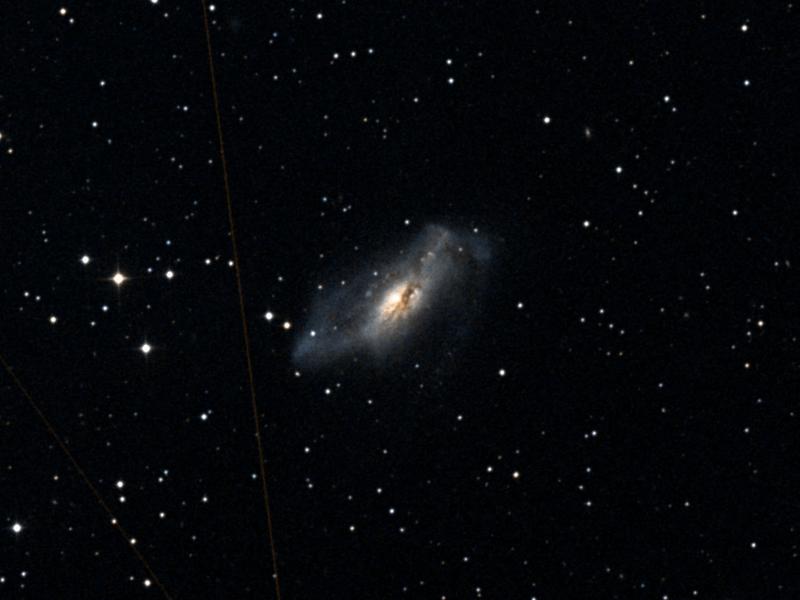
The Dusty Hand: a bent starburst spiral in Camelopardalis, its arm folded over its own core — a bright curved glow at 250 mm.La Main poussiéreuse : une spirale à flambée pliée dans la Girafe, un bras rabattu sur son propre cœur — une lueur courbe et brillante à 250 mm.La Mano Polvorienta: una espiral con brote doblada en la Jirafa, con un brazo plegado sobre su propio núcleo — un resplandor curvo y brillante a 250 mm.Die Staubige Hand: eine geknickte Starburst-Spirale in der Giraffe, ein Arm über den eigenen Kern gefaltet — ein helles gekrümmtes Glimmen bei 250 mm.
large scope, dark skygrand diamètre, ciel noirgran abertura, cielo oscurogroße Öffnung, dunkler HimmelDSS2 — STScI/NASA · CDS
TypeTypeTipoTyp
galaxygalaxiegalaxiaGalaxie
ConstellationConstellationConstelaciónSternbild
Cepheus
MagnitudeMagnitudeMagnitudHelligkeit
11.2
SizeTailleTamañoGröße
3.05′ × 2.34′
Surface brightnessBrillance de surfaceBrillo superficialFlächenhelligkeit
21.9 mag/arcsec²
DistanceDistanceDistanciaEntfernung
about 100 million light-yearsenviron 100 millions d'années-lumièreunos 100 millones de años luzetwa 100 Millionen Lichtjahre
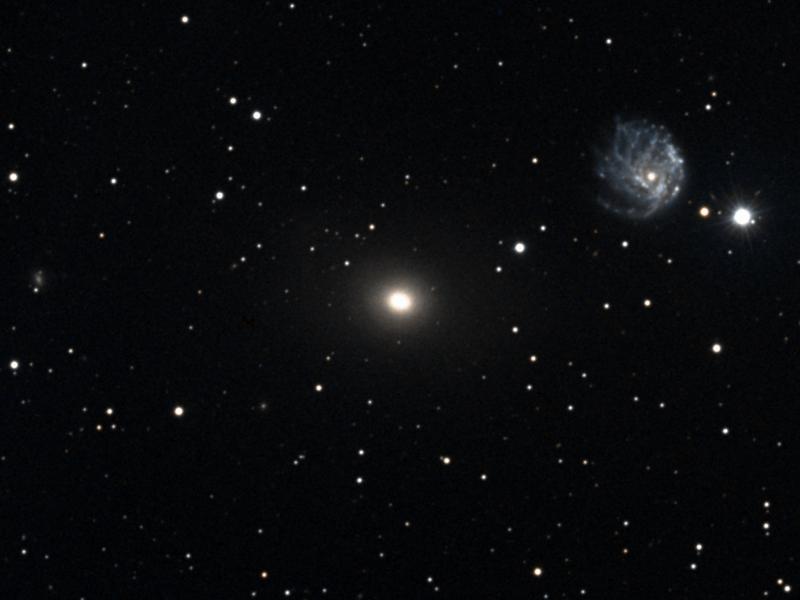
The elliptical half of the Cepheus pair with NGC 2276 — the brighter, easier glow of the two at 250 mm, near the pole all year.La moitié elliptique de la paire de Céphée avec NGC 2276 — la lueur la plus brillante et facile des deux à 250 mm, près du pôle toute l'année.La mitad elíptica de la pareja de Cefeo con NGC 2276 — el resplandor más brillante y fácil de los dos a 250 mm, cerca del polo todo el año.Die elliptische Hälfte des Kepheus-Paares mit NGC 2276 — das hellere, leichtere Glimmen der beiden bei 250 mm, das ganze Jahr nahe dem Pol.
large scope, dark skygrand diamètre, ciel noirgran abertura, cielo oscurogroße Öffnung, dunkler HimmelDSS2 — STScI/NASA · CDS
TypeTypeTipoTyp
galaxygalaxiegalaxiaGalaxie
ConstellationConstellationConstelaciónSternbild
Ursa Major
MagnitudeMagnitudeMagnitudHelligkeit
11.2
SizeTailleTamañoGröße
3.24′ × 1.81′
Surface brightnessBrillance de surfaceBrillo superficialFlächenhelligkeit
21.8 mag/arcsec²
DistanceDistanceDistanciaEntfernung
about 24 million light-yearsenviron 24 millions d'années-lumièreunos 24 millones de años luzetwa 24 Millionen Lichtjahre
A barred lenticular on the M 81 group's outskirts — a bright lens with a stellar core at 200 mm, its tidy rings of dust a keepsake for the imagers.Une lenticulaire barrée aux abords du groupe de M 81 — une lentille brillante au cœur stellaire à 200 mm, ses anneaux nets de poussière étant un souvenir pour les imageurs.Una lenticular barrada en las afueras del grupo de M 81 — una lente brillante de núcleo estelar a 200 mm, con sus pulcros anillos de polvo como recuerdo para los astrofotógrafos.Eine Balken-Linsengalaxie am Rand der M-81-Gruppe — eine helle Linse mit Sternkern bei 200 mm, die ordentlichen Staubringe ein Andenken für die Fotografen.
large scope, dark skygrand diamètre, ciel noirgran abertura, cielo oscurogroße Öffnung, dunkler HimmelDSS2 — STScI/NASA · CDS
TypeTypeTipoTyp
galaxygalaxiegalaxiaGalaxie
ConstellationConstellationConstelaciónSternbild
Draco
MagnitudeMagnitudeMagnitudHelligkeit
11.4
SizeTailleTamañoGröße
1.93′ × 1.62′
Surface brightnessBrillance de surfaceBrillo superficialFlächenhelligkeit
21.3 mag/arcsec²
DistanceDistanceDistanciaEntfernung
about 100 million light-yearsenviron 100 millions d'années-lumièreunos 100 millones de años luzetwa 100 Millionen Lichtjahre
A compact elliptical in Draco's polar country, neighbour of the photogenic Splinter — a condensed 250 mm dot available all year.Une elliptique compacte au pays polaire du Dragon, voisine de la photogénique Écharde — un point condensé à 250 mm disponible toute l'année.Una elíptica compacta en el país polar del Dragón, vecina de la fotogénica Astilla — un punto condensado a 250 mm disponible todo el año.Eine kompakte Elliptische im Polarland des Drachen, Nachbarin des fotogenen Splitters — ein verdichteter 250-mm-Punkt, das ganze Jahr verfügbar.
large scope, dark skygrand diamètre, ciel noirgran abertura, cielo oscurogroße Öffnung, dunkler HimmelDSS2 — STScI/NASA · CDS
TypeTypeTipoTyp
galaxygalaxiegalaxiaGalaxie
ConstellationConstellationConstelaciónSternbild
Camelopardalis
MagnitudeMagnitudeMagnitudHelligkeit
11.5
SizeTailleTamañoGröße
2.34′ × 1.85′
Surface brightnessBrillance de surfaceBrillo superficialFlächenhelligkeit
21.7 mag/arcsec²
DistanceDistanceDistanciaEntfernung
about 45 million light-yearsenviron 45 millions d'années-lumièreunos 45 millones de años luzetwa 45 Millionen Lichtjahre
A face-on spiral hidden behind Camelopardalis's dust — a soft round 250 mm glow, dimmed by our own galaxy's veil.Une spirale de face cachée derrière la poussière de la Girafe — une lueur ronde et douce à 250 mm, éteinte par le voile de notre propre galaxie.Una espiral de frente escondida tras el polvo de la Jirafa — un resplandor redondo y suave a 250 mm, apagado por el velo de nuestra propia galaxia.Eine Spirale in Draufsicht, verborgen hinter dem Staub der Giraffe — ein weiches rundes 250-mm-Glimmen, gedämpft vom Schleier unserer eigenen Galaxis.
large scope, dark skygrand diamètre, ciel noirgran abertura, cielo oscurogroße Öffnung, dunkler HimmelDSS2 — STScI/NASA · CDS
TypeTypeTipoTyp
galaxygalaxiegalaxiaGalaxie
ConstellationConstellationConstelaciónSternbild
Cepheus
MagnitudeMagnitudeMagnitudHelligkeit
11.5
SizeTailleTamañoGröße
2.23′ × 1.73′
Surface brightnessBrillance de surfaceBrillo superficialFlächenhelligkeit
21.6 mag/arcsec²
DistanceDistanceDistanciaEntfernung
about 110 million light-yearsenviron 110 millions d'années-lumièreunos 110 millones de años luzetwa 110 Millionen Lichtjahre
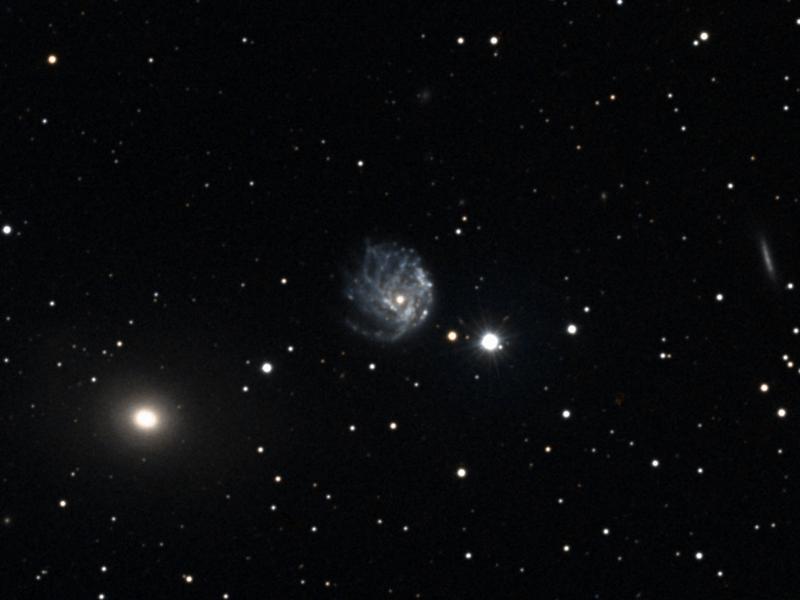
A one-sided spiral in Cepheus, its arms combed by the elliptical NGC 2300 beside it — a faint round glow at 250 mm, the lopsidedness photographic. Circumpolar.Une spirale dissymétrique de Céphée, ses bras peignés par l'elliptique NGC 2300 voisine — une lueur ronde et pâle à 250 mm, la dissymétrie photographique. Circumpolaire.Una espiral asimétrica de Cefeo, con sus brazos peinados por la elíptica NGC 2300 de al lado — un resplandor redondo y pálido a 250 mm, con la asimetría fotográfica. Circumpolar.Eine einseitige Spirale im Kepheus, die Arme von der Elliptischen NGC 2300 daneben gekämmt — ein blasses rundes Glimmen bei 250 mm, die Schiefe fotografisch. Zirkumpolar.
large scope, dark skygrand diamètre, ciel noirgran abertura, cielo oscurogroße Öffnung, dunkler HimmelDSS2 — STScI/NASA · CDS
TypeTypeTipoTyp
galaxygalaxiegalaxiaGalaxie
ConstellationConstellationConstelaciónSternbild
Camelopardalis
MagnitudeMagnitudeMagnitudHelligkeit
11.5
SizeTailleTamañoGröße
4.2′ × 1.41′
Surface brightnessBrillance de surfaceBrillo superficialFlächenhelligkeit
22.0 mag/arcsec²
DistanceDistanceDistanciaEntfernung
about 65 million light-yearsenviron 65 millions d'années-lumièreunos 65 millones de años luzetwa 65 Millionen Lichtjahre
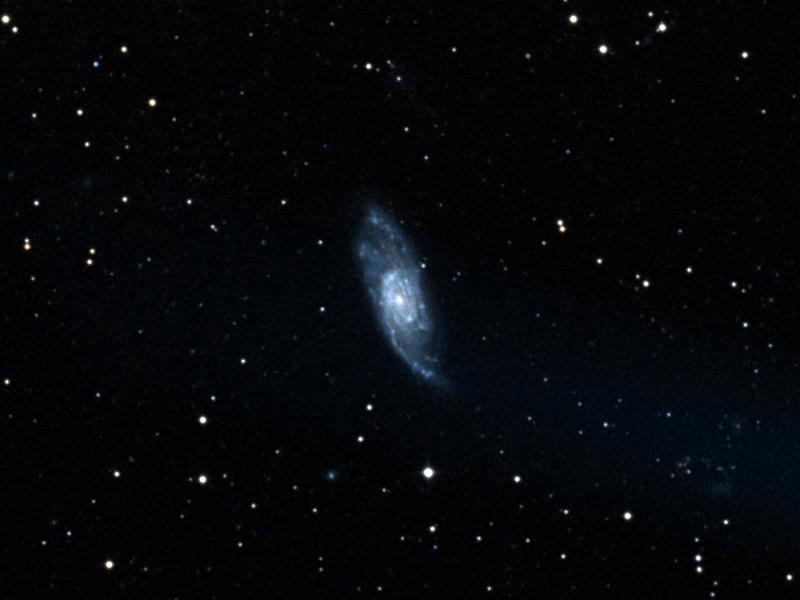
A tilted spiral in Camelopardalis's far north — an even, elongated 250 mm glow that never sets for northern observers.Une spirale inclinée dans le grand nord de la Girafe — une lueur allongée et égale à 250 mm, qui ne se couche jamais pour les observateurs boréaux.Una espiral inclinada en el extremo norte de la Jirafa — un resplandor alargado y parejo a 250 mm que nunca se pone para los observadores boreales.Eine geneigte Spirale im hohen Norden der Giraffe — ein gleichmäßiges, gestrecktes 250-mm-Glimmen, das für nördliche Beobachter nie untergeht.
large scope, dark skygrand diamètre, ciel noirgran abertura, cielo oscurogroße Öffnung, dunkler HimmelDSS2 — STScI/NASA · CDS
TypeTypeTipoTyp
galaxygalaxiegalaxiaGalaxie
ConstellationConstellationConstelaciónSternbild
Draco
MagnitudeMagnitudeMagnitudHelligkeit
11.9
SizeTailleTamañoGröße
4.11′ × 3.55′
Surface brightnessBrillance de surfaceBrillo superficialFlächenhelligkeit
23.5 mag/arcsec²
DistanceDistanceDistanciaEntfernung
about 130 million light-yearsenviron 130 millions d'années-lumièreunos 130 millones de años luzetwa 130 Millionen Lichtjahre
A face-on Seyfert spiral in Draco's far north, circumpolar for most northern observers — a round condensed glow at 250 mm available every month of the year.Une spirale de Seyfert de face dans le grand nord du Dragon, circumpolaire pour la plupart des observateurs boréaux — une lueur ronde et condensée à 250 mm, disponible chaque mois de l'année.Una espiral Seyfert de frente en el extremo norte del Dragón, circumpolar para la mayoría de los observadores boreales — un resplandor redondo y condensado a 250 mm, disponible cada mes del año.Eine Seyfert-Spirale in Draufsicht im hohen Norden des Drachen, zirkumpolar für die meisten nördlichen Beobachter — ein rundes, verdichtetes Glimmen bei 250 mm, in jedem Monat des Jahres verfügbar.
Both stars bright enough for a small telescope, wide enough to split.Deux composantes assez brillantes pour un petit télescope, assez écartées pour être séparées.Ambas componentes lo bastante brillantes para un telescopio pequeño y separables.Beide Komponenten hell genug für ein kleines Teleskop und weit genug zum Trennen.
Sep.Sép.Sep.Abstand
PAAPAPPW
MagsMagsMagsHelligkeiten
Huagai
3″
231°
4.7 / 6.9
HD 112028
21.8″
324°
5.3 / 5.7
41 Dra
18.6″
232°
5.7 / 6.0
HD 211300
28.8″
346°
6.2 / 7.9
HD 12927
55.7″
277°
6.5 / 7.2
HD 139777
31.6″
79°
6.6 / 7.3
HD 88849
16.6″
167°
6.7 / 7.3
HD 176795
5.7″
217°
6.7 / 7.3
HD 82685
4.9″
126°
7.0 / 7.2
HD 209942
13.7″
65°
7.0 / 7.5
HD 106799
14.4″
218°
7.2 / 7.8
Also on this chartAussi sur cette carteTambién en esta cartaEbenfalls auf dieser Karte
4 · Everything else the chart plots, easiest first where a rank exists.Tout le reste de la carte, du plus facile au plus difficile quand un classement existe.Todo lo demás que traza la carta, de lo más fácil a lo más difícil cuando hay clasificación.Alles Übrige auf der Karte, wo möglich nach Schwierigkeit geordnet.
TypeTypeTipoTyp
MagnitudeMagnitudeMagnitudHelligkeit
SizeTailleTamañoGröße
NGC 6217
galaxygalaxiegalaxiaGalaxie
12.8
2.24′ × 1.63′
B 175
dark nebulanébuleuse obscurenebulosa oscuraDunkelnebel
60′
LDN 1247
dark nebulanébuleuse obscurenebulosa oscuraDunkelnebel
27.6672′
LDN 1251
dark nebulanébuleuse obscurenebulosa oscuraDunkelnebel