66 objects on this chartobjets sur cette carteobjetos en esta cartaObjekte auf dieser Karte
Easiest firstLes plus faciles d'abordLos más fáciles primeroDie einfachsten zuerst
What this chart shows, in the order you should try: start where success is certain, work toward the hard ones.Ce que montre cette carte, dans l'ordre où l'essayer : commencez là où le succès est certain, avancez vers le difficile.Lo que muestra esta carta, en el orden en que conviene intentarlo: empiece donde el éxito es seguro y avance hacia lo difícil.Was diese Karte zeigt, in der Reihenfolge, in der man es versuchen sollte: Beginnen Sie, wo der Erfolg sicher ist, und arbeiten Sie sich vor.
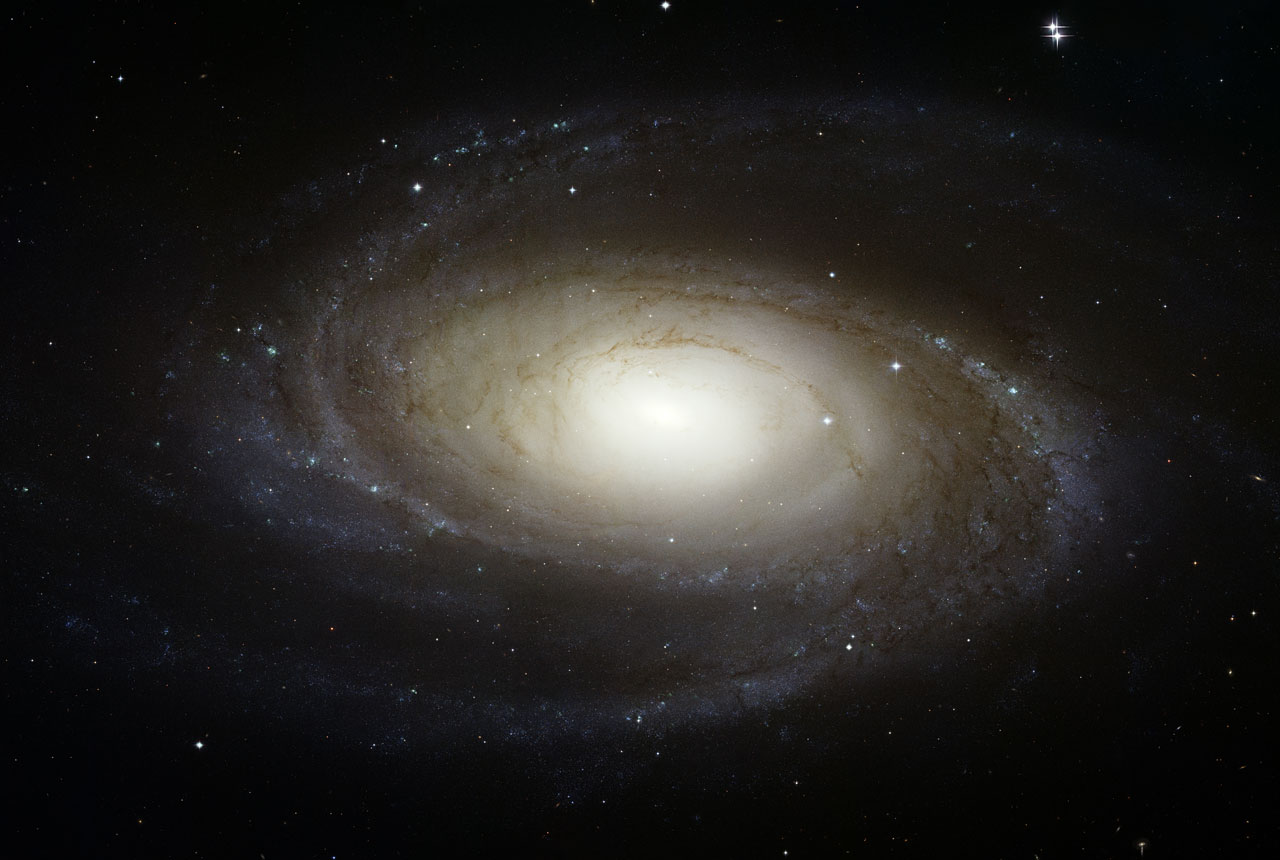
M 81
small telescopepetit télescopetelescopio pequeñokleines Teleskop
Bode's Galaxy
NASA, ESA and the Hubble Heritage Team (STScI/AURA) · CC BY 4.0
TypeTypeTipoTyp
galaxygalaxiegalaxiaGalaxie
ConstellationConstellationConstelaciónSternbild
Ursa Major
MagnitudeMagnitudeMagnitudHelligkeit
6.9
SizeTailleTamañoGröße
21.63′ × 11.25′
Surface brightnessBrillance de surfaceBrillo superficialFlächenhelligkeit
21.5 mag/arcsec²
DistanceDistanceDistanciaEntfernung
about 11.8 million light-yearsenviron 11.8 millions d'années-lumièreunos 11.8 millones de años luzetwa 11.8 Millionen Lichtjahre
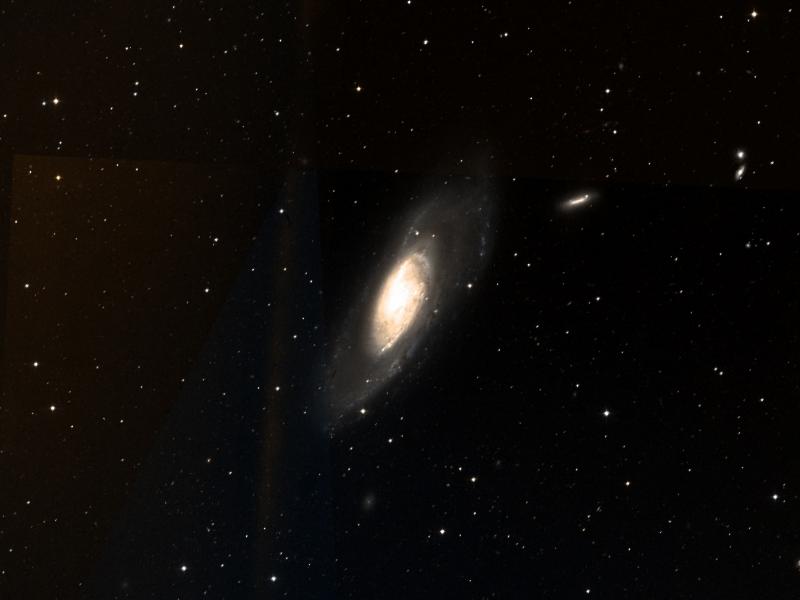
The brightest spiral of the northern sky after Andromeda, and with M 82 a marvel: two utterly different galaxies in one field. M 81 is a serene bright oval, visible in binoculars off the Big Dipper's bowl; 250 mm under dark skies suggest the arms. Keep both in view and compare.La spirale la plus brillante du ciel boréal après Andromède, et avec M 82 une merveille : deux galaxies radicalement différentes dans le même champ. M 81 est un ovale brillant et serein, visible aux jumelles près du bol de la Grande Casserole ; 250 mm sous un ciel noir suggèrent les bras. Gardez les deux en vue, et comparez.La espiral más brillante del cielo boreal después de Andrómeda, y con M 82 una maravilla: dos galaxias totalmente distintas en un mismo campo. M 81 es un óvalo brillante y sereno, visible en prismáticos junto al cazo del Carro; 250 mm bajo cielo oscuro sugieren los brazos. Mantenga ambas a la vista y compare.Die hellste Spirale des Nordhimmels nach Andromeda, und mit M 82 ein Wunder: zwei völlig verschiedene Galaxien in einem Feld. M 81 ist ein ruhiges, helles Oval, im Fernglas nahe der Schüssel des Großen Wagens sichtbar; 250 mm unter dunklem Himmel deuten die Arme an. Beide im Blick behalten und vergleichen.
small telescopepetit télescopetelescopio pequeñokleines Teleskop
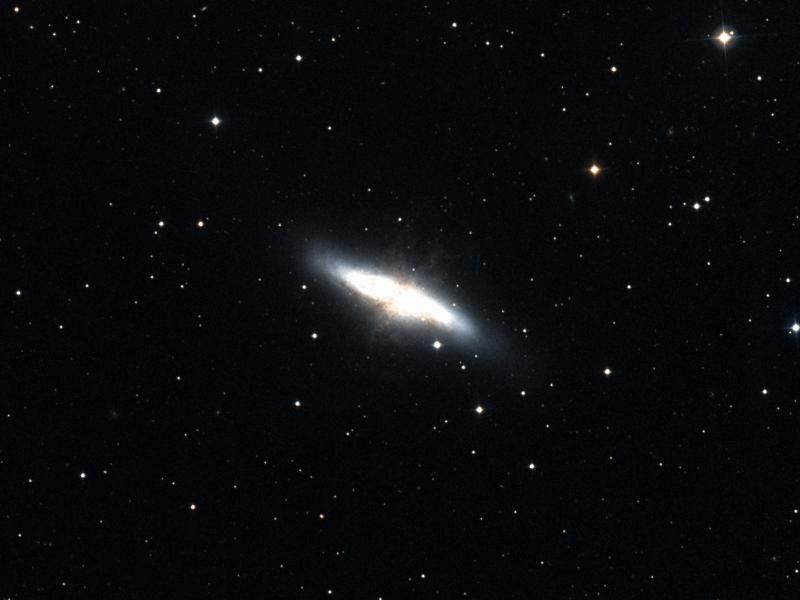
Cigar Galaxy
DSS2 — STScI/NASA · CDS
TypeTypeTipoTyp
galaxygalaxiegalaxiaGalaxie
ConstellationConstellationConstelaciónSternbild
Ursa Major
MagnitudeMagnitudeMagnitudHelligkeit
8.3
SizeTailleTamañoGröße
10.99′ × 5.11′
Surface brightnessBrillance de surfaceBrillo superficialFlächenhelligkeit
21.3 mag/arcsec²
DistanceDistanceDistanciaEntfernung
about 12 million light-yearsenviron 12 millions d'années-lumièreunos 12 millones de años luzetwa 12 Millionen Lichtjahre
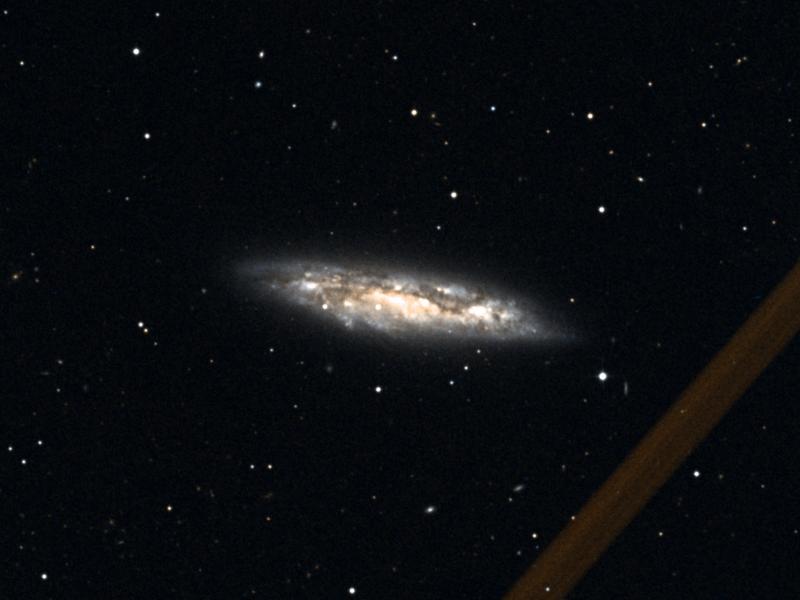
The Cigar: a thin silver splinter beside serene M 81, and the nearest starburst galaxy — a close pass of its neighbour lit a firestorm of star formation. 200 mm show the splinter broken by dark notches; larger apertures cut it into ragged thirds. The pair is the finest galaxy duo in the northern sky.Le Cigare : une fine écharde d'argent près du serein M 81, et la galaxie à flambée d'étoiles la plus proche — un passage rapproché de sa voisine y a allumé une tempête de formation stellaire. 200 mm montrent l'écharde brisée d'encoches sombres ; les grands diamètres la coupent en tiers déchiquetés. La paire est le plus beau duo de galaxies du ciel boréal.El Puro: una esquirla fina y plateada junto al sereno M 81, y la galaxia con brote estelar más cercana — un paso cercano de su vecina encendió una tormenta de formación de estrellas. 200 mm muestran la esquirla rota por muescas oscuras; las aberturas mayores la parten en tercios desgarrados. La pareja es el mejor dúo de galaxias del cielo boreal.Die Zigarre: ein dünner Silbersplitter neben der ruhigen M 81, und die nächste Starburst-Galaxie — eine nahe Passage der Nachbarin entfachte einen Feuersturm der Sternentstehung. 200 mm zeigen den Splitter von dunklen Kerben zerbrochen; größere Öffnungen schneiden ihn in zerfetzte Drittel. Das Paar ist das schönste Galaxien-Duo des Nordhimmels.
small telescopepetit télescopetelescopio pequeñokleines TeleskopDSS2 — STScI/NASA · CDS
TypeTypeTipoTyp
objectobjetobjetoObjekt
ConstellationConstellationConstelaciónSternbild
Ursa Major
MagnitudeMagnitudeMagnitudHelligkeit
8.0
Messier's oddest entry: not a cluster or nebula but a plain double star, logged while he searched for a nebula reported here that does not exist. Two 9th-magnitude suns 53 arcseconds apart, an easy split — observe it for the story, and to say you have.L'entrée la plus étrange de Messier : ni amas ni nébuleuse, mais une simple étoile double, notée alors qu'il cherchait ici une nébuleuse signalée qui n'existe pas. Deux soleils de 9e magnitude séparés de 53 secondes d'arc, faciles à dédoubler — observez-la pour l'histoire, et pour dire que c'est fait.La entrada más rara de Messier: ni cúmulo ni nebulosa, sino una simple estrella doble, anotada mientras buscaba aquí una nebulosa reportada que no existe. Dos soles de 9ª magnitud a 53 segundos de arco, fáciles de separar — obsérvela por la historia, y para decir que ya está.Messiers seltsamster Eintrag: kein Haufen, kein Nebel, sondern ein schlichter Doppelstern, notiert bei der Suche nach einem hier gemeldeten Nebel, den es nicht gibt. Zwei Sonnen 9. Größe, 53 Bogensekunden getrennt, leicht zu trennen — der Geschichte wegen beobachten, und um es gewesen zu sein.
small telescopepetit télescopetelescopio pequeñokleines TeleskopDSS2 — STScI/NASA · CDS
TypeTypeTipoTyp
galaxygalaxiegalaxiaGalaxie
ConstellationConstellationConstelaciónSternbild
Ursa Major
MagnitudeMagnitudeMagnitudHelligkeit
7.9
SizeTailleTamañoGröße
23.99′ × 23.07′
Surface brightnessBrillance de surfaceBrillo superficialFlächenhelligkeit
23.4 mag/arcsec²
DistanceDistanceDistanciaEntfernung
about 21 million light-yearsenviron 21 millions d'années-lumièreunos 21 millones de años luzetwa 21 Millionen Lichtjahre
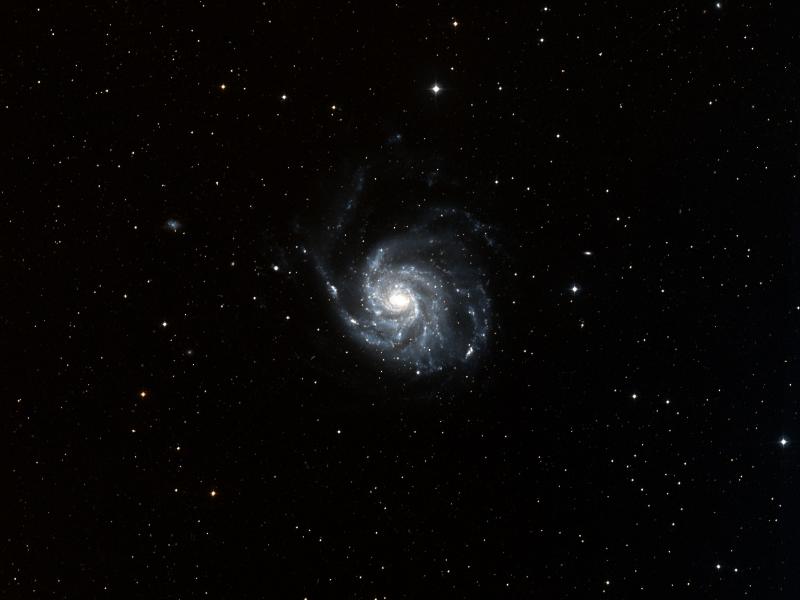
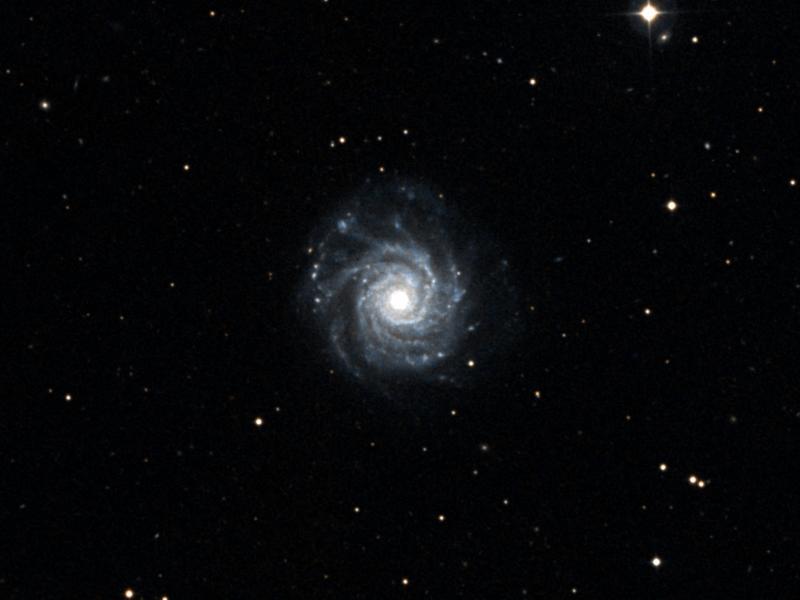
The Pinwheel: a spiral wider than the full moon above the Big Dipper's handle, and a byword for low surface brightness. Binoculars under a dark sky show it more surely than a telescope under a poor one. From 250 mm the arms knot into bright patches — several carry their own NGC numbers.Le Moulinet : une spirale plus large que la pleine lune au-dessus du manche de la Grande Casserole, et un cas d'école de faible brillance de surface. Des jumelles sous un ciel noir la montrent plus sûrement qu'un télescope sous un ciel médiocre. À partir de 250 mm, les bras se nouent en taches brillantes — plusieurs portent leur propre numéro NGC.El Molinete: una espiral más ancha que la luna llena sobre el mango del Carro, y un caso de manual de bajo brillo superficial. Unos prismáticos bajo cielo oscuro la muestran con más seguridad que un telescopio bajo cielo mediocre. Desde 250 mm los brazos se anudan en manchas brillantes — varias llevan su propio número NGC.Das Feuerrad: eine Spirale breiter als der Vollmond über der Deichsel des Großen Wagens, und ein Musterfall niedriger Flächenhelligkeit. Ein Fernglas unter dunklem Himmel zeigt sie sicherer als ein Teleskop unter mäßigem. Ab 250 mm verknoten sich die Arme zu hellen Flecken — mehrere tragen eigene NGC-Nummern.
small telescopepetit télescopetelescopio pequeñokleines Teleskop
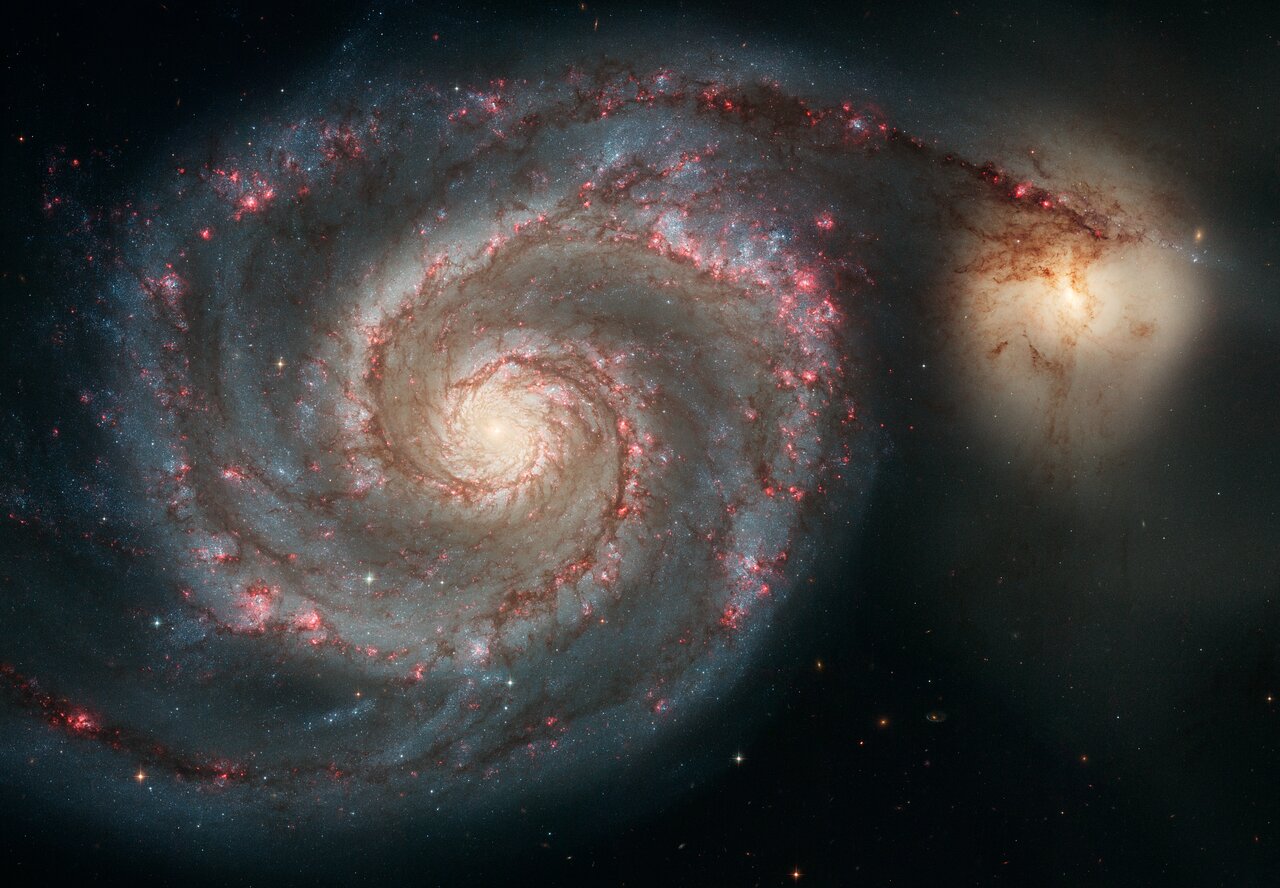
Whirlpool Galaxy
NASA, ESA, S. Beckwith (STScI) and the Hubble Heritage Team (STScI/AURA) · CC BY 4.0
TypeTypeTipoTyp
galaxygalaxiegalaxiaGalaxie
ConstellationConstellationConstelaciónSternbild
Canes Venatici
MagnitudeMagnitudeMagnitudHelligkeit
8.4
SizeTailleTamañoGröße
13.71′ × 11.67′
Surface brightnessBrillance de surfaceBrillo superficialFlächenhelligkeit
22.5 mag/arcsec²
DistanceDistanceDistanciaEntfernung
about 28 million light-yearsenviron 28 millions d'années-lumièreunos 28 millones de años luzetwa 28 Millionen Lichtjahre
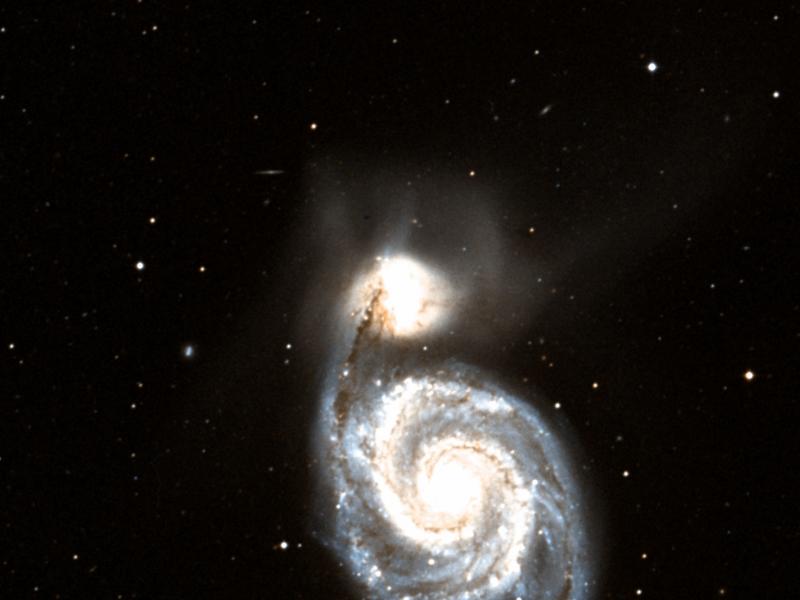
The galaxy where spiral structure was first seen, by Lord Rosse's giant reflector in 1845 — and the easiest place for you to repeat the feat. A 100 mm telescope shows two touching glows; from 200 mm under a dark sky the spiral coils emerge, wrapped toward the smaller companion. Find it off the Big Dipper's last handle star.La galaxie où la structure spirale fut vue pour la première fois, au télescope géant de Lord Rosse en 1845 — et l'endroit le plus facile pour répéter l'exploit. Un 100 mm montre deux lueurs qui se touchent ; à partir de 200 mm sous un ciel noir, les spires émergent, enroulées vers la petite compagne. Cherchez-la près de la dernière étoile du manche de la Grande Casserole.La galaxia donde la estructura espiral se vio por primera vez, con el telescopio gigante de Lord Rosse en 1845 — y el lugar más fácil para repetir la hazaña. Un 100 mm muestra dos resplandores que se tocan; desde 200 mm bajo cielo oscuro emergen las espiras, enrolladas hacia la pequeña compañera. Búsquela junto a la última estrella del mango del Carro.Die Galaxie, in der 1845 mit Lord Rosses Riesenteleskop erstmals Spiralstruktur gesehen wurde — und der leichteste Ort, es ihm nachzutun. Ein 100-mm-Teleskop zeigt zwei sich berührende Lichter; ab 200 mm unter dunklem Himmel treten die Windungen hervor, zur kleineren Begleiterin hin gewickelt. Beim letzten Deichselstern des Großen Wagens zu finden.
Surface brightnessBrillance de surfaceBrillo superficialFlächenhelligkeit
21.3 mag/arcsec²
DistanceDistanceDistanciaEntfernung
about 2 000 light-yearsenviron 2 000 années-lumièreunos 2 000 años luzetwa 2 000 Lichtjahre
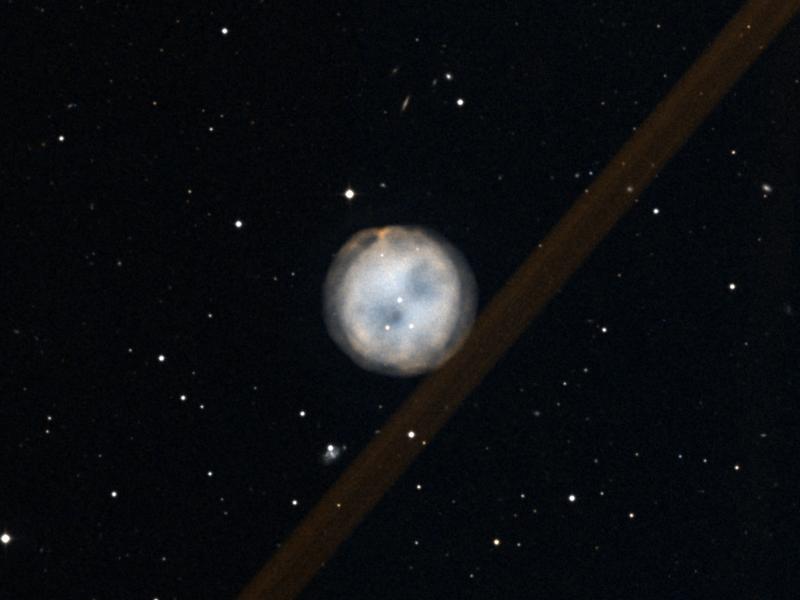
The Owl: a big, round, pale planetary under the Big Dipper's bowl, and a lesson in surface brightness — bright in total, dim per square arcsecond. An O III filter makes it easy; 250 mm on a dark night show the two shadowy eyes. M 108 floats in the same low-power field.Le Hibou : une planétaire grande, ronde et pâle sous le bol de la Grande Casserole, et une leçon de brillance de surface — brillante au total, faible par seconde d'arc carrée. Un filtre O III la rend facile ; 250 mm par nuit noire montrent les deux yeux d'ombre. M 108 flotte dans le même champ à faible grossissement.El Búho: una planetaria grande, redonda y pálida bajo el cazo del Carro, y una lección de brillo superficial — brillante en total, tenue por segundo de arco cuadrado. Un filtro O III la vuelve fácil; 250 mm en noche oscura muestran los dos ojos de sombra. M 108 flota en el mismo campo de pocos aumentos.Die Eule: ein großer, runder, blasser Planetarischer unter der Schüssel des Großen Wagens, und eine Lektion in Flächenhelligkeit — hell in Summe, matt pro Quadratbogensekunde. Ein O-III-Filter macht sie leicht; 250 mm in dunkler Nacht zeigen die zwei Schattenaugen. M 108 schwebt im selben Weitwinkelfeld.
large scope, dark skygrand diamètre, ciel noirgran abertura, cielo oscurogroße Öffnung, dunkler HimmelDSS2 — STScI/NASA · CDS
TypeTypeTipoTyp
galaxygalaxiegalaxiaGalaxie
ConstellationConstellationConstelaciónSternbild
Canes Venatici
MagnitudeMagnitudeMagnitudHelligkeit
9.6
SizeTailleTamañoGröße
5.5′ × 4.36′
Surface brightnessBrillance de surfaceBrillo superficialFlächenhelligkeit
21.7 mag/arcsec²
DistanceDistanceDistanciaEntfernung
about 28 million light-yearsenviron 28 millions d'années-lumièreunos 28 millones de años luzetwa 28 Millionen Lichtjahre
The Whirlpool's tormentor: the small companion whose passage wound M 51's arms tight and lit its star formation. Easily seen touching the big spiral; 250 mm show the dust bridge's dark notch between them.Le bourreau du Tourbillon : la petite compagne dont le passage a tendu les bras de M 51 et allumé sa formation d'étoiles. Facile à voir touchant la grande spirale ; 250 mm montrent l'encoche sombre du pont de poussière entre les deux.El verdugo del Remolino: la pequeña compañera cuyo paso tensó los brazos de M 51 y encendió su formación estelar. Fácil de ver tocando la gran espiral; 250 mm muestran la muesca oscura del puente de polvo entre ambas.Der Peiniger des Strudels: die kleine Begleiterin, deren Vorbeigang M 51s Arme spannte und ihre Sternentstehung entzündete. Leicht zu sehen, die große Spirale berührend; 250 mm zeigen die dunkle Kerbe der Staubbrücke dazwischen.
Surface brightnessBrillance de surfaceBrillo superficialFlächenhelligkeit
17.1 mag/arcsec²
DistanceDistanceDistanciaEntfernung
about 9 000 light-yearsenviron 9 000 années-lumièreunos 9 000 años luzetwa 9 000 Lichtjahre
The Lemon Slice: a small, perfectly round planetary near the pole in Camelopardalis — one of the most symmetrical objects known, a soft disc with a bright core at 250×, circumpolar all year.La Tranche de citron : une petite planétaire parfaitement ronde près du pôle dans la Girafe — l'un des objets les plus symétriques connus, un disque doux au cœur brillant à 250×, circumpolaire toute l'année.La Rodaja de Limón: una pequeña planetaria perfectamente redonda cerca del polo en la Jirafa — uno de los objetos más simétricos conocidos, un disco suave de núcleo brillante a 250×, circumpolar todo el año.Die Zitronenscheibe: ein kleiner, vollkommen runder Planetarischer nahe dem Pol in der Giraffe — eines der symmetrischsten bekannten Objekte, eine weiche Scheibe mit hellem Kern bei 250×, das ganze Jahr zirkumpolar.
large scope, dark skygrand diamètre, ciel noirgran abertura, cielo oscurogroße Öffnung, dunkler HimmelDSS2 — STScI/NASA · CDS
TypeTypeTipoTyp
galaxygalaxiegalaxiaGalaxie
ConstellationConstellationConstelaciónSternbild
Draco
MagnitudeMagnitudeMagnitudHelligkeit
9.7
SizeTailleTamañoGröße
5.87′ × 4.58′
Surface brightnessBrillance de surfaceBrillo superficialFlächenhelligkeit
21.9 mag/arcsec²
DistanceDistanceDistanciaEntfernung
about 75 million light-yearsenviron 75 millions d'années-lumièreunos 75 millones de años luzetwa 75 Millionen Lichtjahre
The brightest elliptical of Draco — an easy condensed oval at 200 mm, circumpolar, with a small companion in the field.La plus brillante elliptique du Dragon — un ovale condensé facile à 200 mm, circumpolaire, une petite compagne dans le champ.La elíptica más brillante del Dragón — un óvalo condensado fácil a 200 mm, circumpolar, con una pequeña compañera en el campo.Die hellste Elliptische des Drachen — ein leichtes verdichtetes Oval bei 200 mm, zirkumpolar, mit kleiner Begleiterin im Feld.
large scope, dark skygrand diamètre, ciel noirgran abertura, cielo oscurogroße Öffnung, dunkler HimmelDSS2 — STScI/NASA · CDS
TypeTypeTipoTyp
galaxygalaxiegalaxiaGalaxie
ConstellationConstellationConstelaciónSternbild
Canes Venatici
MagnitudeMagnitudeMagnitudHelligkeit
9.3
SizeTailleTamañoGröße
16.98′ × 7.24′
Surface brightnessBrillance de surfaceBrillo superficialFlächenhelligkeit
23.1 mag/arcsec²
DistanceDistanceDistanciaEntfernung
about 24 million light-yearsenviron 24 millions d'années-lumièreunos 24 millones de años luzetwa 24 Millionen Lichtjahre
A big, bright, tilted spiral between the Big Dipper and Canes Venatici, kin to M 31 in the eyepiece: a long oval with a condensed core, easy at 100 mm. Its maser disc gave one of the cleanest distance measurements in astronomy — this galaxy is a measuring rod.Une grande spirale brillante et inclinée entre la Grande Casserole et les Chiens de chasse, parente de M 31 à l'oculaire : un long ovale au cœur condensé, facile à 100 mm. Son disque à masers a donné l'une des mesures de distance les plus propres de l'astronomie — cette galaxie est un mètre-étalon.Una espiral grande, brillante e inclinada entre el Carro y los Perros de Caza, pariente de M 31 en el ocular: un óvalo largo de núcleo condensado, fácil a 100 mm. Su disco de másers dio una de las medidas de distancia más limpias de la astronomía — esta galaxia es una vara de medir.Eine große, helle, geneigte Spirale zwischen Großem Wagen und Jagdhunden, im Okular eine Verwandte von M 31: ein langes Oval mit verdichtetem Kern, leicht bei 100 mm. Ihre Maser-Scheibe lieferte eine der saubersten Entfernungsmessungen der Astronomie — diese Galaxie ist ein Maßstab.
large scope, dark skygrand diamètre, ciel noirgran abertura, cielo oscurogroße Öffnung, dunkler HimmelDSS2 — STScI/NASA · CDS
TypeTypeTipoTyp
galaxygalaxiegalaxiaGalaxie
ConstellationConstellationConstelaciónSternbild
Ursa Major
MagnitudeMagnitudeMagnitudHelligkeit
9.9
SizeTailleTamañoGröße
5.21′ × 4.32′
Surface brightnessBrillance de surfaceBrillo superficialFlächenhelligkeit
21.9 mag/arcsec²
DistanceDistanceDistanciaEntfernung
about 12.8 million light-yearsenviron 12.8 millions d'années-lumièreunos 12.8 millones de años luzetwa 12.8 Millionen Lichtjahre
The third member of the M 81 group's inner trio — a small, bright, fuzzy oval east of the famous pair, its edges frayed by their tides. Take all three in one low-power sweep.Le troisième membre du trio interne du groupe de M 81 — un petit ovale flou et brillant à l'est de la paire célèbre, ses bords effilochés par leurs marées. Prenez les trois en un seul balayage à faible grossissement.El tercer miembro del trío interno del grupo de M 81 — un pequeño óvalo borroso y brillante al este de la pareja famosa, con los bordes deshilachados por sus mareas. Tome los tres en un solo barrido a pocos aumentos.Das dritte Mitglied des inneren Trios der M-81-Gruppe — ein kleines, helles, verwaschenes Oval östlich des berühmten Paares, die Ränder von deren Gezeiten ausgefranst. Alle drei in einem Schwenk bei schwacher Vergrößerung mitnehmen.
large scope, dark skygrand diamètre, ciel noirgran abertura, cielo oscurogroße Öffnung, dunkler HimmelDSS2 — STScI/NASA · CDS
TypeTypeTipoTyp
galaxygalaxiegalaxiaGalaxie
ConstellationConstellationConstelaciónSternbild
Ursa Major
MagnitudeMagnitudeMagnitudHelligkeit
10.1
SizeTailleTamañoGröße
3.98′ × 1.66′
Surface brightnessBrillance de surfaceBrillo superficialFlächenhelligkeit
20.7 mag/arcsec²
DistanceDistanceDistanciaEntfernung
about 46 million light-yearsenviron 46 millions d'années-lumièreunos 46 millones de años luzetwa 46 Millionen Lichtjahre
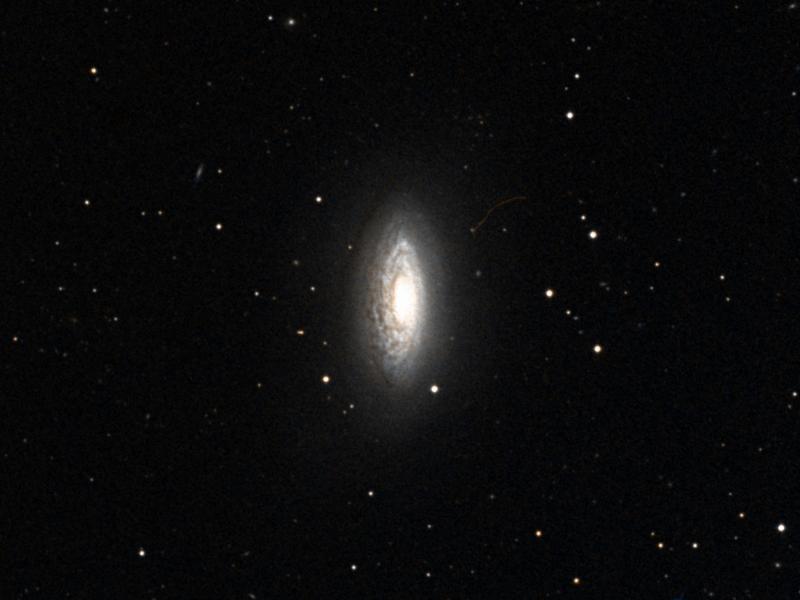
A nearly edge-on spiral without a central bulge: a streak of mottled light, all texture and no core, like a fainter cousin of M 82. It shares a low-power field with the Owl Nebula — galaxy and planetary in one view, fifteen hundred light-years and forty-six million in the same glance.Une spirale presque par la tranche, sans bulbe central : une traînée de lumière marbrée, tout en texture et sans cœur, comme une cousine plus faible de M 82. Elle partage un champ à faible grossissement avec le Hibou — galaxie et planétaire d'une seule vue, quinze cents années-lumière et quarante-six millions dans le même regard.Una espiral casi de canto, sin bulbo central: una veta de luz moteada, pura textura y sin núcleo, como una prima más débil de M 82. Comparte campo de pocos aumentos con el Búho — galaxia y planetaria en una sola vista, mil quinientos años luz y cuarenta y seis millones en la misma mirada.Eine fast in Kantenlage stehende Spirale ohne Zentralbulge: ein Streifen gesprenkelten Lichts, ganz Textur und kein Kern, wie eine schwächere Cousine von M 82. Sie teilt sich ein Weitwinkelfeld mit der Eule — Galaxie und Planetarischer in einem Blick, fünfzehnhundert Lichtjahre und sechsundvierzig Millionen im selben Augenaufschlag.
large scope, dark skygrand diamètre, ciel noirgran abertura, cielo oscurogroße Öffnung, dunkler HimmelDSS2 — STScI/NASA · CDS
TypeTypeTipoTyp
galaxygalaxiegalaxiaGalaxie
ConstellationConstellationConstelaciónSternbild
Ursa Major
MagnitudeMagnitudeMagnitudHelligkeit
10.1
SizeTailleTamañoGröße
5.9′ × 3.27′
Surface brightnessBrillance de surfaceBrillo superficialFlächenhelligkeit
21.9 mag/arcsec²
DistanceDistanceDistanciaEntfernung
about 50 million light-yearsenviron 50 millions d'années-lumièreunos 50 millones de años luzetwa 50 Millionen Lichtjahre
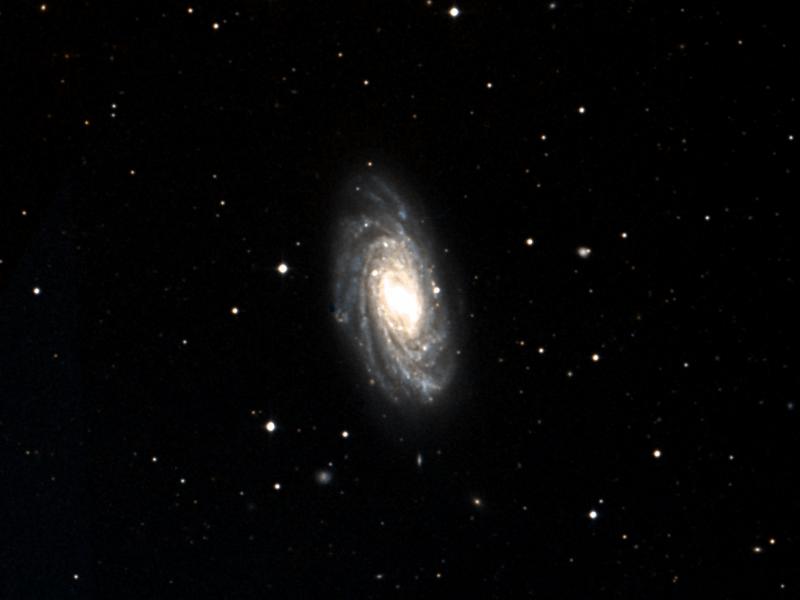
A tilted spiral in the Great Bear's southern reaches — a bright oval with one sharper edge where its dust lane rides, subtle at 150 mm, convincing at 250.Une spirale inclinée dans les marches sud de la Grande Ourse — un ovale brillant à un bord plus net, là où court sa bande de poussière, subtile à 150 mm, convaincante à 250.Una espiral inclinada en los confines australes de la Osa Mayor — un óvalo brillante con un borde más nítido donde corre su banda de polvo, sutil a 150 mm, convincente a 250.Eine geneigte Spirale in den Südbereichen des Großen Bären — ein helles Oval mit einer schärferen Kante, wo ihr Staubband läuft, subtil bei 150 mm, überzeugend bei 250.
large scope, dark skygrand diamètre, ciel noirgran abertura, cielo oscurogroße Öffnung, dunkler HimmelDSS2 — STScI/NASA · CDS
TypeTypeTipoTyp
galaxygalaxiegalaxiaGalaxie
ConstellationConstellationConstelaciónSternbild
Ursa Major
MagnitudeMagnitudeMagnitudHelligkeit
10.1
SizeTailleTamañoGröße
6.14′ × 3.13′
Surface brightnessBrillance de surfaceBrillo superficialFlächenhelligkeit
21.9 mag/arcsec²
DistanceDistanceDistanciaEntfernung
about 55 million light-yearsenviron 55 millions d'années-lumièreunos 55 millones de años luzetwa 55 Millionen Lichtjahre
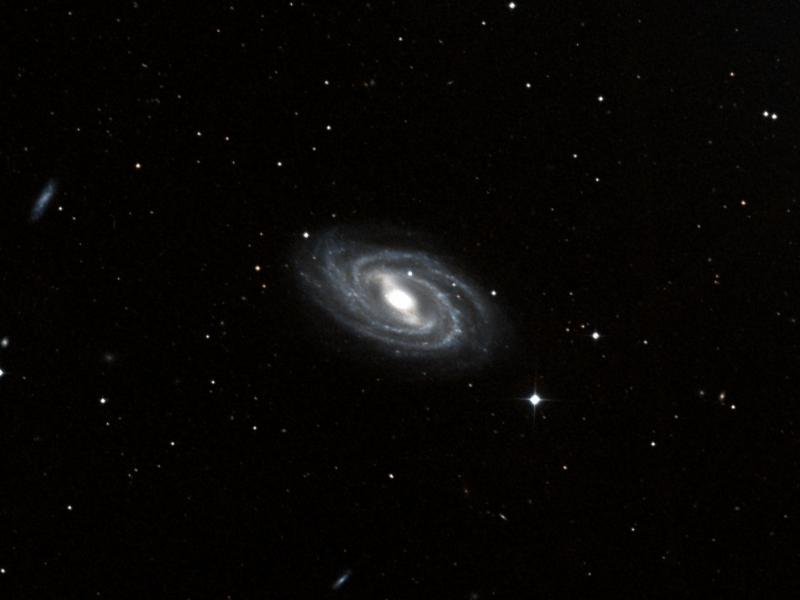
A barred spiral in the Big Dipper's bowl, M 109's slightly brighter sibling one field south — the two are often confused, and comparing them settles which is which better than any chart note.Une spirale barrée dans le bol de la Grande Casserole, la sœur un peu plus brillante de M 109 à un champ au sud — on les confond souvent, et les comparer tranche mieux que toute note de carte.Una espiral barrada en el cazo del Carro, la hermana algo más brillante de M 109 a un campo al sur — se confunden a menudo, y compararlas zanja cuál es cuál mejor que cualquier nota de carta.Eine Balkenspirale in der Schüssel des Großen Wagens, M 109s etwas hellere Schwester ein Feld südlich — die beiden werden oft verwechselt, und sie zu vergleichen klärt besser als jede Kartennotiz, welche welche ist.
large scope, dark skygrand diamètre, ciel noirgran abertura, cielo oscurogroße Öffnung, dunkler HimmelDSS2 — STScI/NASA · CDS
TypeTypeTipoTyp
galaxygalaxiegalaxiaGalaxie
ConstellationConstellationConstelaciónSternbild
Ursa Major
MagnitudeMagnitudeMagnitudHelligkeit
10.1
SizeTailleTamañoGröße
5.62′ × 3.49′
Surface brightnessBrillance de surfaceBrillo superficialFlächenhelligkeit
22.0 mag/arcsec²
DistanceDistanceDistanciaEntfernung
about 100 million light-yearsenviron 100 millions d'années-lumièreunos 100 millones de años luzetwa 100 Millionen Lichtjahre
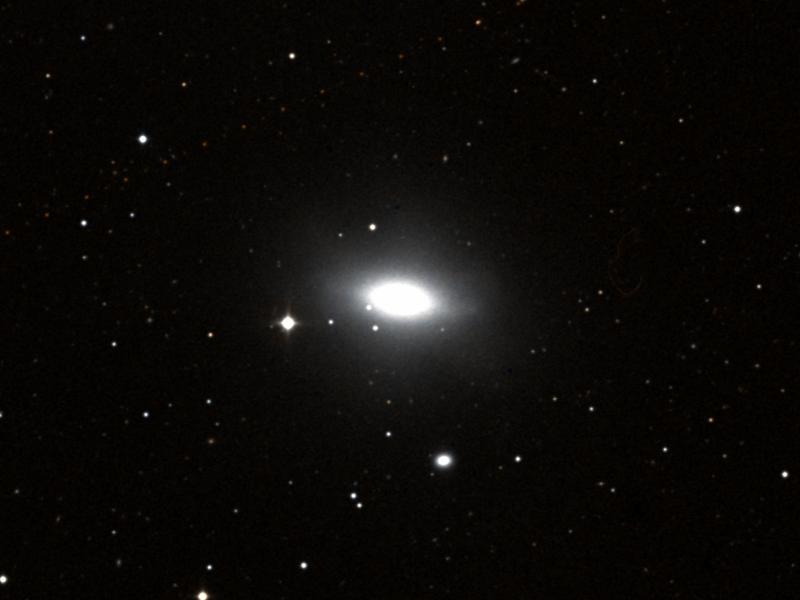
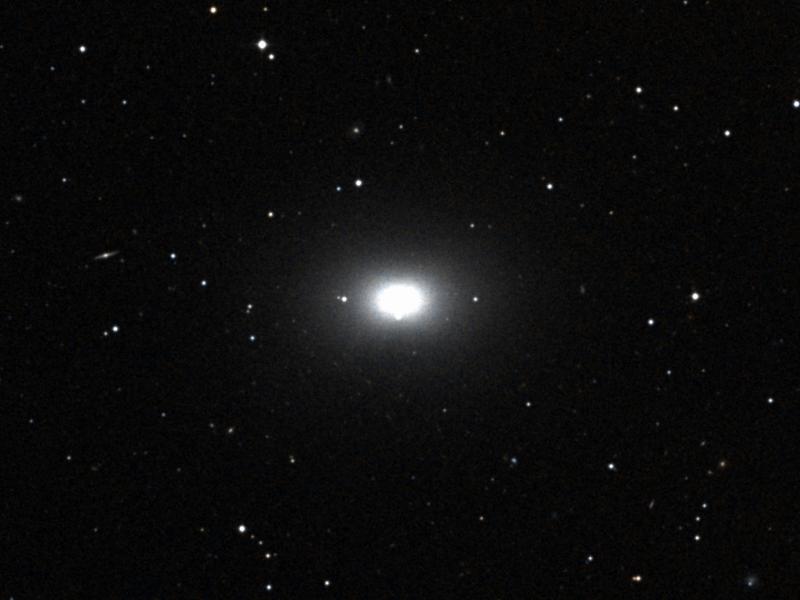
A giant elliptical above the Big Dipper's handle, a hundred million light-years out — a smooth bright oval at 200 mm with a counter- rotating core remembered from some ancient merger.Une elliptique géante au-dessus du manche de la Grande Casserole, à cent millions d'années-lumière — un ovale lisse et brillant à 200 mm, au cœur contrarotatif hérité de quelque fusion ancienne.Una elíptica gigante sobre el mango del Carro, a cien millones de años luz — un óvalo liso y brillante a 200 mm, con un núcleo contrarrotante heredado de alguna fusión antigua.Eine Riesenelliptische über der Deichsel des Großen Wagens, hundert Millionen Lichtjahre entfernt — ein glattes, helles Oval bei 200 mm mit einem gegenrotierenden Kern, Andenken irgendeiner uralten Verschmelzung.
large scope, dark skygrand diamètre, ciel noirgran abertura, cielo oscurogroße Öffnung, dunkler HimmelDSS2 — STScI/NASA · CDS
TypeTypeTipoTyp
galaxygalaxiegalaxiaGalaxie
ConstellationConstellationConstelaciónSternbild
Ursa Major
MagnitudeMagnitudeMagnitudHelligkeit
9.9
SizeTailleTamañoGröße
8.07′ × 5.64′
Surface brightnessBrillance de surfaceBrillo superficialFlächenhelligkeit
22.7 mag/arcsec²
DistanceDistanceDistanciaEntfernung
about 80 million light-yearsenviron 80 millions d'années-lumièreunos 80 millones de años luzetwa 80 Millionen Lichtjahre
The most distant object in the Messier catalogue: a barred spiral just off Phecda in the Big Dipper's bowl, eighty million light-years out. In moderate telescopes an oval haze with a slightly barred middle; its remoteness, with a bright star crowding the field, is the challenge.L'objet le plus lointain du catalogue de Messier : une spirale barrée tout près de Phecda, dans le bol de la Grande Casserole, à quatre-vingts millions d'années-lumière. Dans un télescope moyen, une brume ovale au milieu légèrement barré ; son éloignement, avec une étoile brillante qui encombre le champ, fait la difficulté.El objeto más lejano del catálogo de Messier: una espiral barrada junto a Phecda, en el cazo del Carro, a ochenta millones de años luz. En un telescopio mediano, una bruma oval de centro ligeramente barrado; su lejanía, con una estrella brillante estorbando el campo, es el desafío.Das fernste Objekt des Messier-Katalogs: eine Balkenspirale dicht bei Phecda in der Schüssel des Großen Wagens, achtzig Millionen Lichtjahre entfernt. Im mittleren Teleskop ein ovaler Dunst mit leicht balkenförmiger Mitte; die Ferne, mit einem hellen Stern im Feld, ist die Herausforderung.
large scope, dark skygrand diamètre, ciel noirgran abertura, cielo oscurogroße Öffnung, dunkler HimmelDSS2 — STScI/NASA · CDS
TypeTypeTipoTyp
galaxygalaxiegalaxiaGalaxie
ConstellationConstellationConstelaciónSternbild
Ursa Major
MagnitudeMagnitudeMagnitudHelligkeit
10.4
SizeTailleTamañoGröße
3.55′ × 3.44′
Surface brightnessBrillance de surfaceBrillo superficialFlächenhelligkeit
21.7 mag/arcsec²
DistanceDistanceDistanciaEntfernung
about 55 million light-yearsenviron 55 millions d'années-lumièreunos 55 millones de años luzetwa 55 Millionen Lichtjahre
A serene face-on spiral in Ursa Major's southern reaches — a round, low-contrast glow at 200 mm whose arms stay photographic; the calm kind of galaxy that rewards a patient, dark-adapted look.Une spirale de face sereine dans les marches sud de la Grande Ourse — une lueur ronde et peu contrastée à 200 mm, aux bras photographiques ; le genre de galaxie calme qui récompense un regard patient et bien adapté au noir.Una espiral de frente serena en los confines australes de la Osa Mayor — un resplandor redondo de bajo contraste a 200 mm, con brazos que quedan fotográficos; el tipo de galaxia tranquila que premia una mirada paciente y adaptada a la oscuridad.Eine ruhige Spirale in Draufsicht in den Südbereichen des Großen Bären — ein rundes, kontrastarmes Glimmen bei 200 mm, dessen Arme fotografisch bleiben; die stille Art Galaxie, die einen geduldigen, dunkeladaptierten Blick belohnt.
large scope, dark skygrand diamètre, ciel noirgran abertura, cielo oscurogroße Öffnung, dunkler HimmelDSS2 — STScI/NASA · CDS
TypeTypeTipoTyp
galaxygalaxiegalaxiaGalaxie
ConstellationConstellationConstelaciónSternbild
Ursa Major
MagnitudeMagnitudeMagnitudHelligkeit
10.4
SizeTailleTamañoGröße
3.72′ × 3.08′
Surface brightnessBrillance de surfaceBrillo superficialFlächenhelligkeit
21.7 mag/arcsec²
DistanceDistanceDistanciaEntfernung
about 65 million light-yearsenviron 65 millions d'années-lumièreunos 65 millones de años luzetwa 65 Millionen Lichtjahre
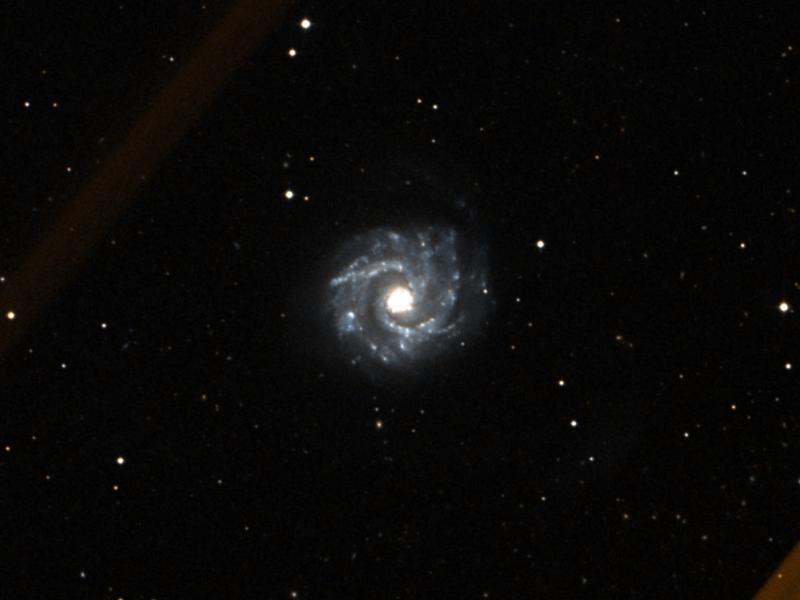
A face-on grand-design spiral in the Great Bear — a soft round glow with a bright pip of a core at 200 mm, its elegant whorl reserved, as with most of its kind, for the camera.Une spirale de face de grande architecture dans la Grande Ourse — une lueur ronde et douce au pépin de cœur brillant à 200 mm, sa volute élégante réservée, comme chez la plupart des siennes, à l'appareil photo.Una espiral de frente de gran diseño en la Osa Mayor — un resplandor redondo y suave con una pepita de núcleo brillante a 200 mm, y su voluta elegante reservada, como en la mayoría de las suyas, a la cámara.Eine Grand-Design-Spirale in Draufsicht im Großen Bären — ein weiches, rundes Glimmen mit hellem Kernpunkt bei 200 mm, ihr eleganter Wirbel wie bei den meisten ihrer Art der Kamera vorbehalten.
large scope, dark skygrand diamètre, ciel noirgran abertura, cielo oscurogroße Öffnung, dunkler HimmelDSS2 — STScI/NASA · CDS
TypeTypeTipoTyp
galaxygalaxiegalaxiaGalaxie
ConstellationConstellationConstelaciónSternbild
Ursa Major
MagnitudeMagnitudeMagnitudHelligkeit
10.5
SizeTailleTamañoGröße
3.61′ × 2.92′
Surface brightnessBrillance de surfaceBrillo superficialFlächenhelligkeit
21.7 mag/arcsec²
DistanceDistanceDistanciaEntfernung
about 70 million light-yearsenviron 70 millions d'années-lumièreunos 70 millones de años luzetwa 70 Millionen Lichtjahre
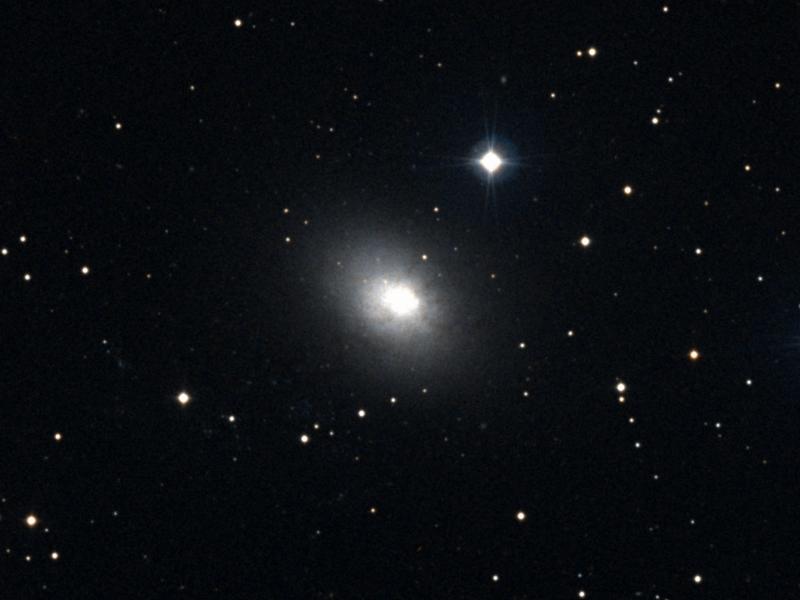
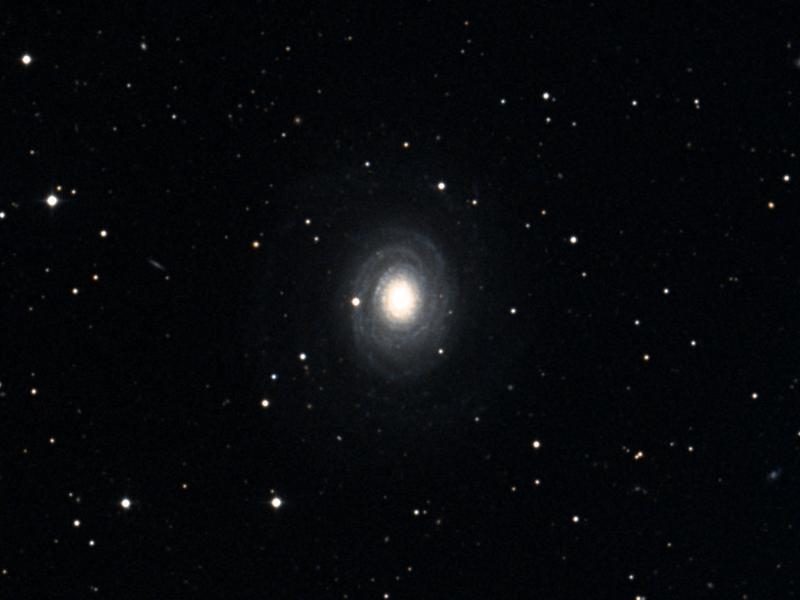
A tightly wound spiral in the Great Bear's far north — a small round glow with a bright core at 200 mm, circumpolar and available any clear night of the year.Une spirale serrée dans le grand nord de la Grande Ourse — une petite lueur ronde au cœur brillant à 200 mm, circumpolaire et disponible chaque nuit claire de l'année.Una espiral apretada en el extremo norte de la Osa Mayor — un pequeño resplandor redondo de núcleo brillante a 200 mm, circumpolar y disponible cualquier noche clara del año.Eine eng gewundene Spirale im hohen Norden des Großen Bären — ein kleines rundes Glimmen mit hellem Kern bei 200 mm, zirkumpolar und in jeder klaren Nacht des Jahres verfügbar.
large scope, dark skygrand diamètre, ciel noirgran abertura, cielo oscurogroße Öffnung, dunkler HimmelDSS2 — STScI/NASA · CDS
TypeTypeTipoTyp
galaxygalaxiegalaxiaGalaxie
ConstellationConstellationConstelaciónSternbild
Ursa Major
MagnitudeMagnitudeMagnitudHelligkeit
10.6
SizeTailleTamañoGröße
2.69′ × 1.43′
Surface brightnessBrillance de surfaceBrillo superficialFlächenhelligkeit
20.7 mag/arcsec²
DistanceDistanceDistanciaEntfernung
about 55 million light-yearsenviron 55 millions d'années-lumièreunos 55 millones de años luzetwa 55 Millionen Lichtjahre
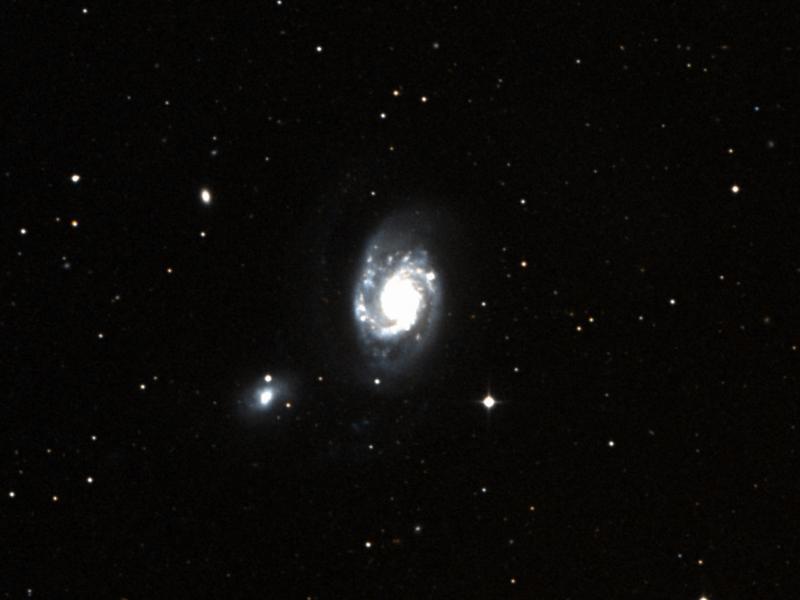
A compact spiral in Ursa Major with a small companion tugging one arm open — a bright oval at 200 mm, one of a string of Herschel galaxies under the Dipper's bowl.Une spirale compacte de la Grande Ourse, une petite compagne lui ouvrant un bras — un ovale brillant à 200 mm, un maillon du chapelet de galaxies Herschel sous le bol de la Casserole.Una espiral compacta de la Osa Mayor con una pequeña compañera abriéndole un brazo — un óvalo brillante a 200 mm, un eslabón del rosario de galaxias Herschel bajo el cazo del Carro.Eine kompakte Spirale im Großen Bären, deren kleiner Begleiter einen Arm aufzieht — ein helles Oval bei 200 mm, ein Glied der Herschel-Galaxienkette unter der Schüssel des Wagens.
Both stars bright enough for a small telescope, wide enough to split.Deux composantes assez brillantes pour un petit télescope, assez écartées pour être séparées.Ambas componentes lo bastante brillantes para un telescopio pequeño y separables.Beide Komponenten hell genug für ein kleines Teleskop und weit genug zum Trennen.
Sep.Sép.Sep.Abstand
PAAPAPPW
MagsMagsMagsHelligkeiten
Mizar
14.4″
153°
2.2 / 3.9
HD 112486
3.7″
280°
6.0 / 7.8
HD 97855
12.2″
343°
6.5 / 7.8
HD 88849
16.6″
167°
6.7 / 7.3
HD 82685
4.9″
126°
7.0 / 7.2
HD 106799
14.4″
218°
7.2 / 7.8
Also on this chartAussi sur cette carteTambién en esta cartaEbenfalls auf dieser Karte
46 · Everything else the chart plots, easiest first where a rank exists.Tout le reste de la carte, du plus facile au plus difficile quand un classement existe.Todo lo demás que traza la carta, de lo más fácil a lo más difícil cuando hay clasificación.Alles Übrige auf der Karte, wo möglich nach Schwierigkeit geordnet.
TypeTypeTipoTyp
MagnitudeMagnitudeMagnitudHelligkeit
SizeTailleTamañoGröße
NGC 4605
galaxygalaxiegalaxiaGalaxie
10.3
5.87′ × 2.29′
NGC 3359
galaxygalaxiegalaxiaGalaxie
10.6
4.07′ × 2.83′
NGC 4096
galaxygalaxiegalaxiaGalaxie
10.6
5.65′ × 1.43′
NGC 3726
galaxygalaxiegalaxiaGalaxie
10.5
5.27′ × 3.54′
NGC 3718
galaxygalaxiegalaxiaGalaxie
10.7
4.7′ × 2.34′
NGC 3898
galaxygalaxiegalaxiaGalaxie
10.7
3.47′ × 2.11′
NGC 4236
galaxygalaxiegalaxiaGalaxie
9.8
23.5′ × 6.85′
NGC 4589
galaxygalaxiegalaxiaGalaxie
10.7
2.93′ × 2.31′
NGC 3610
galaxygalaxiegalaxiaGalaxie
10.8
2.39′
NGC 4026
galaxygalaxiegalaxiaGalaxie
10.8
4.41′ × 0.87′
NGC 4088
galaxygalaxiegalaxiaGalaxie
10.6
7.01′ × 2.65′
NGC 3613
galaxygalaxiegalaxiaGalaxie
10.8
3.55′ × 1.78′
NGC 4036
galaxygalaxiegalaxiaGalaxie
10.8
4.85′ × 2.08′
NGC 3949
galaxygalaxiegalaxiaGalaxie
10.9
2.26′ × 1.32′
NGC 3348
galaxygalaxiegalaxiaGalaxie
10.9
2.13′
NGC 3877
galaxygalaxiegalaxiaGalaxie
11.0
5.36′ × 1.23′
NGC 5474
galaxygalaxiegalaxiaGalaxie
11.0
2.39′ × 1.57′
NGC 3945
galaxygalaxiegalaxiaGalaxie
10.8
5.55′ × 3.29′
NGC 4041
galaxygalaxiegalaxiaGalaxie
11.1
2.57′ × 2.39′
NGC 4100
galaxygalaxiegalaxiaGalaxie
11.1
4.56′ × 1.3′
NGC 4242
galaxygalaxiegalaxiaGalaxie
11.0
3.8′ × 2.67′
NGC 5585
galaxygalaxiegalaxiaGalaxie
11.0
4.27′ × 2.62′
NGC 5377
galaxygalaxiegalaxiaGalaxie
11.3
3.64′ × 1.42′
NGC 4013
galaxygalaxiegalaxiaGalaxie
11.3
4.89′ × 1.23′
NGC 4157
galaxygalaxiegalaxiaGalaxie
11.3
6.22′ × 1.14′
NGC 5308
galaxygalaxiegalaxiaGalaxie
11.3
4.33′ × 0.57′
IC 2574
galaxygalaxiegalaxiaGalaxie
10.5
12.91′ × 5.57′
NGC 3998
galaxygalaxiegalaxiaGalaxie
11.3
2.78′ × 2.26′
NGC 4220
galaxygalaxiegalaxiaGalaxie
11.3
3.3′ × 0.99′
NGC 4217
galaxygalaxiegalaxiaGalaxie
11.2
5.43′ × 1.61′
NGC 4346
galaxygalaxiegalaxiaGalaxie
12.1
3.13′ × 1.13′
NGC 4291
galaxygalaxiegalaxiaGalaxie
11.4
1.93′ × 1.62′
NGC 3738
galaxygalaxiegalaxiaGalaxie
11.4
2.26′ × 1.63′
NGC 5473
galaxygalaxiegalaxiaGalaxie
11.5
1.99′ × 1.54′
NGC 5485
galaxygalaxiegalaxiaGalaxie
11.5
2.51′ × 1.75′
NGC 2715
galaxygalaxiegalaxiaGalaxie
11.5
4.2′ × 1.41′
NGC 4800
galaxygalaxiegalaxiaGalaxie
12.3
1.65′ × 1.16′
NGC 3729
galaxygalaxiegalaxiaGalaxie
11.6
2.89′ × 2.09′
NGC 5204
galaxygalaxiegalaxiaGalaxie
11.3
4.5′ × 2.82′
NGC 3982
galaxygalaxiegalaxiaGalaxie
11.7
2.13′ × 1.87′
NGC 4102
galaxygalaxiegalaxiaGalaxie
11.9
2.94′ × 1.67′
NGC 4051
galaxygalaxiegalaxiaGalaxie
11.4
4.89′ × 4.26′
NGC 3619
galaxygalaxiegalaxiaGalaxie
12.5
3.89′ × 3.08′
NGC 4085
galaxygalaxiegalaxiaGalaxie
12.4
2.22′ × 0.57′
NGC 3147
galaxygalaxiegalaxiaGalaxie
11.9
4.11′ × 3.55′
NN
dark nebulanébuleuse obscurenebulosa oscuraDunkelnebel