18 objects on this chartobjets sur cette carteobjetos en esta cartaObjekte auf dieser Karte
Easiest firstLes plus faciles d'abordLos más fáciles primeroDie einfachsten zuerst
What this chart shows, in the order you should try: start where success is certain, work toward the hard ones.Ce que montre cette carte, dans l'ordre où l'essayer : commencez là où le succès est certain, avancez vers le difficile.Lo que muestra esta carta, en el orden en que conviene intentarlo: empiece donde el éxito es seguro y avance hacia lo difícil.Was diese Karte zeigt, in der Reihenfolge, in der man es versuchen sollte: Beginnen Sie, wo der Erfolg sicher ist, und arbeiten Sie sich vor.
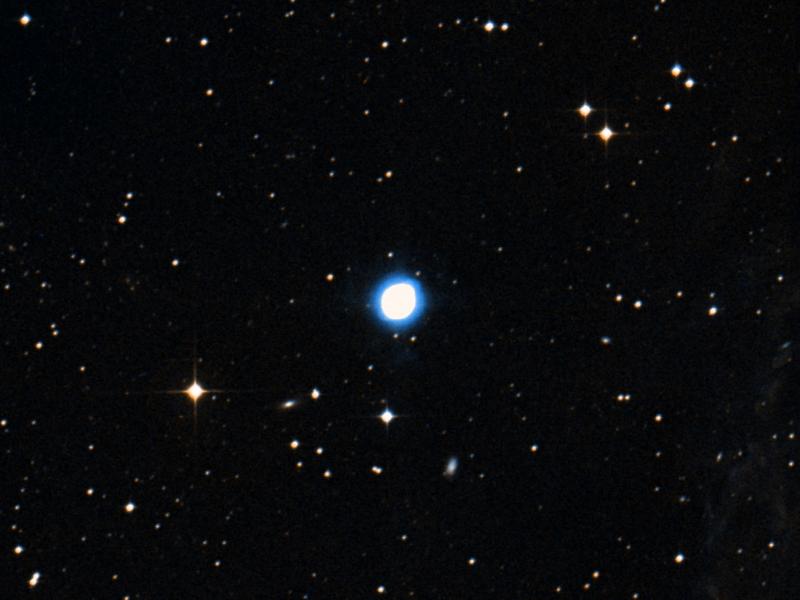
NGC 3242
small telescopepetit télescopetelescopio pequeñokleines Teleskop
Surface brightnessBrillance de surfaceBrillo superficialFlächenhelligkeit
14.4 mag/arcsec²
DistanceDistanceDistanciaEntfernung
about 1 400 light-yearsenviron 1 400 années-lumièreunos 1 400 años luzetwa 1 400 Lichtjahre
The Ghost of Jupiter: a planetary the apparent size of the planet, and the brightest of the spring sky — an intense blue-green disc at any power, an inner lens within an outer shell at 250 mm. In Hydra's long emptiness it looks almost artificial.Le Fantôme de Jupiter : une planétaire de la taille apparente de la planète, la plus brillante du ciel de printemps — un disque bleu-vert intense à tout grossissement, une lentille interne dans une coquille externe à 250 mm. Dans le long vide de l'Hydre, elle paraît presque artificielle.El Fantasma de Júpiter: una planetaria del tamaño aparente del planeta, la más brillante del cielo de primavera — un disco azul verdoso intenso a cualquier aumento, una lente interna dentro de una capa externa a 250 mm. En el largo vacío de la Hidra parece casi artificial.Jupiters Geist: ein Planetarischer von der scheinbaren Größe des Planeten, der hellste des Frühlingshimmels — eine intensiv blaugrüne Scheibe bei jeder Vergrößerung, eine innere Linse in äußerer Hülle bei 250 mm. In der langen Leere der Wasserschlange wirkt er fast künstlich.
small telescopepetit télescopetelescopio pequeñokleines Teleskop
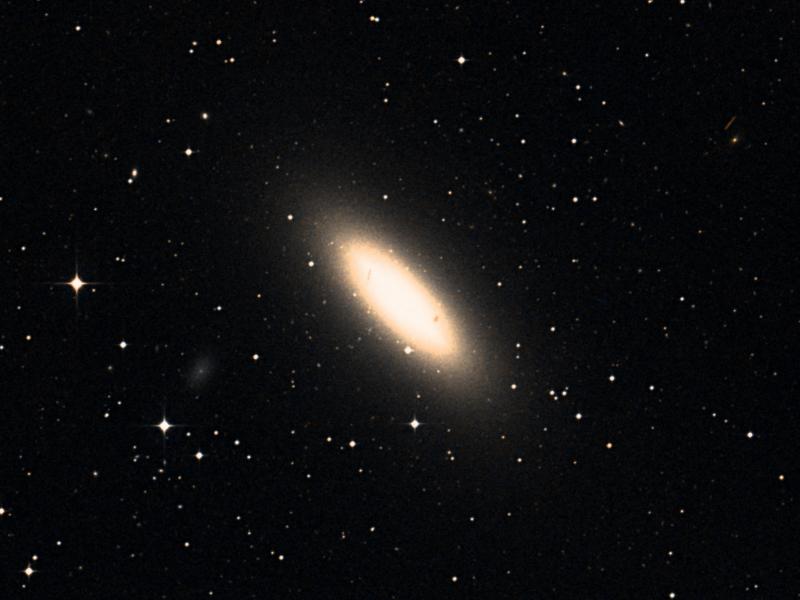
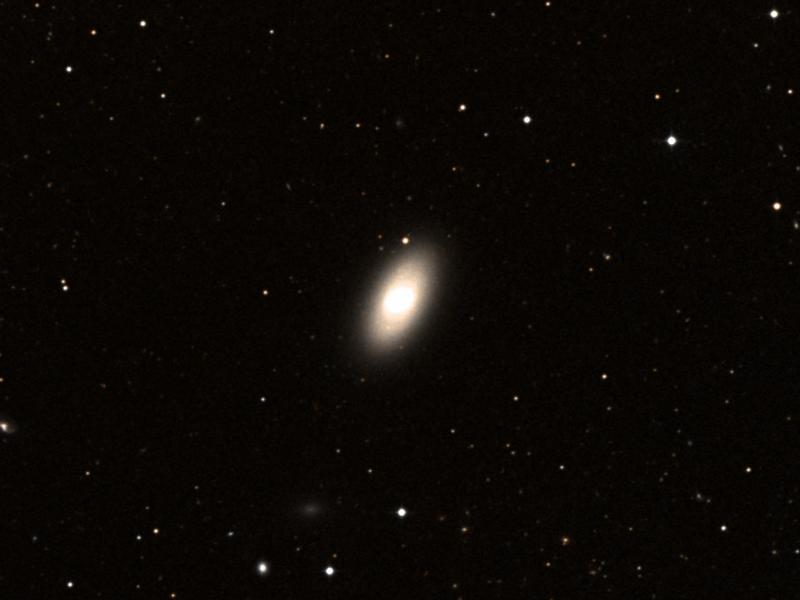
Spindle Galaxy
DSS2 — STScI/NASA · CDS
TypeTypeTipoTyp
galaxygalaxiegalaxiaGalaxie
ConstellationConstellationConstelaciónSternbild
Sextans
MagnitudeMagnitudeMagnitudHelligkeit
9.1
SizeTailleTamañoGröße
7.1′ × 3.01′
Surface brightnessBrillance de surfaceBrillo superficialFlächenhelligkeit
21.0 mag/arcsec²
DistanceDistanceDistanciaEntfernung
about 32 million light-yearsenviron 32 millions d'années-lumièreunos 32 millones de años luzetwa 32 Millionen Lichtjahre
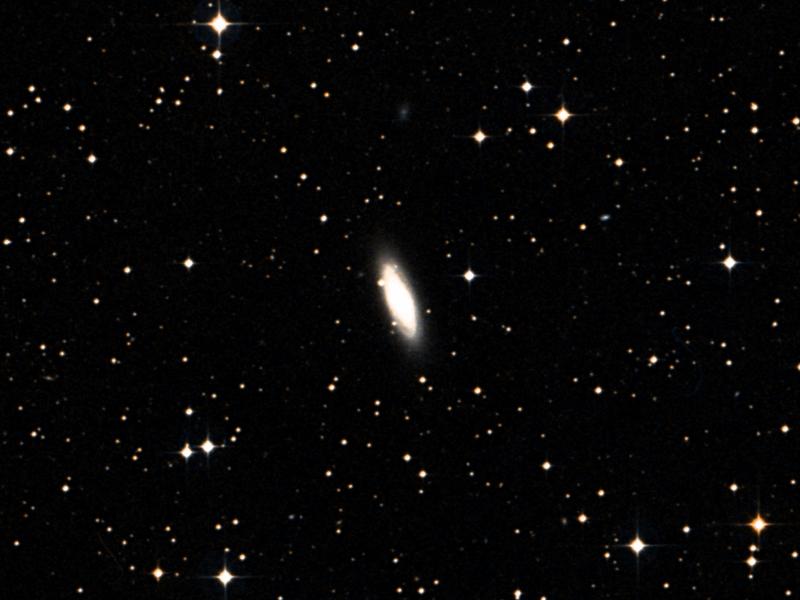
The Spindle: a lens-shaped galaxy seen perfectly edge-on in dim Sextans, bright enough for 100 mm and shapely at 200 — a lens of light tapering to needle points. It hides one of the nearest billion-sun black holes.Le Fuseau : une galaxie en lentille vue parfaitement par la tranche dans le discret Sextant, assez brillante pour 100 mm et galbée à 200 — une lentille de lumière effilée en pointes d'aiguille. Elle cache l'un des trous noirs d'un milliard de soleils les plus proches.El Huso: una galaxia lenticular vista perfectamente de canto en el tenue Sextante, lo bastante brillante para 100 mm y esbelta a 200 — una lente de luz afilada en puntas de aguja. Esconde uno de los agujeros negros de mil millones de soles más cercanos.Die Spindel: eine linsenförmige Galaxie in perfekter Kantenlage im unscheinbaren Sextanten, hell genug für 100 mm und formschön bei 200 — eine Lichtlinse, die in Nadelspitzen ausläuft. Sie verbirgt eines der nächsten Milliarden-Sonnen-Schwarzen Löcher.
small telescopepetit télescopetelescopio pequeñokleines TeleskopDSS2 — STScI/NASA · CDS
TypeTypeTipoTyp
galaxygalaxiegalaxiaGalaxie
ConstellationConstellationConstelaciónSternbild
Leo
MagnitudeMagnitudeMagnitudHelligkeit
9.2
SizeTailleTamañoGröße
8.26′ × 5.51′
Surface brightnessBrillance de surfaceBrillo superficialFlächenhelligkeit
22.0 mag/arcsec²
DistanceDistanceDistanciaEntfernung
about 31 million light-yearsenviron 31 millions d'années-lumièreunos 31 millones de años luzetwa 31 Millionen Lichtjahre
The brightest of the Leo I group, under the Lion's belly: an oval glow with an off-centre core that small telescopes show without struggle. Use it as the anchor for the M 95–M 96–M 105 triangle, one of spring's best single fields of galaxies.La plus brillante du groupe Leo I, sous le ventre du Lion : une lueur ovale au cœur décentré, que les petits télescopes montrent sans peine. Prenez-la comme ancre du triangle M 95–M 96–M 105, l'un des meilleurs champs de galaxies du printemps.La más brillante del grupo Leo I, bajo el vientre del León: un resplandor oval de núcleo descentrado que los telescopios pequeños muestran sin esfuerzo. Úsela como ancla del triángulo M 95–M 96–M 105, uno de los mejores campos de galaxias de la primavera.Die hellste der Leo-I-Gruppe, unter dem Bauch des Löwen: ein ovales Glimmen mit außermittigem Kern, das kleine Teleskope mühelos zeigen. Als Anker fürs Dreieck M 95–M 96–M 105 nehmen, eines der besten Galaxienfelder des Frühlings.
small telescopepetit télescopetelescopio pequeñokleines TeleskopDSS2 — STScI/NASA · CDS
TypeTypeTipoTyp
galaxygalaxiegalaxiaGalaxie
ConstellationConstellationConstelaciónSternbild
Leo
MagnitudeMagnitudeMagnitudHelligkeit
9.3
SizeTailleTamañoGröße
4.89′ × 4.25′
Surface brightnessBrillance de surfaceBrillo superficialFlächenhelligkeit
21.2 mag/arcsec²
DistanceDistanceDistanciaEntfernung
about 32 million light-yearsenviron 32 millions d'années-lumièreunos 32 millones de años luzetwa 32 Millionen Lichtjahre
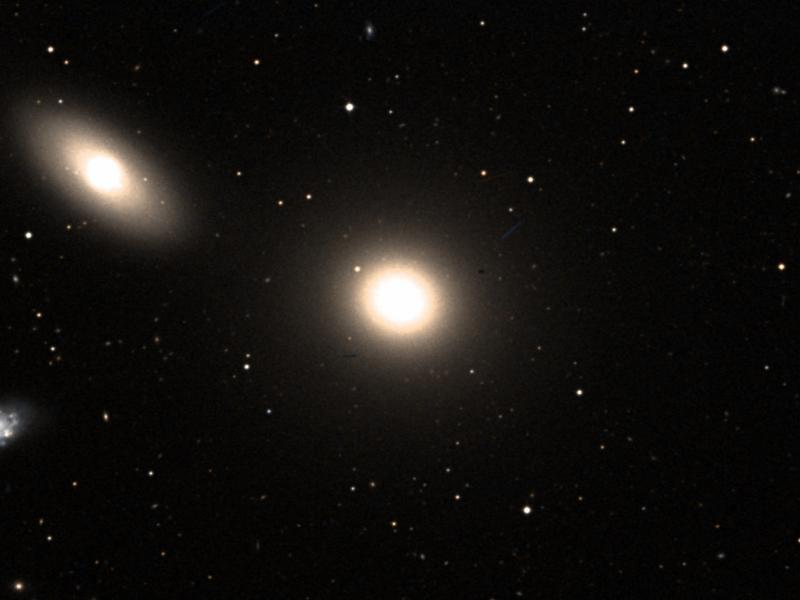
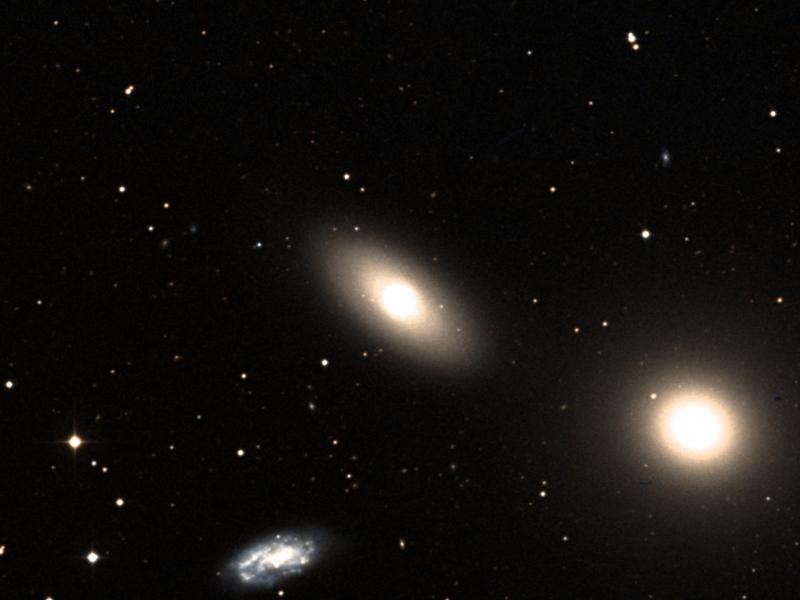
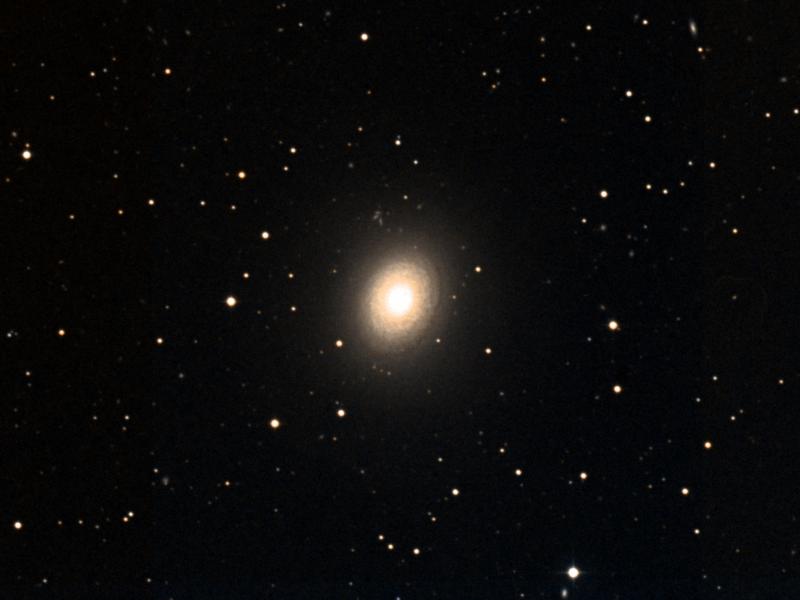
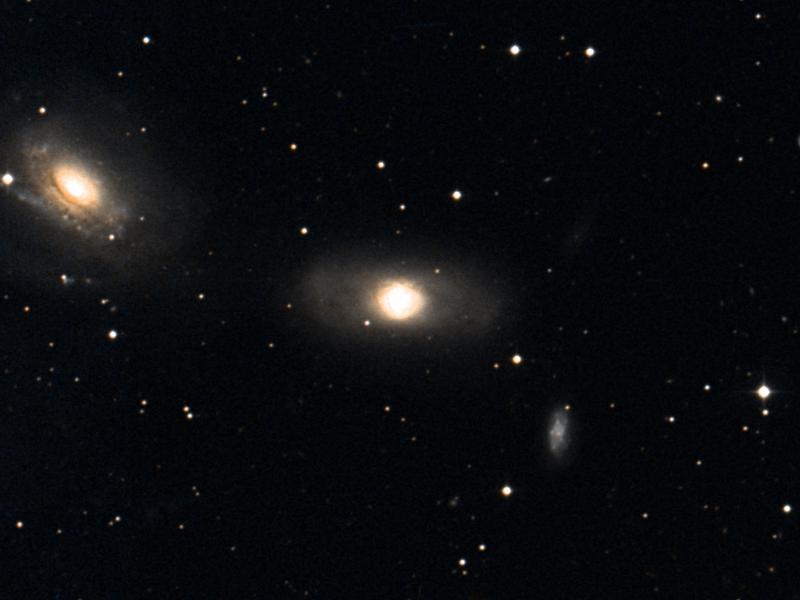
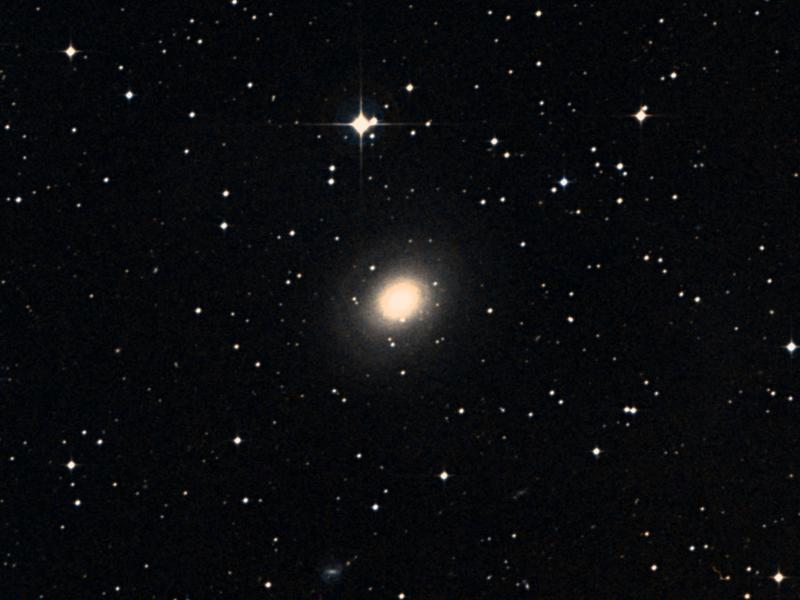
The elliptical of the Leo I group, completing the triangle with M 95 and M 96 — and in the same high-power field as NGC 3384 and faint NGC 3389, three galaxies of three different kinds at once. A textbook round glow, brightening smoothly to the centre.L'elliptique du groupe Leo I, qui complète le triangle avec M 95 et M 96 — et dans le même champ à fort grossissement que NGC 3384 et la pâle NGC 3389, trois galaxies de trois espèces d'un coup. Une lueur ronde d'école, s'intensifiant régulièrement vers le centre.La elíptica del grupo Leo I, que completa el triángulo con M 95 y M 96 — y en el mismo campo de altos aumentos que NGC 3384 y la pálida NGC 3389, tres galaxias de tres clases a la vez. Un resplandor redondo de manual, intensificándose suavemente hacia el centro.Die Elliptische der Leo-I-Gruppe, die das Dreieck mit M 95 und M 96 schließt — und im selben Feld hoher Vergrößerung wie NGC 3384 und die blasse NGC 3389: drei Galaxien dreier Arten auf einmal. Ein rundes Glimmen wie aus dem Lehrbuch, gleichmäßig zur Mitte aufhellend.
large scope, dark skygrand diamètre, ciel noirgran abertura, cielo oscurogroße Öffnung, dunkler HimmelDSS2 — STScI/NASA · CDS
TypeTypeTipoTyp
galaxygalaxiegalaxiaGalaxie
ConstellationConstellationConstelaciónSternbild
Leo
MagnitudeMagnitudeMagnitudHelligkeit
9.8
SizeTailleTamañoGröße
7.23′ × 4.45′
Surface brightnessBrillance de surfaceBrillo superficialFlächenhelligkeit
22.2 mag/arcsec²
DistanceDistanceDistanciaEntfernung
about 33 million light-yearsenviron 33 millions d'années-lumièreunos 33 millones de años luzetwa 33 Millionen Lichtjahre
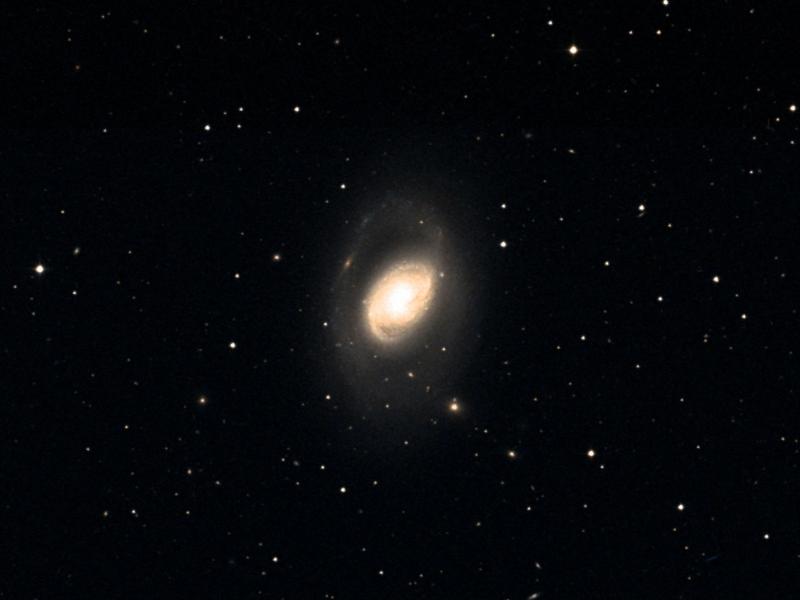
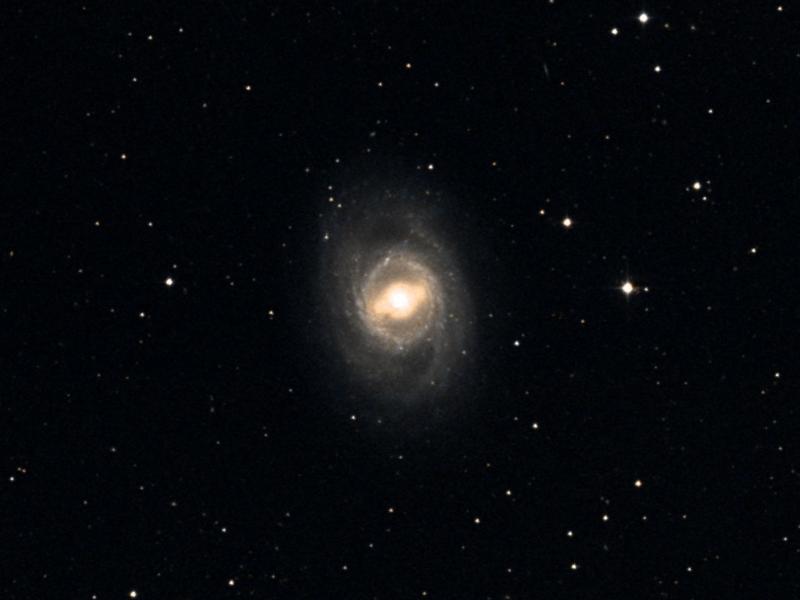
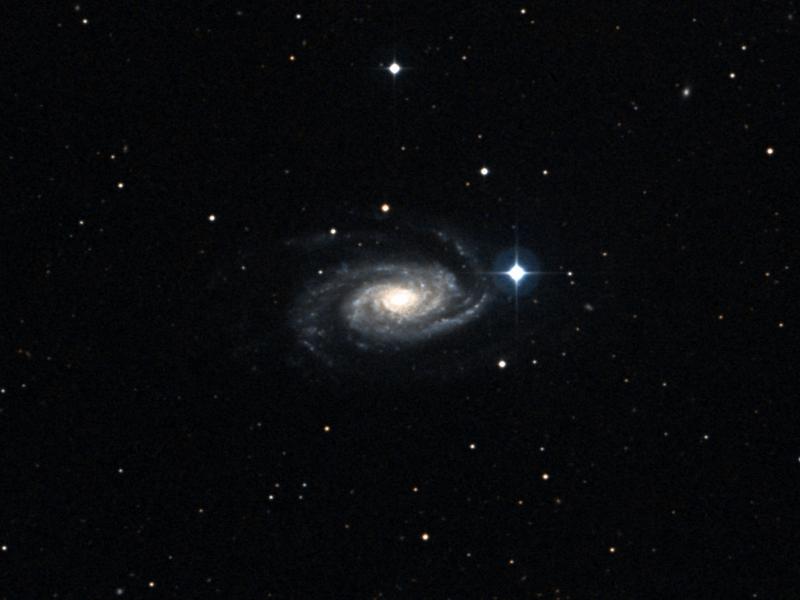
The fainter half of the Leo pair it forms with M 96: a barred spiral whose ring, in photographs, circles the bar like a wreath. In the eyepiece a round glow with a brighter bar-shaped middle. With M 96 and M 105 close by, three Messier galaxies fit one low-power field.La moitié la plus faible de la paire du Lion qu'elle forme avec M 96 : une spirale barrée dont l'anneau, en photographie, entoure la barre comme une couronne. À l'oculaire, une lueur ronde au milieu plus brillant en forme de barre. Avec M 96 et M 105 tout près, trois galaxies de Messier tiennent dans un champ à faible grossissement.La mitad más débil de la pareja de Leo que forma con M 96: una espiral barrada cuyo anillo, en fotografía, rodea la barra como una corona. En el ocular, un resplandor redondo con un centro más brillante en forma de barra. Con M 96 y M 105 al lado, tres galaxias de Messier caben en un campo de pocos aumentos.Die schwächere Hälfte des Löwen-Paares mit M 96: eine Balkenspirale, deren Ring auf Fotos den Balken wie ein Kranz umschließt. Im Okular ein rundes Glimmen mit hellerer, balkenförmiger Mitte. Mit M 96 und M 105 nebenan passen drei Messier-Galaxien in ein Weitwinkelfeld.
large scope, dark skygrand diamètre, ciel noirgran abertura, cielo oscurogroße Öffnung, dunkler HimmelDSS2 — STScI/NASA · CDS
TypeTypeTipoTyp
galaxygalaxiegalaxiaGalaxie
ConstellationConstellationConstelaciónSternbild
Leo
MagnitudeMagnitudeMagnitudHelligkeit
10.0
SizeTailleTamañoGröße
5.24′ × 2.37′
Surface brightnessBrillance de surfaceBrillo superficialFlächenhelligkeit
21.3 mag/arcsec²
DistanceDistanceDistanciaEntfernung
about 35 million light-yearsenviron 35 millions d'années-lumièreunos 35 millones de años luzetwa 35 Millionen Lichtjahre
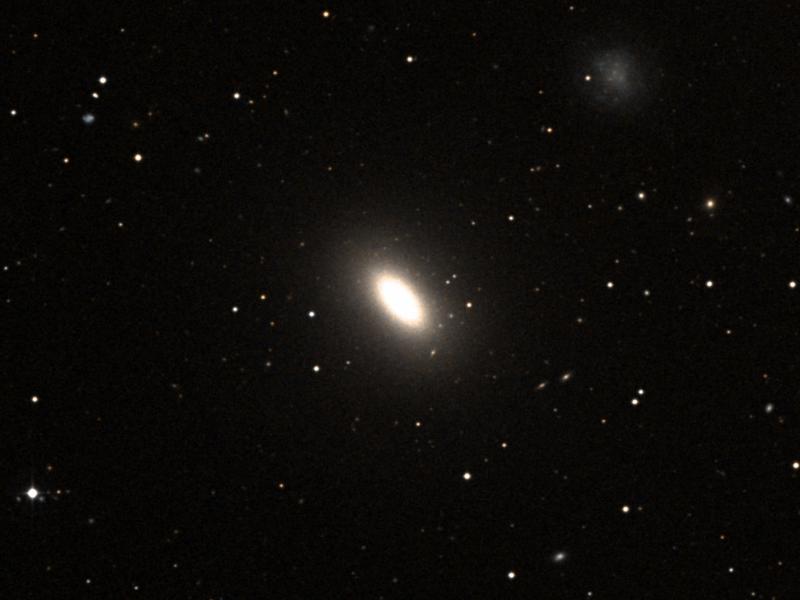
M 105's constant companion: a bright lenticular in the same high-power field, the middle member of the Leo I trio. Comparing its lens shape with the elliptical's round glow is the quick lesson the field offers.La compagne constante de M 105 : une lenticulaire brillante dans le même champ à fort grossissement, membre médian du trio Leo I. Comparer sa forme de lentille à la lueur ronde de l'elliptique est la leçon rapide qu'offre le champ.La compañera constante de M 105: una lenticular brillante en el mismo campo de muchos aumentos, miembro central del trío Leo I. Comparar su forma de lente con el resplandor redondo de la elíptica es la lección rápida que ofrece el campo.M 105s ständige Begleiterin: eine helle Linsengalaxie im selben Feld hoher Vergrößerung, das mittlere Mitglied des Leo-I-Trios. Ihre Linsenform mit dem runden Glimmen der Elliptischen zu vergleichen ist die schnelle Lektion des Feldes.
large scope, dark skygrand diamètre, ciel noirgran abertura, cielo oscurogroße Öffnung, dunkler HimmelDSS2 — STScI/NASA · CDS
TypeTypeTipoTyp
galaxygalaxiegalaxiaGalaxie
ConstellationConstellationConstelaciónSternbild
Cancer
MagnitudeMagnitudeMagnitudHelligkeit
10.2
SizeTailleTamañoGröße
4.25′ × 3.36′
Surface brightnessBrillance de surfaceBrillo superficialFlächenhelligkeit
21.8 mag/arcsec²
DistanceDistanceDistanciaEntfernung
about 55 million light-yearsenviron 55 millions d'années-lumièreunos 55 millones de años luzetwa 55 Millionen Lichtjahre
A spiral with a huge, smooth bulge and tightly wound, flocculent arms — in the eyepiece a bright round core in a fainter halo, almost an elliptical until photographs correct you. On the Cancer–Hydra border, easy at 200 mm.Une spirale au bulbe énorme et lisse, aux bras serrés et floconneux — à l'oculaire, un cœur rond et brillant dans un halo plus faible, presque une elliptique jusqu'à ce que la photographie vous corrige. À la frontière Cancer–Hydre, facile à 200 mm.Una espiral de bulbo enorme y liso, con brazos apretados y floculentos — en el ocular, un núcleo redondo y brillante en un halo más débil, casi una elíptica hasta que las fotografías le corrigen. En la frontera Cáncer–Hidra, fácil a 200 mm.Eine Spirale mit riesigem, glattem Bulge und eng gewundenen, flockigen Armen — im Okular ein heller runder Kern in schwächerem Halo, fast eine Elliptische, bis Fotos einen korrigieren. An der Grenze Krebs– Wasserschlange, leicht bei 200 mm.
large scope, dark skygrand diamètre, ciel noirgran abertura, cielo oscurogroße Öffnung, dunkler HimmelDSS2 — STScI/NASA · CDS
TypeTypeTipoTyp
galaxygalaxiegalaxiaGalaxie
ConstellationConstellationConstelaciónSternbild
Leo
MagnitudeMagnitudeMagnitudHelligkeit
10.3
SizeTailleTamañoGröße
3.87′ × 1.87′
Surface brightnessBrillance de surfaceBrillo superficialFlächenhelligkeit
21.0 mag/arcsec²
DistanceDistanceDistanciaEntfernung
about 35 million light-yearsenviron 35 millions d'années-lumièreunos 35 millones de años luzetwa 35 Millionen Lichtjahre
A modest elliptical of the Leo I group north of the M 105 trio — a soft oval with a bright nucleus, part of the constellation-wide family portrait this patch of Leo offers at low power.Une elliptique modeste du groupe Leo I au nord du trio de M 105 — un ovale doux au noyau brillant, un membre du portrait de famille que ce coin du Lion offre à faible grossissement.Una elíptica modesta del grupo Leo I al norte del trío de M 105 — un óvalo suave de núcleo brillante, parte del retrato de familia que este rincón de Leo ofrece a pocos aumentos.Eine bescheidene Elliptische der Leo-I-Gruppe nördlich des M-105-Trios — ein weiches Oval mit hellem Kern, Teil des Familienporträts, das dieser Fleck des Löwen bei schwacher Vergrößerung bietet.
large scope, dark skygrand diamètre, ciel noirgran abertura, cielo oscurogroße Öffnung, dunkler HimmelDSS2 — STScI/NASA · CDS
TypeTypeTipoTyp
galaxygalaxiegalaxiaGalaxie
ConstellationConstellationConstelaciónSternbild
Leo
MagnitudeMagnitudeMagnitudHelligkeit
10.5
SizeTailleTamañoGröße
3.96′ × 2.17′
Surface brightnessBrillance de surfaceBrillo superficialFlächenhelligkeit
21.5 mag/arcsec²
DistanceDistanceDistanciaEntfernung
about 36 million light-yearsenviron 36 millions d'années-lumièreunos 36 millones de años luzetwa 36 Millionen Lichtjahre
A bright little lenticular in the Leo I neighbourhood — a lens with a sharp core at 150 mm, one of the easy fill-ins that make this patch of Leo a one-field galaxy school.Une petite lenticulaire brillante dans le voisinage de Leo I — une lentille au cœur net à 150 mm, l'un des compléments faciles qui font de ce coin du Lion une école de galaxies en un champ.Una lenticular pequeña y brillante en el vecindario de Leo I — una lente de núcleo nítido a 150 mm, uno de los rellenos fáciles que hacen de este rincón de Leo una escuela de galaxias en un campo.Eine helle kleine Linsengalaxie in der Leo-I-Nachbarschaft — eine Linse mit scharfem Kern bei 150 mm, eine der leichten Ergänzungen, die diesen Fleck des Löwen zur Ein-Feld-Galaxienschule machen.
large scope, dark skygrand diamètre, ciel noirgran abertura, cielo oscurogroße Öffnung, dunkler HimmelDSS2 — STScI/NASA · CDS
TypeTypeTipoTyp
galaxygalaxiegalaxiaGalaxie
ConstellationConstellationConstelaciónSternbild
Sextans
MagnitudeMagnitudeMagnitudHelligkeit
10.6
SizeTailleTamañoGröße
4.5′ × 2.84′
Surface brightnessBrillance de surfaceBrillo superficialFlächenhelligkeit
22.0 mag/arcsec²
DistanceDistanceDistanciaEntfernung
about 70 million light-yearsenviron 70 millions d'années-lumièreunos 70 millones de años luzetwa 70 Millionen Lichtjahre
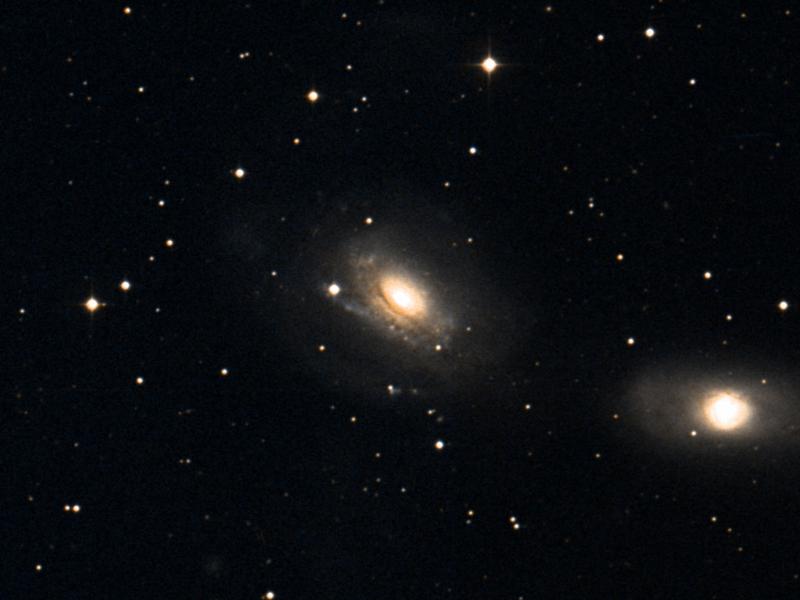
Half of a close interacting pair with NGC 3169 in Sextans — two bright ovals seven arcminutes apart at 150 mm, quietly pulling each other's discs out of true.La moitié d'une paire serrée en interaction avec NGC 3169 dans le Sextant — deux ovales brillants à sept minutes d'arc l'un de l'autre à 150 mm, se tirant mutuellement les disques hors d'aplomb.La mitad de una pareja prieta en interacción con NGC 3169 en el Sextante — dos óvalos brillantes a siete minutos de arco a 150 mm, sacándose en silencio los discos de su sitio.Die Hälfte eines engen wechselwirkenden Paares mit NGC 3169 im Sextanten — zwei helle Ovale, sieben Bogenminuten getrennt, bei 150 mm, die einander still die Scheiben verziehen.
large scope, dark skygrand diamètre, ciel noirgran abertura, cielo oscurogroße Öffnung, dunkler HimmelDSS2 — STScI/NASA · CDS
TypeTypeTipoTyp
galaxygalaxiegalaxiaGalaxie
ConstellationConstellationConstelaciónSternbild
Leo
MagnitudeMagnitudeMagnitudHelligkeit
10.9
SizeTailleTamañoGröße
1.23′ × 0.71′
Surface brightnessBrillance de surfaceBrillo superficialFlächenhelligkeit
19.4 mag/arcsec²
DistanceDistanceDistanciaEntfernung
about 100 million light-yearsenviron 100 millions d'années-lumièreunos 100 millones de años luzetwa 100 Millionen Lichtjahre
A graceful tilted spiral under the Lion's belly — a soft oval with a small core at 250 mm.Une gracieuse spirale inclinée sous le ventre du Lion — un ovale doux au petit cœur à 250 mm.Una grácil espiral inclinada bajo el vientre del León — un óvalo suave de núcleo pequeño a 250 mm.Eine anmutige geneigte Spirale unter dem Bauch des Löwen — ein weiches Oval mit kleinem Kern bei 250 mm.
large scope, dark skygrand diamètre, ciel noirgran abertura, cielo oscurogroße Öffnung, dunkler HimmelDSS2 — STScI/NASA · CDS
TypeTypeTipoTyp
galaxygalaxiegalaxiaGalaxie
ConstellationConstellationConstelaciónSternbild
Sextans
MagnitudeMagnitudeMagnitudHelligkeit
10.9
SizeTailleTamañoGröße
3.48′ × 2.13′
Surface brightnessBrillance de surfaceBrillo superficialFlächenhelligkeit
21.7 mag/arcsec²
DistanceDistanceDistanciaEntfernung
about 90 million light-yearsenviron 90 millions d'années-lumièreunos 90 millones de años luzetwa 90 Millionen Lichtjahre
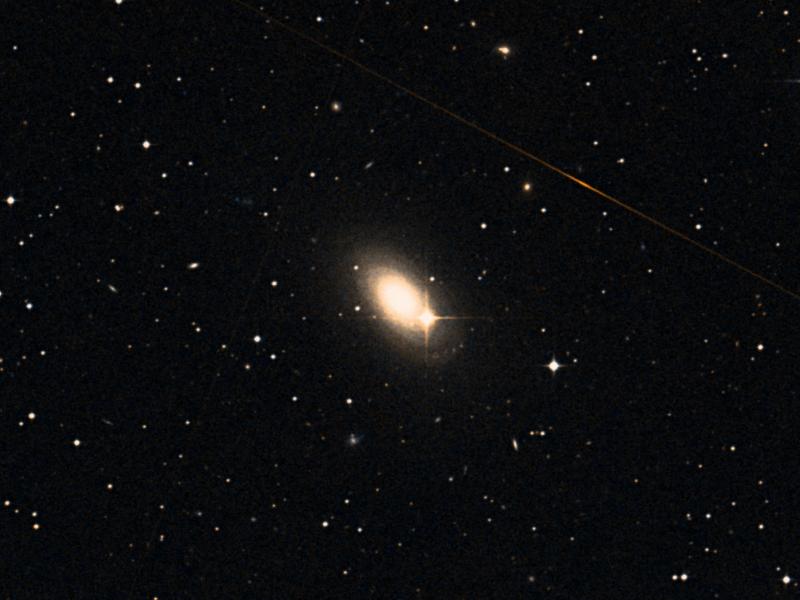
An elliptical in Sextans with a bright star stuck to its southwest rim — the pair looks like a comet at low power. A condensed glow once the star is managed; ninety million light-years past it.Une elliptique du Sextant, une étoile brillante collée à son bord sud-ouest — la paire ressemble à une comète à faible grossissement. Une lueur condensée une fois l'étoile domptée ; quatre-vingt-dix millions d'années-lumière derrière elle.Una elíptica del Sextante con una estrella brillante pegada a su borde suroeste — la pareja parece un cometa a pocos aumentos. Un resplandor condensado una vez domada la estrella; noventa millones de años luz tras ella.Eine Elliptische im Sextanten mit einem hellen Stern am Südwestrand — das Paar sieht bei schwacher Vergrößerung wie ein Komet aus. Ein verdichtetes Glimmen, sobald der Stern gebändigt ist; neunzig Millionen Lichtjahre dahinter.
large scope, dark skygrand diamètre, ciel noirgran abertura, cielo oscurogroße Öffnung, dunkler HimmelDSS2 — STScI/NASA · CDS
TypeTypeTipoTyp
galaxygalaxiegalaxiaGalaxie
ConstellationConstellationConstelaciónSternbild
Sextans
MagnitudeMagnitudeMagnitudHelligkeit
10.9
SizeTailleTamañoGröße
4.34′ × 2.65′
Surface brightnessBrillance de surfaceBrillo superficialFlächenhelligkeit
22.2 mag/arcsec²
DistanceDistanceDistanciaEntfernung
about 70 million light-yearsenviron 70 millions d'années-lumièreunos 70 millones de años luzetwa 70 Millionen Lichtjahre
NGC 3166's interacting partner in Sextans — the slightly brighter, more distorted half of the pair, its arms visibly pulled askew in photographs. Two glows in one field at 150 mm.La partenaire en interaction de NGC 3166 dans le Sextant — la moitié un peu plus brillante et plus déformée de la paire, ses bras visiblement tirés de travers en photographie. Deux lueurs dans un champ à 150 mm.La socia en interacción de NGC 3166 en el Sextante — la mitad algo más brillante y deformada de la pareja, con los brazos visiblemente torcidos en fotografía. Dos resplandores en un campo a 150 mm.NGC 3166s wechselwirkende Partnerin im Sextanten — die etwas hellere, stärker verzerrte Hälfte des Paares, die Arme auf Fotos sichtbar verzogen. Zwei Lichter in einem Feld bei 150 mm.
large scope, dark skygrand diamètre, ciel noirgran abertura, cielo oscurogroße Öffnung, dunkler HimmelDSS2 — STScI/NASA · CDS
TypeTypeTipoTyp
galaxygalaxiegalaxiaGalaxie
ConstellationConstellationConstelaciónSternbild
Hydra
MagnitudeMagnitudeMagnitudHelligkeit
11.1
SizeTailleTamañoGröße
3.45′ × 1.85′
Surface brightnessBrillance de surfaceBrillo superficialFlächenhelligkeit
21.7 mag/arcsec²
DistanceDistanceDistanciaEntfernung
about 80 million light-yearsenviron 80 millions d'années-lumièreunos 80 millones de años luzetwa 80 Millionen Lichtjahre
A ringed spiral in Hydra — a condensed core in a faint envelope at 250 mm.Une spirale à anneau de l'Hydre — un cœur condensé dans une enveloppe pâle à 250 mm.Una espiral anillada de la Hidra — un núcleo condensado en una envoltura pálida a 250 mm.Eine Ringspirale in der Wasserschlange — ein verdichteter Kern in blasser Hülle bei 250 mm.
large scope, dark skygrand diamètre, ciel noirgran abertura, cielo oscurogroße Öffnung, dunkler Himmel
Leo I
DSS2 — STScI/NASA · CDS
TypeTypeTipoTyp
galaxygalaxiegalaxiaGalaxie
ConstellationConstellationConstelaciónSternbild
Leo
MagnitudeMagnitudeMagnitudHelligkeit
10.4
SizeTailleTamañoGröße
11.75′ × 8.51′
Surface brightnessBrillance de surfaceBrillo superficialFlächenhelligkeit
24.0 mag/arcsec²
DistanceDistanceDistanciaEntfernung
about 0.85 million light-yearsenviron 0.85 millions d'années-lumièreunos 0.85 millones de años luzetwa 0.85 Millionen Lichtjahre
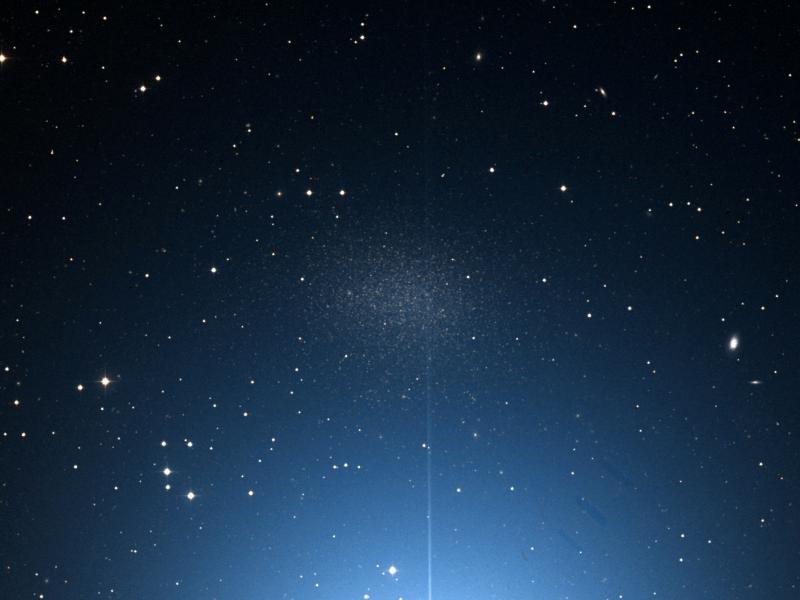
Leo I: a dwarf spheroidal satellite of the Milky Way hiding twenty arcminutes from blazing Regulus — a ghost oval whose only enemy is the star; put Regulus outside the field and sweep slowly. One of visual astronomy's famous tests.Leo I : une naine sphéroïdale satellite de la Voie lactée cachée à vingt minutes d'arc de l'éclatant Régulus — un ovale fantôme dont le seul ennemi est l'étoile ; mettez Régulus hors du champ et balayez lentement. L'un des tests célèbres de l'astronomie visuelle.Leo I: una enana esferoidal satélite de la Vía Láctea escondida a veinte minutos de arco del deslumbrante Régulo — un óvalo fantasma cuyo único enemigo es la estrella; ponga Régulo fuera del campo y barra despacio. Una de las pruebas célebres de la astronomía visual.Leo I: eine sphäroidale Zwergsatellitin der Milchstraße, zwanzig Bogenminuten vom gleißenden Regulus versteckt — ein Geisteroval, dessen einziger Feind der Stern ist; Regulus aus dem Feld legen und langsam schwenken. Einer der berühmten Tests der visuellen Astronomie.
large scope, dark skygrand diamètre, ciel noirgran abertura, cielo oscurogroße Öffnung, dunkler HimmelDSS2 — STScI/NASA · CDS
TypeTypeTipoTyp
galaxygalaxiegalaxiaGalaxie
ConstellationConstellationConstelaciónSternbild
Hydra
MagnitudeMagnitudeMagnitudHelligkeit
11.4
SizeTailleTamañoGröße
3.05′ × 1.03′
Surface brightnessBrillance de surfaceBrillo superficialFlächenhelligkeit
21.3 mag/arcsec²
DistanceDistanceDistanciaEntfernung
about 100 million light-yearsenviron 100 millions d'années-lumièreunos 100 millones de años luzetwa 100 Millionen Lichtjahre
A slim barred spiral in Hydra's head region — a thin bright oval at 250 mm, one of the far-flung stops that pull the Herschel hunter south.Une mince spirale barrée vers la tête de l'Hydre — un ovale fin et brillant à 250 mm, l'une des haltes lointaines qui tirent le chasseur de Herschel vers le sud.Una esbelta espiral barrada hacia la cabeza de la Hidra — un óvalo fino y brillante a 250 mm, una de las paradas remotas que tiran del cazador de Herschel hacia el sur.Eine schlanke Balkenspirale in der Kopfregion der Wasserschlange — ein dünnes helles Oval bei 250 mm, einer der entlegenen Halte, die den Herschel-Jäger nach Süden ziehen.
large scope, dark skygrand diamètre, ciel noirgran abertura, cielo oscurogroße Öffnung, dunkler HimmelDSS2 — STScI/NASA · CDS
TypeTypeTipoTyp
galaxygalaxiegalaxiaGalaxie
ConstellationConstellationConstelaciónSternbild
Leo
MagnitudeMagnitudeMagnitudHelligkeit
11.4
SizeTailleTamañoGröße
3.61′ × 2.71′
Surface brightnessBrillance de surfaceBrillo superficialFlächenhelligkeit
22.5 mag/arcsec²
DistanceDistanceDistanciaEntfernung
about 25 million light-yearsenviron 25 millions d'années-lumièreunos 25 millones de años luzetwa 25 Millionen Lichtjahre
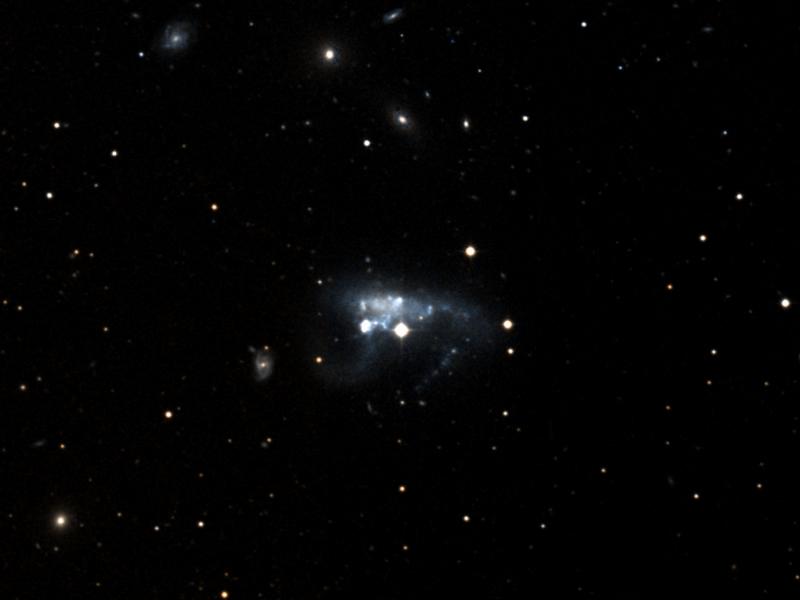
A wrecked irregular in Leo, the debris of a recent merger with a bright star on top — a patchy glow at 250 mm.Une irrégulière naufragée du Lion, débris d'une fusion récente coiffés d'une étoile brillante — une lueur inégale à 250 mm.Una irregular naufragada de Leo, restos de una fusión reciente con una estrella brillante encima — un resplandor desigual a 250 mm.Eine zertrümmerte Irreguläre im Löwen, die Trümmer einer jungen Verschmelzung mit hellem Stern obenauf — ein fleckiges Glimmen bei 250 mm.
large scope, dark skygrand diamètre, ciel noirgran abertura, cielo oscurogroße Öffnung, dunkler Himmel
Sextans Dwarf Spheroidal
DSS2 — STScI/NASA · CDS
TypeTypeTipoTyp
galaxygalaxiegalaxiaGalaxie
ConstellationConstellationConstelaciónSternbild
Sextans
MagnitudeMagnitudeMagnitudHelligkeit
10.4
SizeTailleTamañoGröße
30.2′ × 12.02′
Surface brightnessBrillance de surfaceBrillo superficialFlächenhelligkeit
25.4 mag/arcsec²
A survey-catalogue galaxy in Sextans, too far south of the NGC's sweep for a classic number — a faint 250 mm glow from the modern census.Une galaxie de catalogue de relevé dans le Sextant, trop au sud du balayage du NGC pour un numéro classique — une lueur discrète à 250 mm venue du recensement moderne.Una galaxia de catálogo de rastreo en el Sextante, demasiado al sur del barrido del NGC para un número clásico — un resplandor tenue a 250 mm salido del censo moderno.Eine Durchmusterungskatalog-Galaxie im Sextanten, zu weit südlich des NGC-Schwenks für eine klassische Nummer — ein schwaches 250-mm-Glimmen aus der modernen Zählung.
Both stars bright enough for a small telescope, wide enough to split.Deux composantes assez brillantes pour un petit télescope, assez écartées pour être séparées.Ambas componentes lo bastante brillantes para un telescopio pequeño y separables.Beide Komponenten hell genug für ein kleines Teleskop und weit genug zum Trennen.