20 objects on this chartobjets sur cette carteobjetos en esta cartaObjekte auf dieser Karte
Easiest firstLes plus faciles d'abordLos más fáciles primeroDie einfachsten zuerst
What this chart shows, in the order you should try: start where success is certain, work toward the hard ones.Ce que montre cette carte, dans l'ordre où l'essayer : commencez là où le succès est certain, avancez vers le difficile.Lo que muestra esta carta, en el orden en que conviene intentarlo: empiece donde el éxito es seguro y avance hacia lo difícil.Was diese Karte zeigt, in der Reihenfolge, in der man es versuchen sollte: Beginnen Sie, wo der Erfolg sicher ist, und arbeiten Sie sich vor.
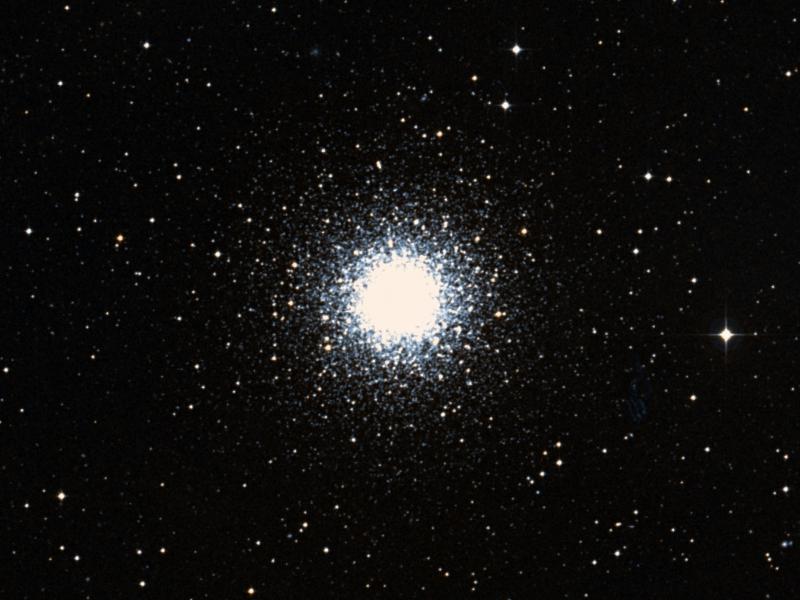
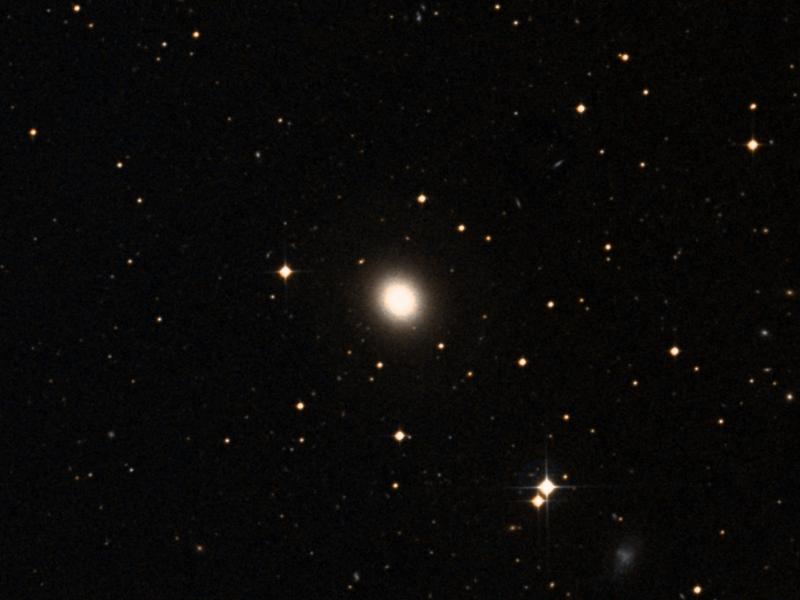
NGC 1851
small telescopepetit télescopetelescopio pequeñokleines TeleskopDSS2 — STScI/NASA · CDS
Surface brightnessBrillance de surfaceBrillo superficialFlächenhelligkeit
20.6 mag/arcsec²
DistanceDistanceDistanciaEntfernung
about 39 000 light-yearsenviron 39 000 années-lumièreunos 39 000 años luzetwa 39 000 Lichtjahre
A bright, dense winter globular alone in Columba, south of Orion's hunting dogs — a sharp core in a misty halo at 150 mm. Far enough south that many northern observers meet it only once; catch it crossing the meridian.Un globulaire d'hiver brillant et dense, seul dans la Colombe au sud des chiens de chasse d'Orion — cœur piqué dans un halo brumeux à 150 mm. Assez austral pour que bien des observateurs boréaux ne le croisent qu'une fois ; attrapez-le au passage au méridien.Un globular de invierno brillante y denso, solo en la Paloma al sur de los perros de caza de Orión — núcleo nítido en un halo brumoso a 150 mm. Lo bastante austral para que muchos observadores boreales lo encuentren una sola vez; cácelo cruzando el meridiano.Ein heller, dichter Winter-Kugelhaufen, allein in der Taube südlich von Orions Jagdhunden — ein scharfer Kern im dunstigen Halo bei 150 mm. So weit südlich, dass viele nördliche Beobachter ihm nur einmal begegnen; beim Meridiandurchgang erwischen.
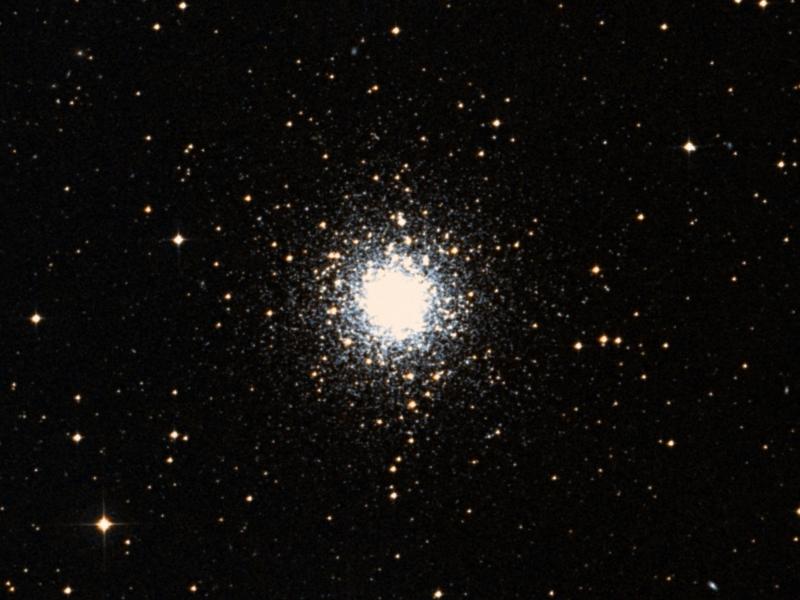
Surface brightnessBrillance de surfaceBrillo superficialFlächenhelligkeit
21.1 mag/arcsec²
DistanceDistanceDistanciaEntfernung
about 42 000 light-yearsenviron 42 000 années-lumièreunos 42 000 años luzetwa 42 000 Lichtjahre
A rare thing: a winter globular, south of Orion in Lepus, when nearly all its kind crowd the summer sky around the galactic centre. A compact, starfish-edged ball that 200 mm begin to resolve; it likely came to us with a devoured dwarf galaxy.Chose rare : un globulaire d'hiver, au sud d'Orion dans le Lièvre, quand presque tous les siens se pressent dans le ciel d'été autour du centre galactique. Une boule compacte aux bords en étoile de mer, que 200 mm commencent à résoudre ; il nous est sans doute venu avec une galaxie naine dévorée.Cosa rara: un globular de invierno, al sur de Orión en la Liebre, cuando casi todos los suyos se agolpan en el cielo estival en torno al centro galáctico. Una bola compacta de bordes en estrella de mar, que 200 mm empiezan a resolver; probablemente nos llegó con una galaxia enana devorada.Eine Seltenheit: ein Winter-Kugelhaufen, südlich von Orion im Hasen, wo sich fast alle seiner Art im Sommerhimmel ums galaktische Zentrum drängen. Ein kompakter Ball mit Seestern-Rändern, den 200 mm aufzulösen beginnen; vermutlich kam er mit einer verschlungenen Zwerggalaxie zu uns.
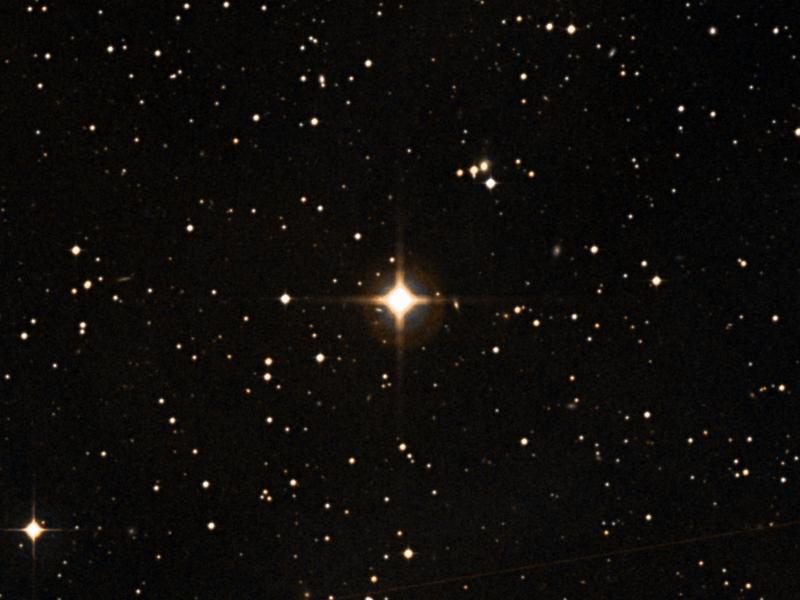
Surface brightnessBrillance de surfaceBrillo superficialFlächenhelligkeit
14.6 mag/arcsec²
DistanceDistanceDistanciaEntfernung
about 3 600 light-yearsenviron 3 600 années-lumièreunos 3 600 años luzetwa 3 600 Lichtjahre
The Spirograph: a small bright planetary in Lepus whose inner shell, in space-telescope images, is etched like machine-turned engraving. In the eyepiece a slightly fuzzy "star" with a reddish tinge some eyes catch — one of the few planetaries reported pink.Le Spirographe : une petite planétaire brillante du Lièvre dont la coquille interne, sur les images spatiales, est gravée comme un guillochage. À l'oculaire, une « étoile » un peu floue à la nuance rougeâtre que certains yeux attrapent — l'une des rares planétaires déclarées roses.El Espirógrafo: una pequeña planetaria brillante de la Liebre cuya capa interna, en las imágenes espaciales, está grabada como un guilloché. En el ocular, una "estrella" algo borrosa con un matiz rojizo que algunos ojos captan — una de las pocas planetarias descritas como rosadas.Der Spirograph: ein kleiner heller Planetarischer im Hasen, dessen innere Hülle auf Weltraumaufnahmen wie Guillochierung graviert ist. Im Okular ein leicht verwaschener "Stern" mit rötlichem Hauch, den manche Augen erhaschen — einer der wenigen als rosa gemeldeten Planetarischen.
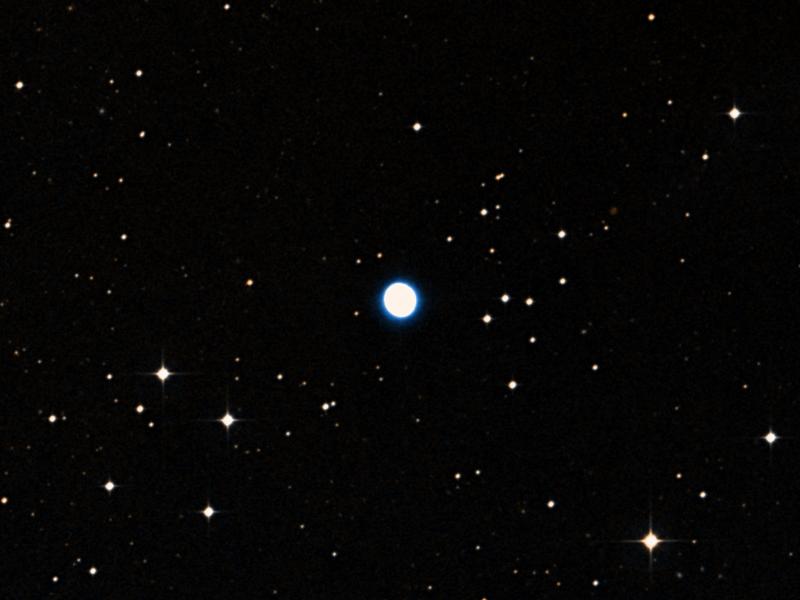
Surface brightnessBrillance de surfaceBrillo superficialFlächenhelligkeit
17.9 mag/arcsec²
DistanceDistanceDistanciaEntfernung
about 5 000 light-yearsenviron 5 000 années-lumièreunos 5 000 años luzetwa 5 000 Lichtjahre
Cleopatra's Eye: the one bright deep-sky object in Eridanus's long emptiness — a blue-grey double-shell disc like a small Eskimo Nebula, with a central star that blinks in and out at 200 mm. A winter planetary that deserves more visitors.L'Œil de Cléopâtre : le seul objet du ciel profond brillant dans le long vide de l'Éridan — un disque gris-bleu à double coquille, comme un petit Esquimau, avec une étoile centrale qui clignote à 200 mm. Une planétaire d'hiver qui mérite plus de visites.El Ojo de Cleopatra: el único objeto brillante de cielo profundo en el largo vacío de Erídano — un disco gris azulado de doble capa, como un pequeño Esquimal, con una estrella central que parpadea a 200 mm. Una planetaria de invierno que merece más visitas.Kleopatras Auge: das eine helle Deep-Sky-Objekt in der langen Leere des Eridanus — eine blaugraue Doppelschalen-Scheibe wie ein kleiner Eskimonebel, mit einem Zentralstern, der bei 200 mm ein- und ausblinkt. Ein Winterplanetarischer, der mehr Besucher verdient.
large scope, dark skygrand diamètre, ciel noirgran abertura, cielo oscurogroße Öffnung, dunkler HimmelDSS2 — STScI/NASA · CDS
TypeTypeTipoTyp
galaxygalaxiegalaxiaGalaxie
ConstellationConstellationConstelaciónSternbild
Horologium
MagnitudeMagnitudeMagnitudHelligkeit
9.9
SizeTailleTamañoGröße
6.19′ × 2.96′
Surface brightnessBrillance de surfaceBrillo superficialFlächenhelligkeit
21.7 mag/arcsec²
DistanceDistanceDistanciaEntfernung
about 40 million light-yearsenviron 40 millions d'années-lumièreunos 40 millones de años luzetwa 40 Millionen Lichtjahre
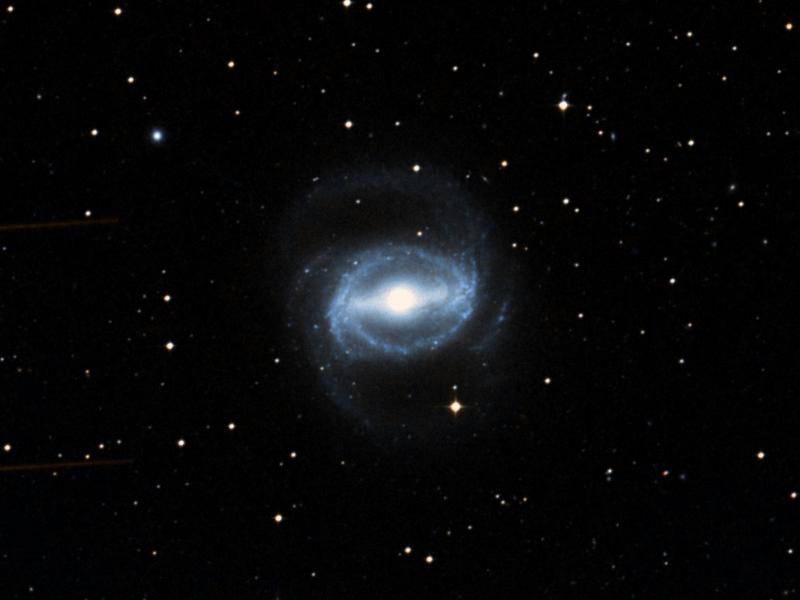
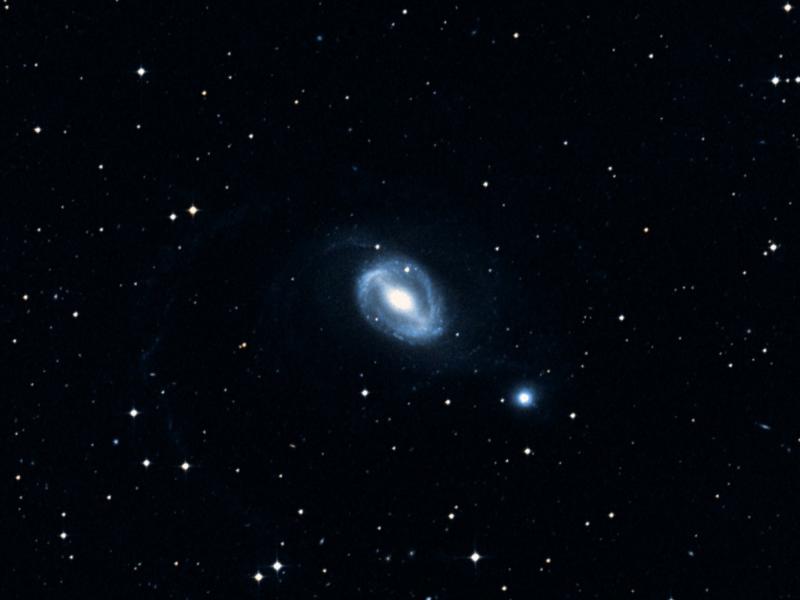
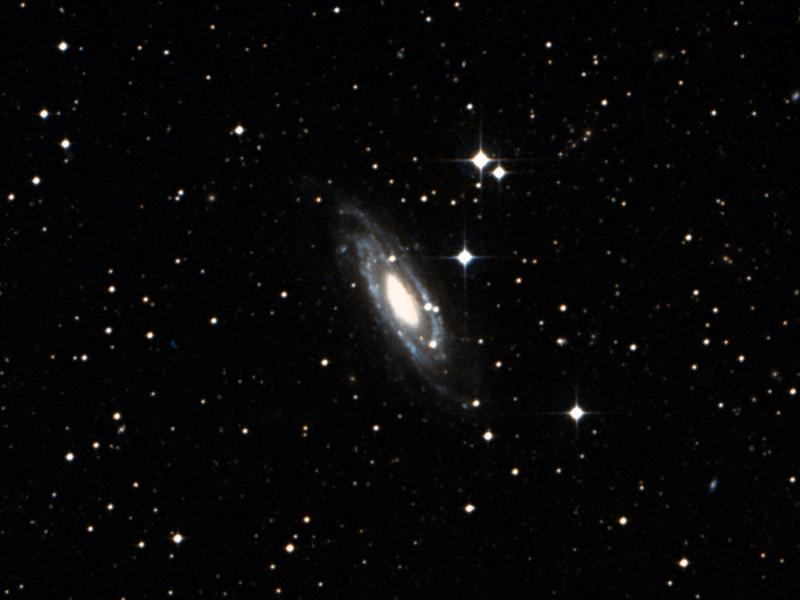
A theatrical barred spiral in Horologium — bright bar, inner ring and nuclear spiral, a favourite of southern imagers; visually a soft oval with a sharp core at 250 mm.Une spirale barrée théâtrale de l'Horloge — barre brillante, anneau interne et spirale nucléaire, favorite des imageurs austraux ; visuellement un ovale doux au cœur net à 250 mm.Una espiral barrada teatral del Reloj — barra brillante, anillo interno y espiral nuclear, favorita de los astrofotógrafos australes; visualmente un óvalo suave de núcleo nítido a 250 mm.Eine theatralische Balkenspirale in der Pendeluhr — heller Balken, Innenring und Kernspirale, ein Liebling südlicher Fotografen; visuell ein weiches Oval mit scharfem Kern bei 250 mm.
large scope, dark skygrand diamètre, ciel noirgran abertura, cielo oscurogroße Öffnung, dunkler HimmelDSS2 — STScI/NASA · CDS
TypeTypeTipoTyp
galaxygalaxiegalaxiaGalaxie
ConstellationConstellationConstelaciónSternbild
Columba
MagnitudeMagnitudeMagnitudHelligkeit
10.2
SizeTailleTamañoGröße
5.52′ × 2.76′
Surface brightnessBrillance de surfaceBrillo superficialFlächenhelligkeit
21.7 mag/arcsec²
DistanceDistanceDistanciaEntfernung
about 40 million light-yearsenviron 40 millions d'années-lumièreunos 40 millones de años luzetwa 40 Millionen Lichtjahre
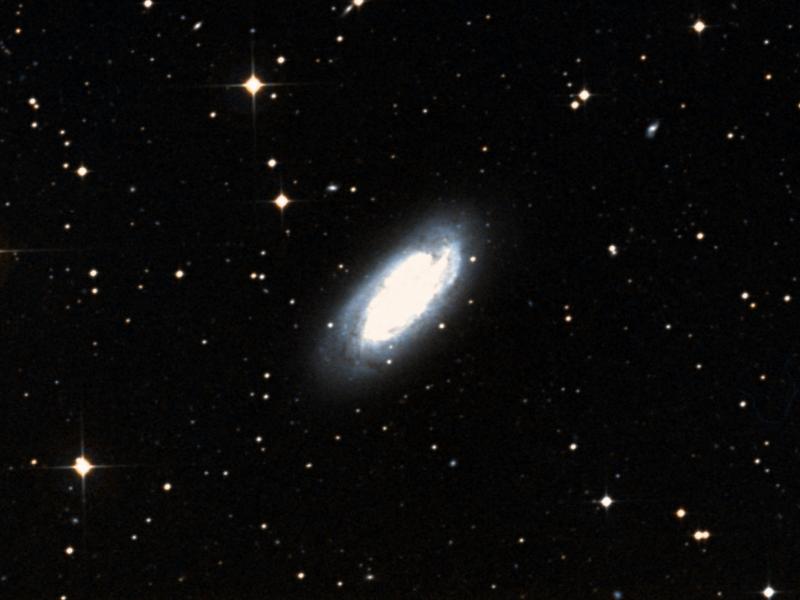
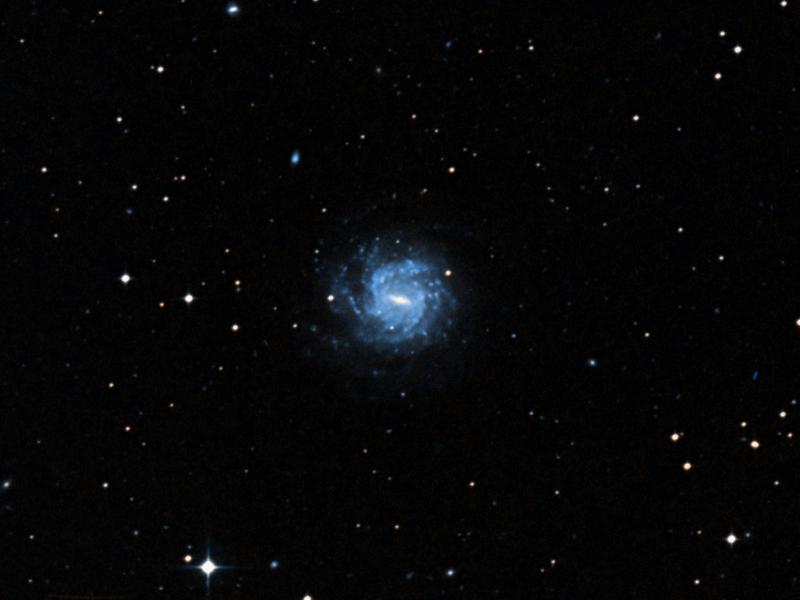
A bright, mottled starburst spiral in Columba — a strong oval at 200 mm with grainy texture, partner to NGC 1808 one field north.Une spirale à flambée brillante et marbrée de la Colombe — un ovale franc à 200 mm à la texture granuleuse, partenaire de NGC 1808 à un champ au nord.Una espiral con brote brillante y moteada de la Paloma — un óvalo firme a 200 mm de textura granulada, socia de NGC 1808 a un campo al norte.Eine helle, gesprenkelte Starburst-Spirale in der Taube — ein kräftiges Oval bei 200 mm mit körniger Textur, Partnerin von NGC 1808 ein Feld nördlich.
large scope, dark skygrand diamètre, ciel noirgran abertura, cielo oscurogroße Öffnung, dunkler HimmelDSS2 — STScI/NASA · CDS
TypeTypeTipoTyp
galaxygalaxiegalaxiaGalaxie
ConstellationConstellationConstelaciónSternbild
Columba
MagnitudeMagnitudeMagnitudHelligkeit
10.2
SizeTailleTamañoGröße
5.42′ × 1.83′
Surface brightnessBrillance de surfaceBrillo superficialFlächenhelligkeit
21.3 mag/arcsec²
DistanceDistanceDistanciaEntfernung
about 40 million light-yearsenviron 40 millions d'années-lumièreunos 40 millones de años luzetwa 40 Millionen Lichtjahre
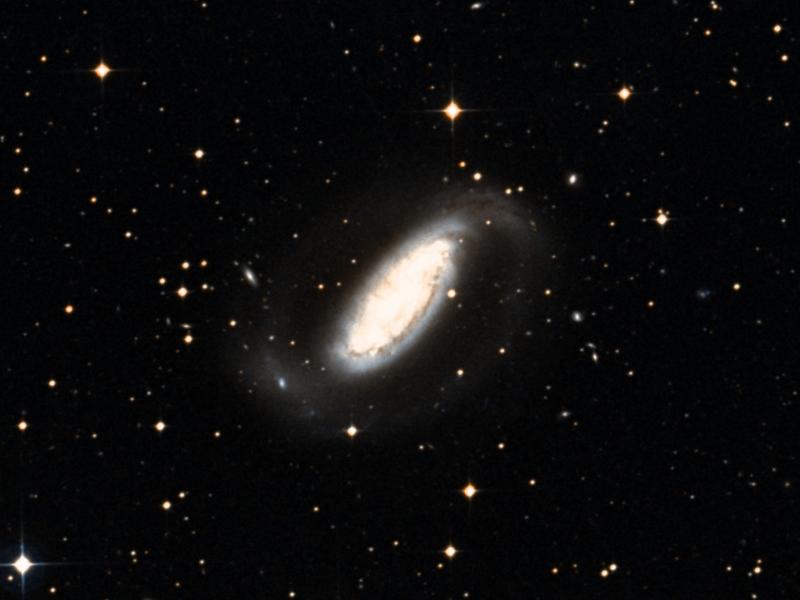
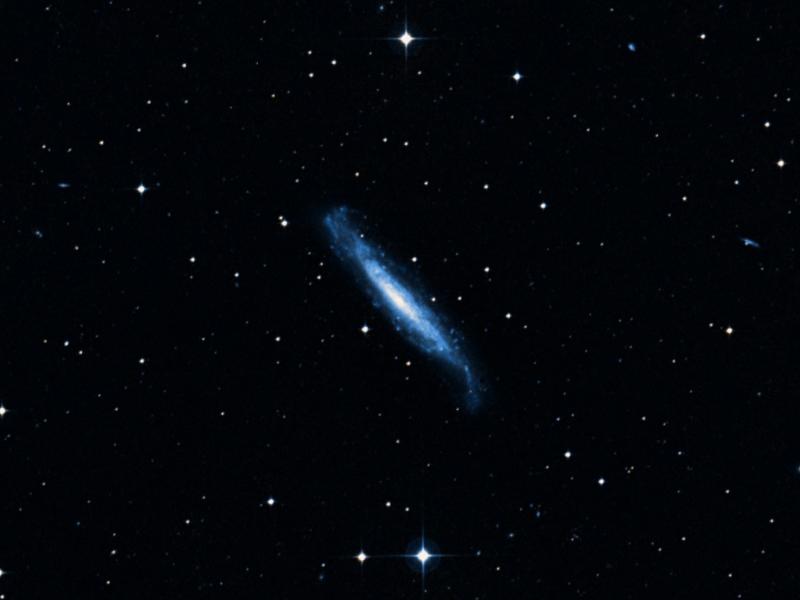
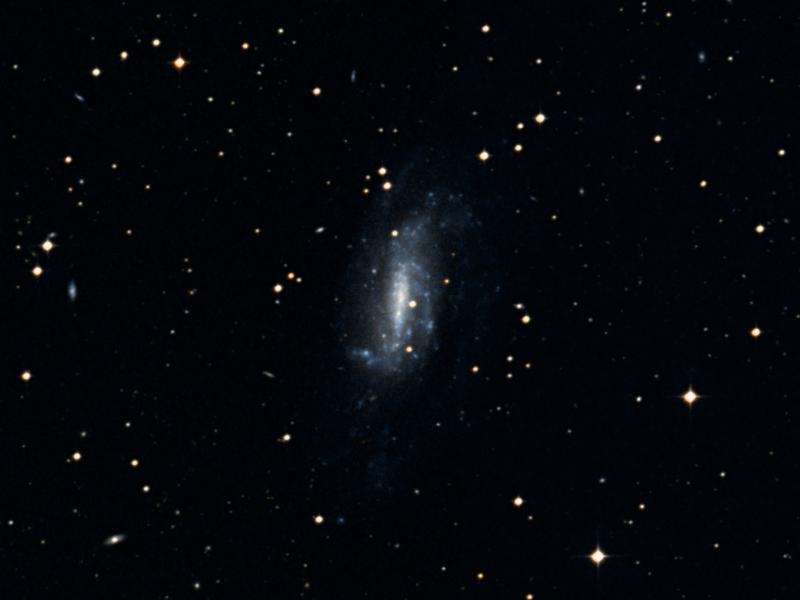
A Seyfert starburst in Columba with dust plumes rising off its core — a bright cigar at 200 mm; with NGC 1792 a fine southern pair nobody visits.Une flambée de Seyfert dans la Colombe, des panaches de poussière montant de son cœur — un cigare brillant à 200 mm ; avec NGC 1792, une belle paire australe que personne ne visite.Un brote Seyfert en la Paloma con penachos de polvo alzándose de su núcleo — un puro brillante a 200 mm; con NGC 1792, una bella pareja austral que nadie visita.Ein Seyfert-Starburst in der Taube mit Staubschweifen über dem Kern — eine helle Zigarre bei 200 mm; mit NGC 1792 ein feines Südpaar, das niemand besucht.
large scope, dark skygrand diamètre, ciel noirgran abertura, cielo oscurogroße Öffnung, dunkler HimmelDSS2 — STScI/NASA · CDS
TypeTypeTipoTyp
galaxygalaxiegalaxiaGalaxie
ConstellationConstellationConstelaciónSternbild
Eridanus
MagnitudeMagnitudeMagnitudHelligkeit
10.1
SizeTailleTamañoGröße
11.27′ × 3.09′
Surface brightnessBrillance de surfaceBrillo superficialFlächenhelligkeit
22.6 mag/arcsec²
DistanceDistanceDistanciaEntfernung
about 55 million light-yearsenviron 55 millions d'années-lumièreunos 55 millones de años luzetwa 55 Millionen Lichtjahre
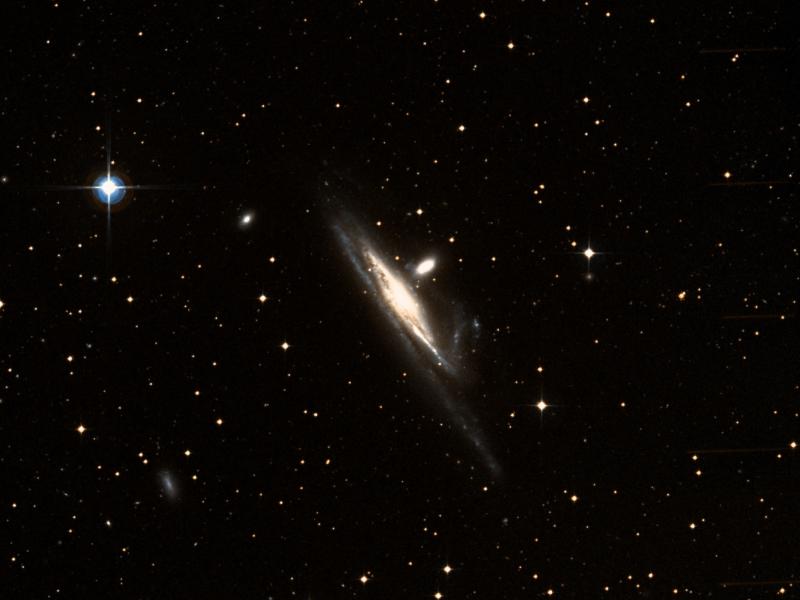
A magnificent interacting edge-on in Eridanus, arched over its small companion NGC 1531 — a bright bent needle at 200 mm from southern latitudes, the pair in mid-embrace.Une magnifique tranche en interaction dans l'Éridan, arquée sur sa petite compagne NGC 1531 — une aiguille pliée et brillante à 200 mm depuis les latitudes australes, la paire en pleine étreinte.Una magnífica galaxia de canto en interacción en Erídano, arqueada sobre su pequeña compañera NGC 1531 — una aguja doblada y brillante a 200 mm desde latitudes australes, la pareja en pleno abrazo.Eine prachtvolle wechselwirkende Kantengalaxie im Eridanus, über ihre kleine Begleiterin NGC 1531 gewölbt — eine helle geknickte Nadel bei 200 mm aus südlichen Breiten, das Paar mitten in der Umarmung.
large scope, dark skygrand diamètre, ciel noirgran abertura, cielo oscurogroße Öffnung, dunkler HimmelDSS2 — STScI/NASA · CDS
TypeTypeTipoTyp
galaxygalaxiegalaxiaGalaxie
ConstellationConstellationConstelaciónSternbild
Eridanus
MagnitudeMagnitudeMagnitudHelligkeit
10.7
SizeTailleTamañoGröße
4.35′ × 2.76′
Surface brightnessBrillance de surfaceBrillo superficialFlächenhelligkeit
22.0 mag/arcsec²
DistanceDistanceDistanciaEntfernung
about 60 million light-yearsenviron 60 millions d'années-lumièreunos 60 millones de años luzetwa 60 Millionen Lichtjahre
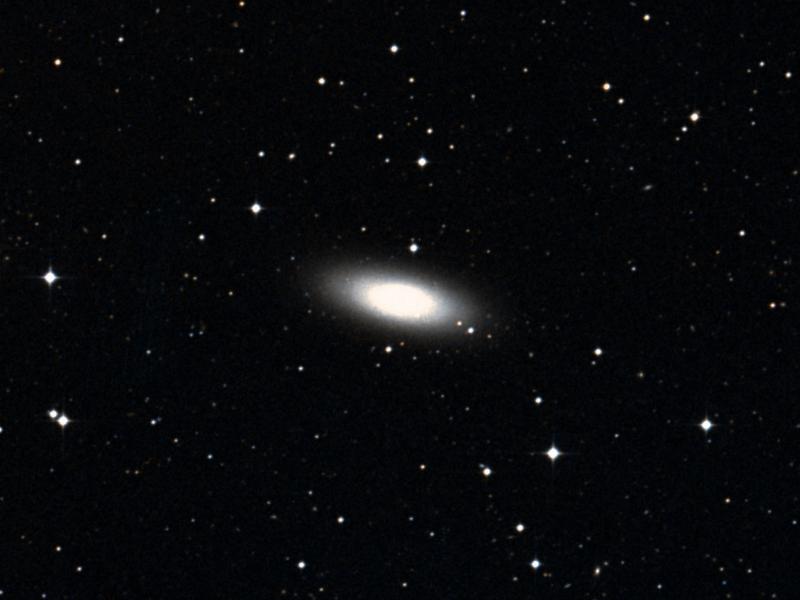
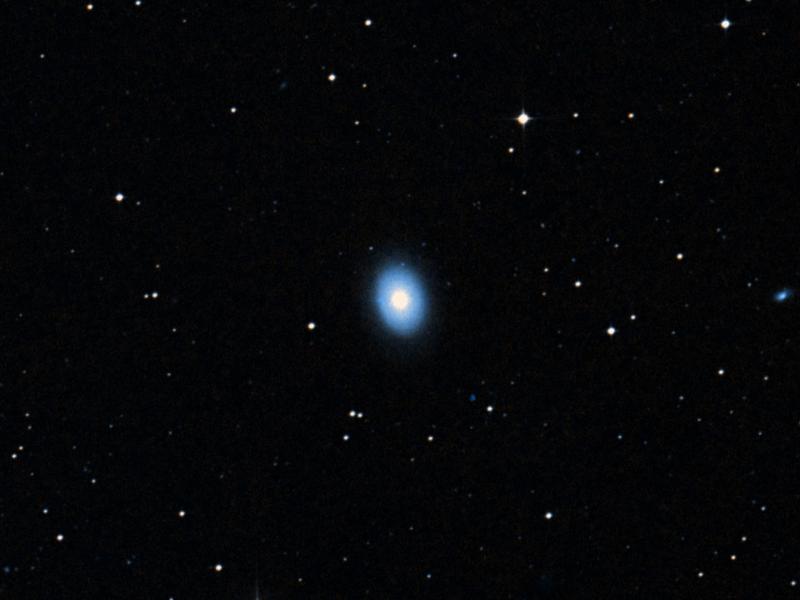
A lenticular on the Eridanus–Lepus border, another quiet merger remnant — an easy condensed oval at 250 mm.Une lenticulaire à la frontière Éridan–Lièvre, encore un discret vestige de fusion — un ovale condensé facile à 250 mm.Una lenticular en la frontera Erídano–Liebre, otro discreto vestigio de fusión — un óvalo condensado fácil a 250 mm.Eine Linsengalaxie an der Grenze Eridanus–Hase, ein weiteres stilles Verschmelzungsrelikt — ein leichtes verdichtetes Oval bei 250 mm.
large scope, dark skygrand diamètre, ciel noirgran abertura, cielo oscurogroße Öffnung, dunkler HimmelDSS2 — STScI/NASA · CDS
TypeTypeTipoTyp
galaxygalaxiegalaxiaGalaxie
ConstellationConstellationConstelaciónSternbild
Horologium
MagnitudeMagnitudeMagnitudHelligkeit
10.4
SizeTailleTamañoGröße
8.43′ × 4.02′
Surface brightnessBrillance de surfaceBrillo superficialFlächenhelligkeit
22.8 mag/arcsec²
DistanceDistanceDistanciaEntfernung
about 38 million light-yearsenviron 38 millions d'années-lumièreunos 38 millones de años luzetwa 38 Millionen Lichtjahre
A double-ringed barred spiral in Horologium paired with the dwarf NGC 1510 — the pair at 250 mm, the nuclear ring of star-birth a space- telescope showpiece.Une spirale barrée à double anneau de l'Horloge, appariée à la naine NGC 1510 — la paire à 250 mm, l'anneau nucléaire de naissance d'étoiles étant une vitrine de télescope spatial.Una espiral barrada de doble anillo del Reloj, emparejada con la enana NGC 1510 — la pareja a 250 mm, con el anillo nuclear de nacimiento estelar como pieza de telescopio espacial.Eine doppelt geringte Balkenspirale in der Pendeluhr, gepaart mit der Zwergin NGC 1510 — das Paar bei 250 mm, der Kernring der Sterngeburt ein Weltraumteleskop-Schaustück.
large scope, dark skygrand diamètre, ciel noirgran abertura, cielo oscurogroße Öffnung, dunkler HimmelDSS2 — STScI/NASA · CDS
TypeTypeTipoTyp
galaxygalaxiegalaxiaGalaxie
ConstellationConstellationConstelaciónSternbild
Horologium
MagnitudeMagnitudeMagnitudHelligkeit
10.8
SizeTailleTamañoGröße
4.58′ × 1.79′
Surface brightnessBrillance de surfaceBrillo superficialFlächenhelligkeit
21.7 mag/arcsec²
DistanceDistanceDistanciaEntfernung
about 55 million light-yearsenviron 55 millions d'années-lumièreunos 55 millones de años luzetwa 55 Millionen Lichtjahre
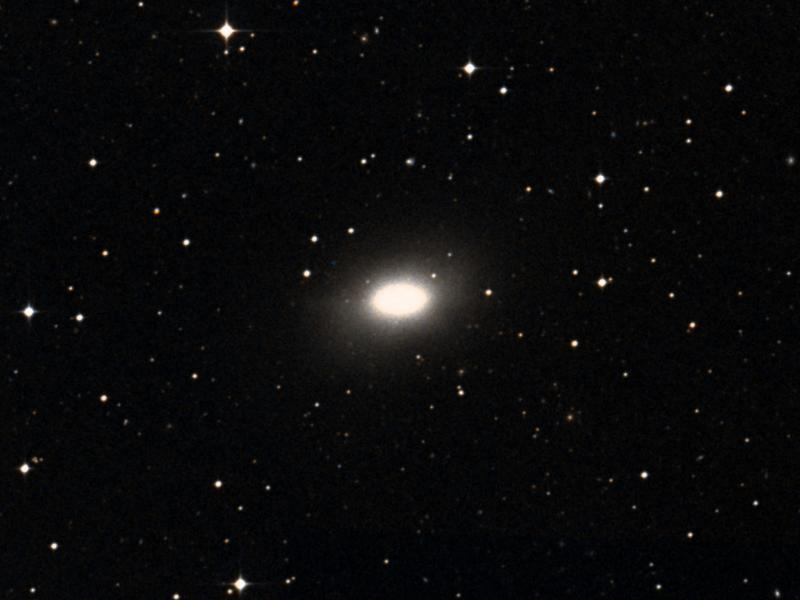
A smooth lenticular in Horologium — a bright small lens at 250 mm.Une lenticulaire lisse de l'Horloge — une petite lentille brillante à 250 mm.Una lenticular lisa del Reloj — una pequeña lente brillante a 250 mm.Eine glatte Linsengalaxie in der Pendeluhr — eine kleine helle Linse bei 250 mm.
large scope, dark skygrand diamètre, ciel noirgran abertura, cielo oscurogroße Öffnung, dunkler HimmelDSS2 — STScI/NASA · CDS
TypeTypeTipoTyp
galaxygalaxiegalaxiaGalaxie
ConstellationConstellationConstelaciónSternbild
Columba
MagnitudeMagnitudeMagnitudHelligkeit
10.9
SizeTailleTamañoGröße
4.47′ × 1.67′
Surface brightnessBrillance de surfaceBrillo superficialFlächenhelligkeit
21.7 mag/arcsec²
DistanceDistanceDistanciaEntfernung
about 37 million light-yearsenviron 37 millions d'années-lumièreunos 37 millones de años luzetwa 37 Millionen Lichtjahre
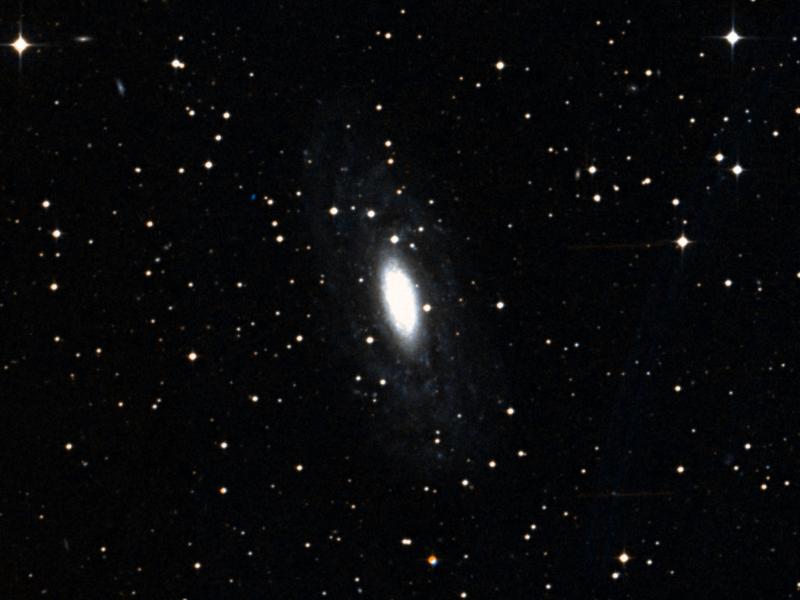
A quiet tilted spiral in Columba — an even oval at 250 mm, one of the Cepheid-distance calibration galaxies of the Hubble project.Une spirale inclinée et tranquille de la Colombe — un ovale égal à 250 mm, l'une des galaxies d'étalonnage céphéide du projet Hubble.Una espiral inclinada y tranquila de la Paloma — un óvalo parejo a 250 mm, una de las galaxias de calibración cefeida del proyecto Hubble.Eine stille geneigte Spirale in der Taube — ein gleichmäßiges Oval bei 250 mm, eine der Cepheiden-Kalibrationsgalaxien des Hubble-Projekts.
large scope, dark skygrand diamètre, ciel noirgran abertura, cielo oscurogroße Öffnung, dunkler HimmelDSS2 — STScI/NASA · CDS
TypeTypeTipoTyp
galaxygalaxiegalaxiaGalaxie
ConstellationConstellationConstelaciónSternbild
Fornax
MagnitudeMagnitudeMagnitudHelligkeit
10.9
SizeTailleTamañoGröße
4.33′ × 2.87′
Surface brightnessBrillance de surfaceBrillo superficialFlächenhelligkeit
22.2 mag/arcsec²
DistanceDistanceDistanciaEntfernung
about 70 million light-yearsenviron 70 millions d'années-lumièreunos 70 millones de años luzetwa 70 Millionen Lichtjahre
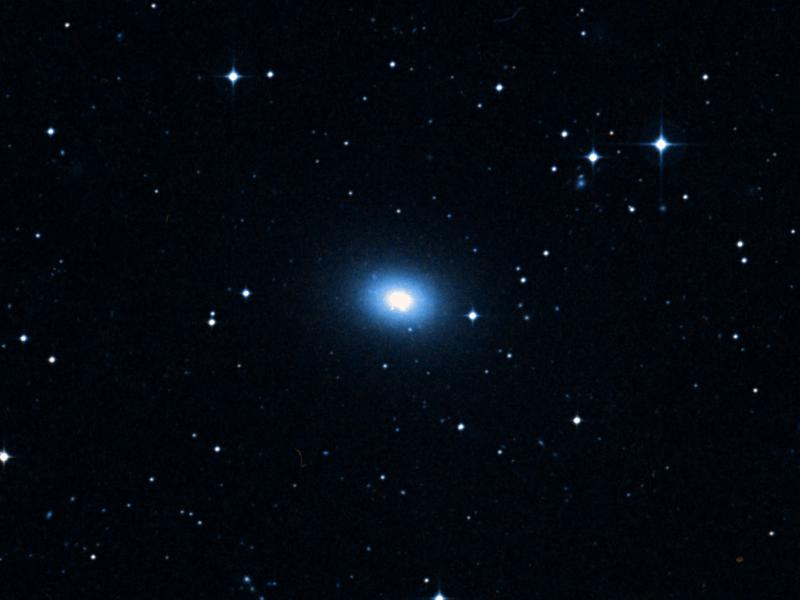
An ordinary elliptical of the Fornax Cluster — a modest condensed glow at 250 mm; its irregular namesake NGC 1427A, plunging cluster-ward, is the famous one.Une elliptique ordinaire de l'amas du Fourneau — une lueur condensée modeste à 250 mm ; son homonyme irrégulière NGC 1427A, plongeant vers l'amas, est la célèbre.Una elíptica corriente del cúmulo de Fornax — un resplandor condensado modesto a 250 mm; su homónima irregular NGC 1427A, zambulléndose hacia el cúmulo, es la famosa.Eine gewöhnliche Elliptische des Fornax-Haufens — ein bescheidenes verdichtetes Glimmen bei 250 mm; ihre irreguläre Namensvetterin NGC 1427A, haufenwärts stürzend, ist die berühmte.
large scope, dark skygrand diamètre, ciel noirgran abertura, cielo oscurogroße Öffnung, dunkler HimmelDSS2 — STScI/NASA · CDS
TypeTypeTipoTyp
galaxygalaxiegalaxiaGalaxie
ConstellationConstellationConstelaciónSternbild
Lepus
MagnitudeMagnitudeMagnitudHelligkeit
10.9
SizeTailleTamañoGröße
5.16′ × 2.33′
Surface brightnessBrillance de surfaceBrillo superficialFlächenhelligkeit
22.2 mag/arcsec²
DistanceDistanceDistanciaEntfernung
about 65 million light-yearsenviron 65 millions d'années-lumièreunos 65 millones de años luzetwa 65 Millionen Lichtjahre
A tilted spiral in Lepus with a sharp stellar nucleus — a small oval with a bright pip at 200 mm, framed by a neat triangle of field stars below Orion's feet.Une spirale inclinée du Lièvre au noyau stellaire net — un petit ovale au pépin brillant à 200 mm, encadré d'un joli triangle d'étoiles de champ sous les pieds d'Orion.Una espiral inclinada de la Liebre con núcleo estelar nítido — un pequeño óvalo con pepita brillante a 200 mm, enmarcado por un pulcro triángulo de estrellas de campo bajo los pies de Orión.Eine geneigte Spirale im Hasen mit scharfem Sternkern — ein kleines Oval mit hellem Punkt bei 200 mm, gerahmt von einem hübschen Dreieck aus Feldsternen unter Orions Füßen.
large scope, dark skygrand diamètre, ciel noirgran abertura, cielo oscurogroße Öffnung, dunkler HimmelDSS2 — STScI/NASA · CDS
TypeTypeTipoTyp
galaxygalaxiegalaxiaGalaxie
ConstellationConstellationConstelaciónSternbild
Horologium
MagnitudeMagnitudeMagnitudHelligkeit
10.9
SizeTailleTamañoGröße
8.02′ × 1.53′
Surface brightnessBrillance de surfaceBrillo superficialFlächenhelligkeit
22.3 mag/arcsec²
DistanceDistanceDistanciaEntfernung
about 55 million light-yearsenviron 55 millions d'années-lumièreunos 55 millones de años luzetwa 55 Millionen Lichtjahre
A nearly edge-on spiral in Horologium — a thin bright streak at 250 mm, host to a busy record of supernovae.Une spirale presque par la tranche de l'Horloge — une traînée fine et brillante à 250 mm, au registre chargé de supernovae.Una espiral casi de canto del Reloj — una veta fina y brillante a 250 mm, con un historial cargado de supernovas.Eine fast kantenständige Spirale in der Pendeluhr — ein dünner heller Strich bei 250 mm, mit reger Supernova-Bilanz.
large scope, dark skygrand diamètre, ciel noirgran abertura, cielo oscurogroße Öffnung, dunkler HimmelDSS2 — STScI/NASA · CDS
TypeTypeTipoTyp
galaxygalaxiegalaxiaGalaxie
ConstellationConstellationConstelaciónSternbild
Horologium
MagnitudeMagnitudeMagnitudHelligkeit
11.2
SizeTailleTamañoGröße
2.45′ × 1.76′
Surface brightnessBrillance de surfaceBrillo superficialFlächenhelligkeit
21.4 mag/arcsec²
DistanceDistanceDistanciaEntfernung
about 45 million light-yearsenviron 45 millions d'années-lumièreunos 45 millones de años luzetwa 45 Millionen Lichtjahre
A small lenticular in Horologium — a condensed 250 mm glow in far- southern autumn skies.Une petite lenticulaire de l'Horloge — une lueur condensée à 250 mm dans les ciels d'automne du sud profond.Una pequeña lenticular del Reloj — un resplandor condensado a 250 mm en los cielos de otoño del sur profundo.Eine kleine Linsengalaxie in der Pendeluhr — ein verdichtetes 250-mm- Glimmen am Herbsthimmel des tiefen Südens.
large scope, dark skygrand diamètre, ciel noirgran abertura, cielo oscurogroße Öffnung, dunkler HimmelDSS2 — STScI/NASA · CDS
TypeTypeTipoTyp
galaxygalaxiegalaxiaGalaxie
ConstellationConstellationConstelaciónSternbild
Eridanus
MagnitudeMagnitudeMagnitudHelligkeit
11.3
SizeTailleTamañoGröße
2.36′ × 1.98′
Surface brightnessBrillance de surfaceBrillo superficialFlächenhelligkeit
21.6 mag/arcsec²
DistanceDistanceDistanciaEntfernung
about 65 million light-yearsenviron 65 millions d'années-lumièreunos 65 millones de años luzetwa 65 Millionen Lichtjahre
A ringed elliptical of the Fornax Cluster's outskirts — a small condensed 250 mm glow with a perfect hydrogen ring only radio eyes see.Une elliptique à anneau des abords de l'amas du Fourneau — une petite lueur condensée à 250 mm, avec un anneau d'hydrogène parfait que seuls les yeux radio voient.Una elíptica anillada de las afueras del cúmulo de Fornax — un pequeño resplandor condensado a 250 mm, con un anillo de hidrógeno perfecto que sólo ven los ojos de radio.Eine geringte Elliptische am Rand des Fornax-Haufens — ein kleines verdichtetes 250-mm-Glimmen mit perfektem Wasserstoffring, den nur Radioaugen sehen.
large scope, dark skygrand diamètre, ciel noirgran abertura, cielo oscurogroße Öffnung, dunkler HimmelDSS2 — STScI/NASA · CDS
TypeTypeTipoTyp
galaxygalaxiegalaxiaGalaxie
ConstellationConstellationConstelaciónSternbild
Horologium
MagnitudeMagnitudeMagnitudHelligkeit
11.4
SizeTailleTamañoGröße
3.44′ × 3.18′
Surface brightnessBrillance de surfaceBrillo superficialFlächenhelligkeit
22.7 mag/arcsec²
DistanceDistanceDistanciaEntfernung
about 35 million light-yearsenviron 35 millions d'années-lumièreunos 35 millones de años luzetwa 35 Millionen Lichtjahre
A quiet face-on barred spiral in Horologium — a round faint glow at 250 mm in the far-southern stillness.Une spirale barrée de face tranquille de l'Horloge — une lueur ronde et pâle à 250 mm dans le calme du sud profond.Una espiral barrada de frente tranquila del Reloj — un resplandor redondo y pálido a 250 mm en la quietud del sur profundo.Eine stille Balkenspirale in Draufsicht in der Pendeluhr — ein blasses rundes Glimmen bei 250 mm in der Stille des tiefen Südens.
large scope, dark skygrand diamètre, ciel noirgran abertura, cielo oscurogroße Öffnung, dunkler HimmelDSS2 — STScI/NASA · CDS
TypeTypeTipoTyp
galaxygalaxiegalaxiaGalaxie
ConstellationConstellationConstelaciónSternbild
Lepus
MagnitudeMagnitudeMagnitudHelligkeit
11.5
SizeTailleTamañoGröße
5.28′ × 1.99′
Surface brightnessBrillance de surfaceBrillo superficialFlächenhelligkeit
22.7 mag/arcsec²
DistanceDistanceDistanciaEntfernung
about 30 million light-yearsenviron 30 millions d'années-lumièreunos 30 millones de años luzetwa 30 Millionen Lichtjahre
A loose barred dwarf in Lepus — a faint elongated glow at 250 mm under Orion's feet.Une naine barrée lâche du Lièvre — une lueur allongée et pâle à 250 mm sous les pieds d'Orion.Una enana barrada suelta de la Liebre — un resplandor alargado y pálido a 250 mm bajo los pies de Orión.Eine lockere Balkenzwergin im Hasen — ein blasses, gestrecktes Glimmen bei 250 mm unter Orions Füßen.
Both stars bright enough for a small telescope, wide enough to split.Deux composantes assez brillantes pour un petit télescope, assez écartées pour être séparées.Ambas componentes lo bastante brillantes para un telescopio pequeño y separables.Beide Komponenten hell genug für ein kleines Teleskop und weit genug zum Trennen.
Sep.Sép.Sep.Abstand
PAAPAPPW
MagsMagsMagsHelligkeiten
Nihal
2.7″
12°
2.9 / 7.5
κ Lep
2″
358°
4.4 / 6.8
HD 24071
8.2″
216°
4.7 / 5.2
HD 35162
3.5″
91°
5.4 / 6.6
HD 35736
26.6″
317°
5.9 / 7.3
YZ Lep
39.3″
18°
6.3 / 6.5
HD 22986
7.5″
327°
6.9 / 7.7
HD 37702
10.9″
123°
6.9 / 7.9
HD 36648
7.2″
168°
7.2 / 7.8
HD 26758
49.7″
50°
7.2 / 8.0
V575 Pup
2.6″
132°
7.3 / 7.7
HD 29482
12.3″
172°
7.3 / 7.8
Also on this chartAussi sur cette carteTambién en esta cartaEbenfalls auf dieser Karte
1 · Everything else the chart plots, easiest first where a rank exists.Tout le reste de la carte, du plus facile au plus difficile quand un classement existe.Todo lo demás que traza la carta, de lo más fácil a lo más difícil cuando hay clasificación.Alles Übrige auf der Karte, wo möglich nach Schwierigkeit geordnet.