75 objects on this chartobjets sur cette carteobjetos en esta cartaObjekte auf dieser Karte
Easiest firstLes plus faciles d'abordLos más fáciles primeroDie einfachsten zuerst
What this chart shows, in the order you should try: start where success is certain, work toward the hard ones.Ce que montre cette carte, dans l'ordre où l'essayer : commencez là où le succès est certain, avancez vers le difficile.Lo que muestra esta carta, en el orden en que conviene intentarlo: empiece donde el éxito es seguro y avance hacia lo difícil.Was diese Karte zeigt, in der Reihenfolge, in der man es versuchen sollte: Beginnen Sie, wo der Erfolg sicher ist, und arbeiten Sie sich vor.
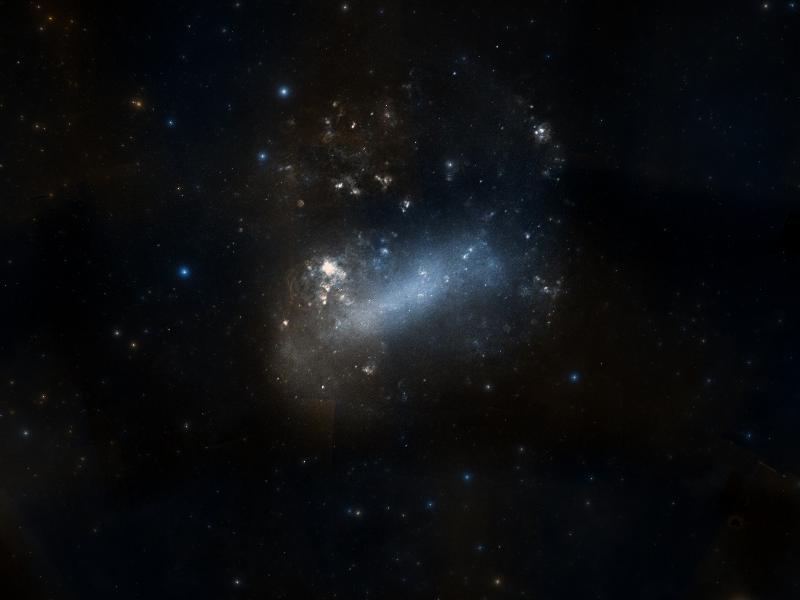
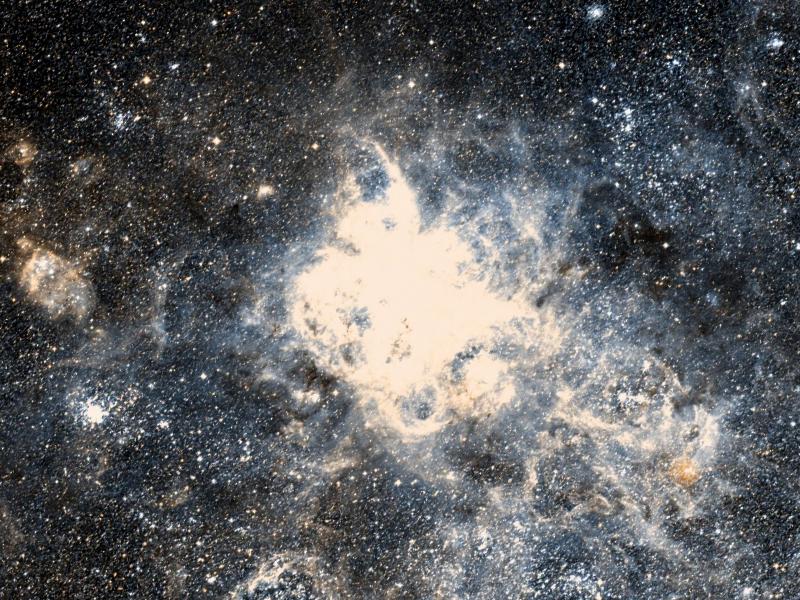
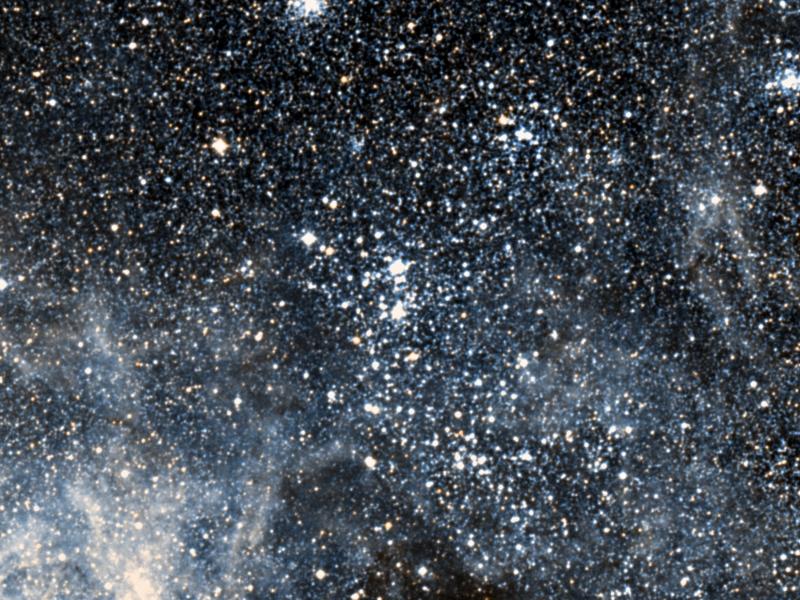
ESO 56-115
binocularsjumellesprismáticosFernglas
ESO 56-115 · Large Magellanic Cloud · Nubecula Major
DSS2 — STScI/NASA · CDS
TypeTypeTipoTyp
galaxygalaxiegalaxiaGalaxie
ConstellationConstellationConstelaciónSternbild
Dorado
MagnitudeMagnitudeMagnitudHelligkeit
0.3
SizeTailleTamañoGröße
646′ × 550′
Surface brightnessBrillance de surfaceBrillo superficialFlächenhelligkeit
22.8 mag/arcsec²
DistanceDistanceDistanciaEntfernung
about 160 000 light-yearsenviron 160 000 années-lumièreunos 160 000 años luzetwa 160 000 Lichtjahre
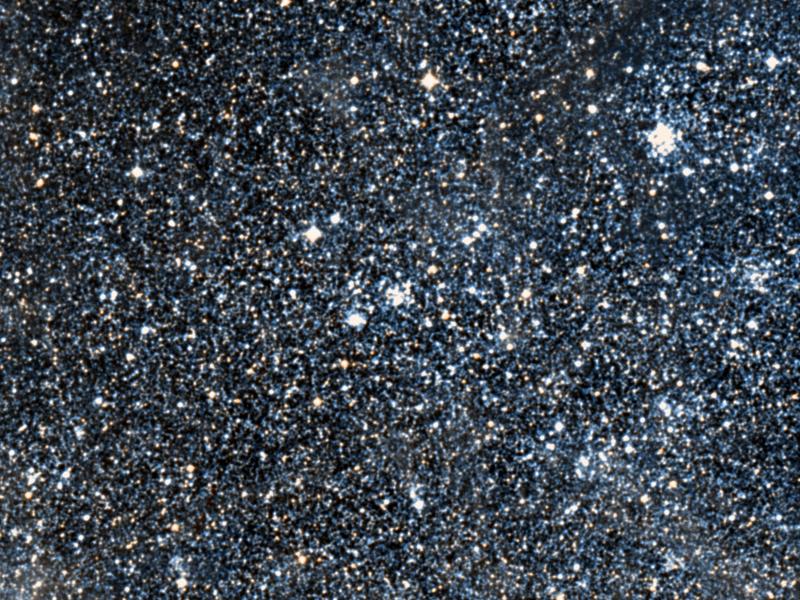
The Large Magellanic Cloud itself: the Milky Way's greatest satellite, a naked-eye cloud two hand-widths long that never sets from the far south. Every sweep across it lands on clusters, nebulae and associations by the dozen — a galaxy served whole, the richest single field any instrument can point at.Le Grand Nuage de Magellan lui-même : le plus grand satellite de la Voie lactée, un nuage à l'œil nu long de deux largeurs de main, qui ne se couche jamais depuis le sud profond. Chaque balayage y tombe sur des amas, nébuleuses et associations par douzaines — une galaxie servie entière, le champ le plus riche que puisse pointer un instrument.La Gran Nube de Magallanes misma: el mayor satélite de la Vía Láctea, una nube a simple vista de dos palmos de largo que nunca se pone desde el sur profundo. Cada barrido cae sobre cúmulos, nebulosas y asociaciones por docenas — una galaxia servida entera, el campo más rico al que un instrumento puede apuntar.Die Große Magellansche Wolke selbst: der größte Satellit der Milchstraße, eine freiäugige Wolke von zwei Handbreiten Länge, die vom tiefen Süden nie untergeht. Jeder Schwenk landet auf Haufen, Nebeln und Assoziationen im Dutzend — eine Galaxie im Ganzen serviert, das reichste Feld, auf das ein Instrument zielen kann.
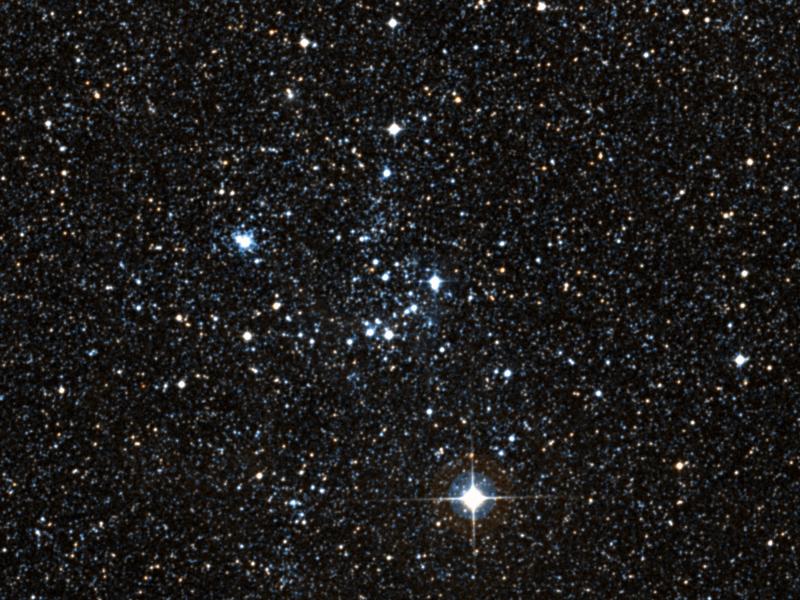
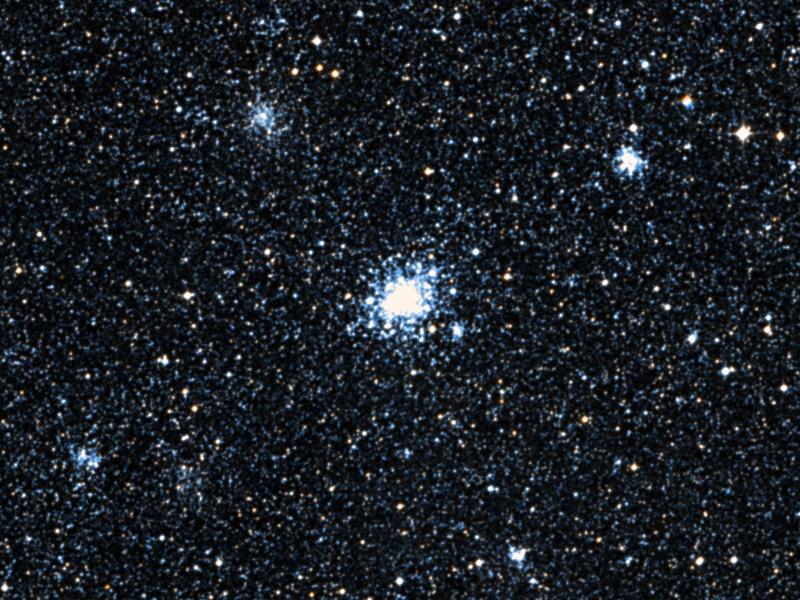
open clusteramas ouvertcúmulo abiertoOffener Sternhaufen
ConstellationConstellationConstelaciónSternbild
Carina
MagnitudeMagnitudeMagnitudHelligkeit
3.8
SizeTailleTamañoGröße
24.3′
Surface brightnessBrillance de surfaceBrillo superficialFlächenhelligkeit
19.4 mag/arcsec²
DistanceDistanceDistanciaEntfernung
about 1 300 light-yearsenviron 1 300 années-lumièreunos 1 300 años luzetwa 1 300 Lichtjahre
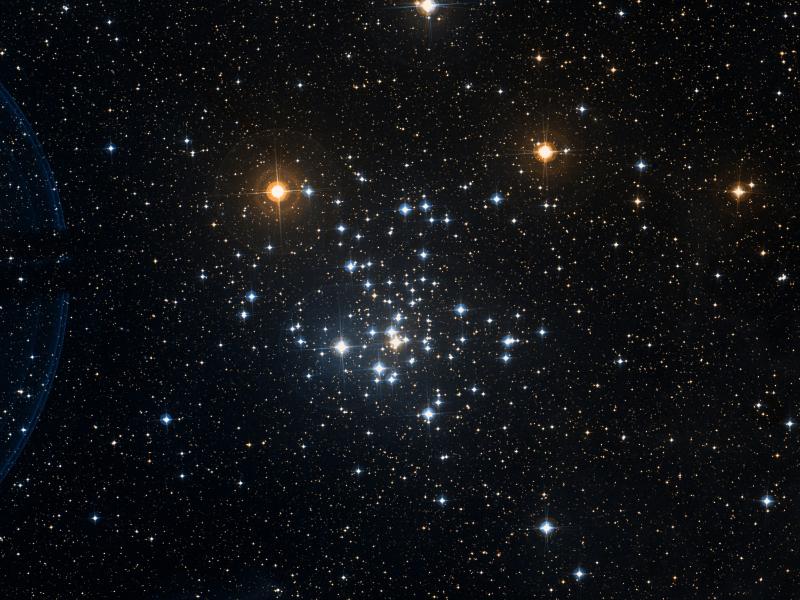
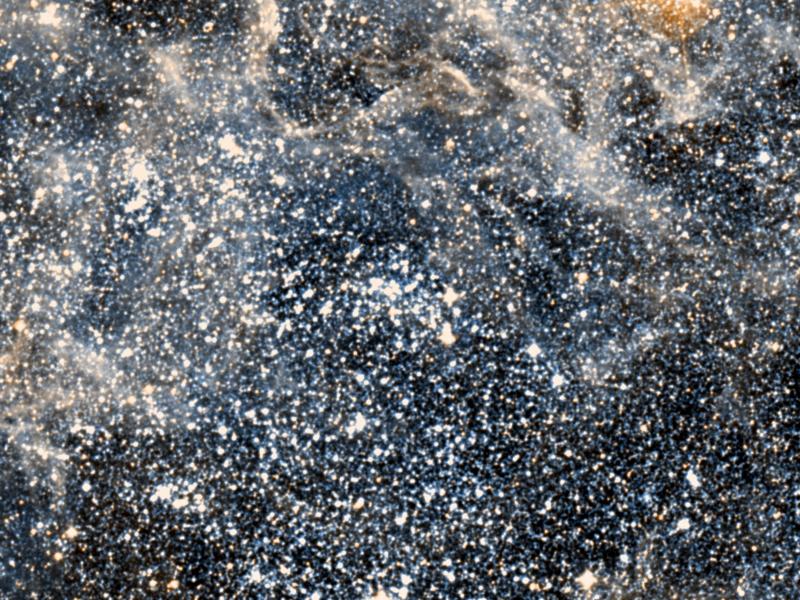
The Southern Beehive: a naked-eye cluster in Carina as rich as its northern namesake, with a red giant at its heart and pairs of stars throughout. A binocular showpiece riding near the False Cross.La Ruche australe : un amas à l'œil nu dans la Carène, aussi riche que son homonyme boréal, une géante rouge en son cœur et des paires d'étoiles partout. Une vitrine pour jumelles, près de la Fausse Croix.La Colmena Austral: un cúmulo a simple vista en la Quilla tan rico como su homónimo boreal, con una gigante roja en el corazón y parejas de estrellas por doquier. Una vitrina para prismáticos junto a la Falsa Cruz.Der Südliche Bienenkorb: ein freiäugiger Haufen in der Schiffskiel, so reich wie sein nördlicher Namensvetter, mit einem Roten Riesen im Herzen und Sternpaaren überall. Ein Fernglas-Schaustück nahe dem Falschen Kreuz.
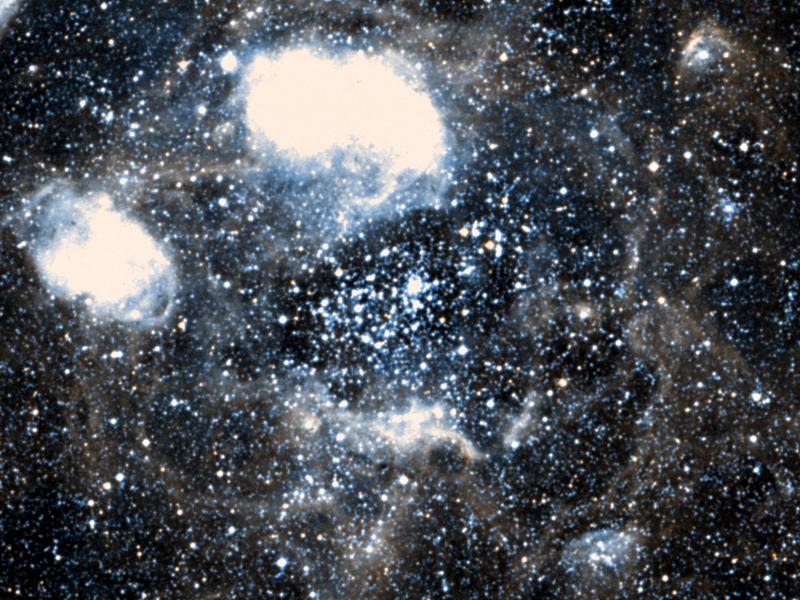
small telescopepetit télescopetelescopio pequeñokleines TeleskopDSS2 — STScI/NASA · CDS
TypeTypeTipoTyp
asterismastérismeasterismoAsterismus
ConstellationConstellationConstelaciónSternbild
Dorado
MagnitudeMagnitudeMagnitudHelligkeit
8.2
SizeTailleTamañoGröße
5′ × 2.7′
Surface brightnessBrillance de surfaceBrillo superficialFlächenhelligkeit
19.7 mag/arcsec²
DistanceDistanceDistanciaEntfernung
about 160 000 light-yearsenviron 160 000 années-lumièreunos 160 000 años luzetwa 160 000 Lichtjahre
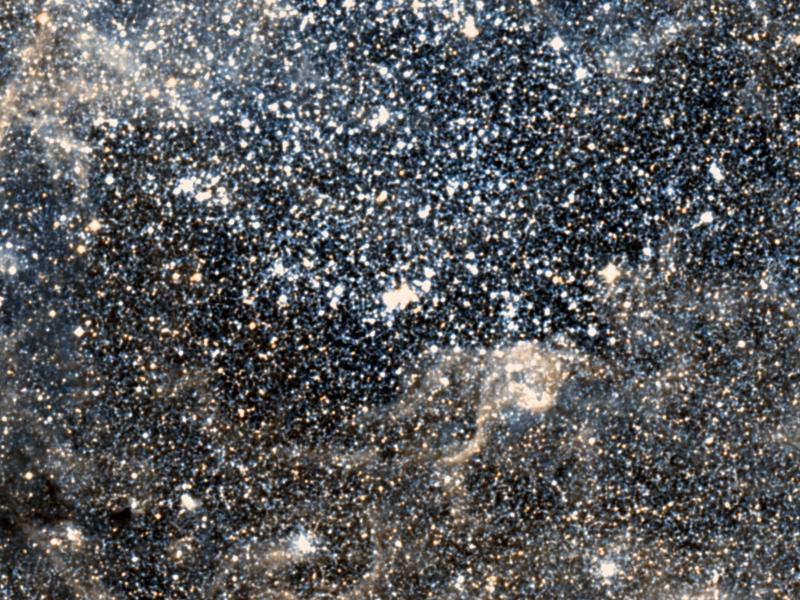
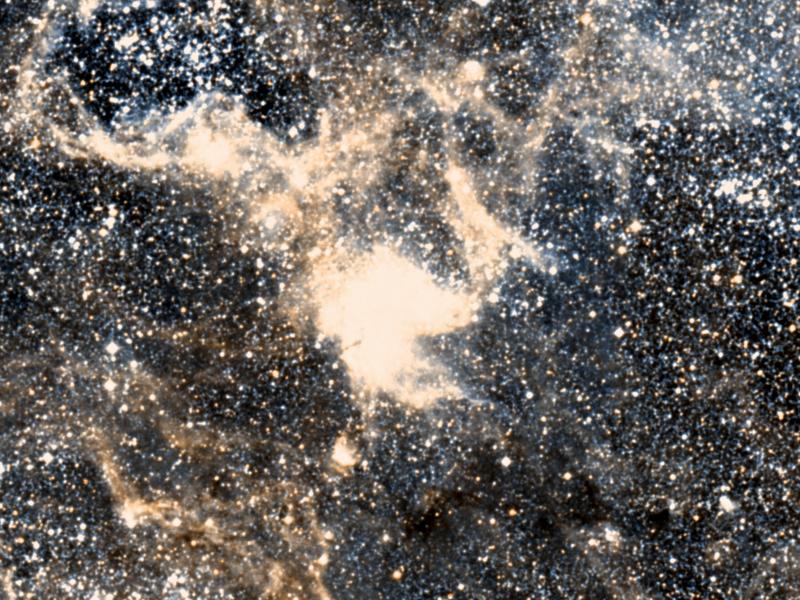
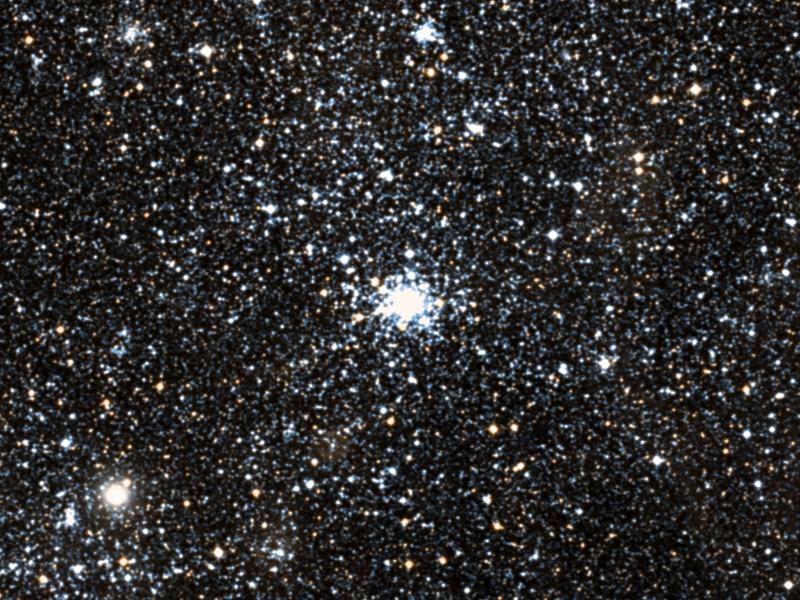
One of the bright stellar associations strung along the Large Magellanic Cloud's bar — a glowing clot in the Cloud's granular texture at low power, young stars and gas together.L'une des associations stellaires brillantes enfilées le long de la barre du Grand Nuage de Magellan — un caillot lumineux dans la texture granuleuse du Nuage à faible grossissement, jeunes étoiles et gaz mêlés.Una de las asociaciones estelares brillantes ensartadas a lo largo de la barra de la Gran Nube de Magallanes — un grumo luminoso en la textura granulada de la Nube a pocos aumentos, estrellas jóvenes y gas juntos.Eine der hellen Sternassoziationen entlang des Balkens der Großen Magellanschen Wolke — ein leuchtender Klumpen in der körnigen Textur der Wolke bei schwacher Vergrößerung, junge Sterne und Gas beisammen.
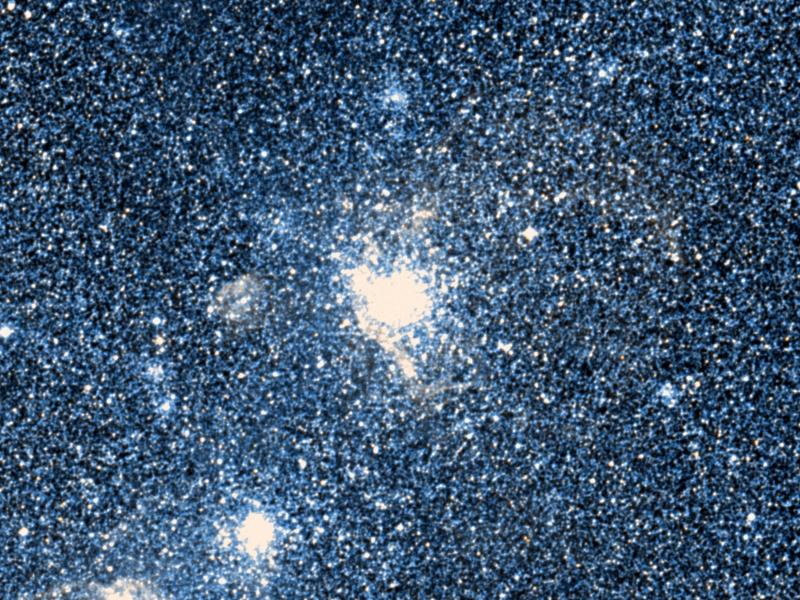
small telescopepetit télescopetelescopio pequeñokleines TeleskopDSS2 — STScI/NASA · CDS
TypeTypeTipoTyp
asterismastérismeasterismoAsterismus
ConstellationConstellationConstelaciónSternbild
Dorado
MagnitudeMagnitudeMagnitudHelligkeit
8.4
SizeTailleTamañoGröße
1.9′ × 1.3′
Surface brightnessBrillance de surfaceBrillo superficialFlächenhelligkeit
18.0 mag/arcsec²
DistanceDistanceDistanciaEntfernung
about 160 000 light-yearsenviron 160 000 années-lumièreunos 160 000 años luzetwa 160 000 Lichtjahre
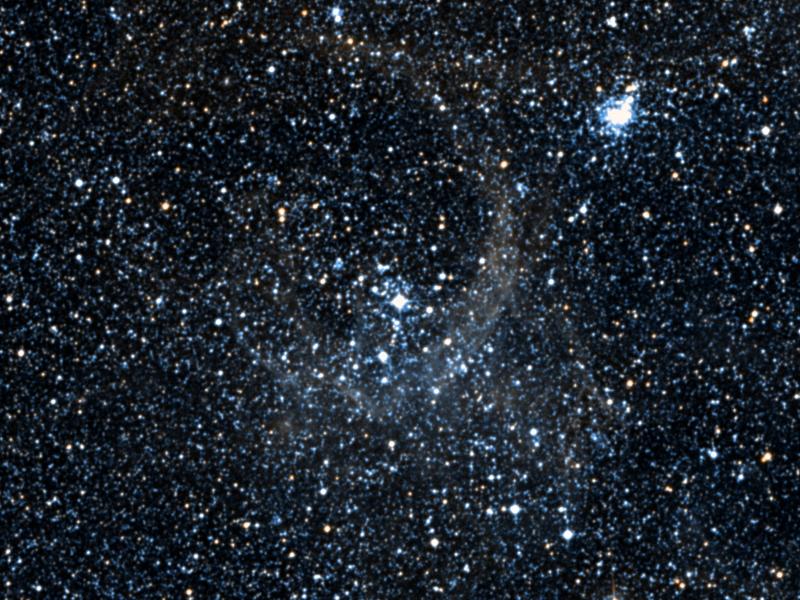
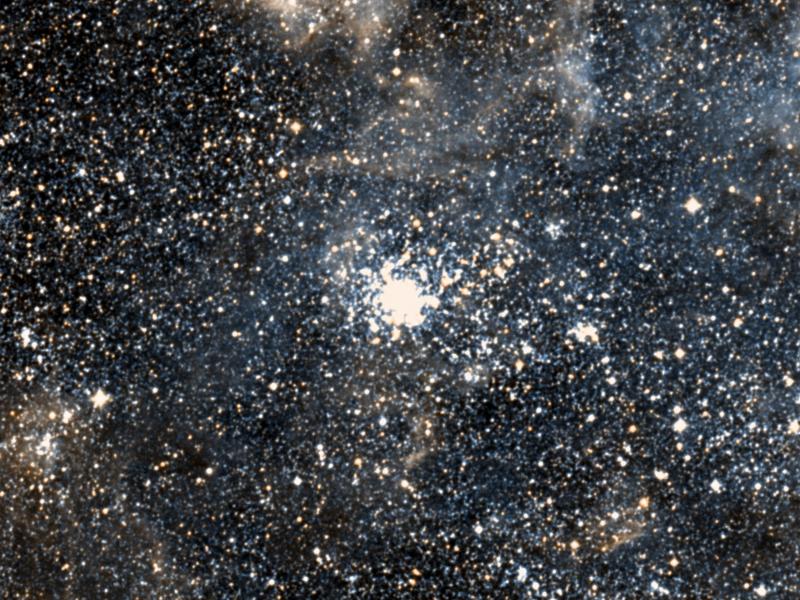
A bright patch of the Large Magellanic Cloud near the Tarantula — a stellar association whose combined light punches through 160,000 light-years to reach a small telescope.Une tache brillante du Grand Nuage de Magellan près de la Tarentule — une association stellaire dont la lumière cumulée perce 160 000 années-lumière pour atteindre un petit télescope.Una mancha brillante de la Gran Nube de Magallanes cerca de la Tarántula — una asociación estelar cuya luz combinada atraviesa 160 000 años luz para llegar a un telescopio pequeño.Ein heller Fleck der Großen Magellanschen Wolke nahe der Tarantel — eine Sternassoziation, deren gebündeltes Licht 160 000 Lichtjahre durchschlägt, um ein kleines Teleskop zu erreichen.
Surface brightnessBrillance de surfaceBrillo superficialFlächenhelligkeit
21.9 mag/arcsec²
DistanceDistanceDistanciaEntfernung
about 160 000 light-yearsenviron 160 000 années-lumièreunos 160 000 años luzetwa 160 000 Lichtjahre
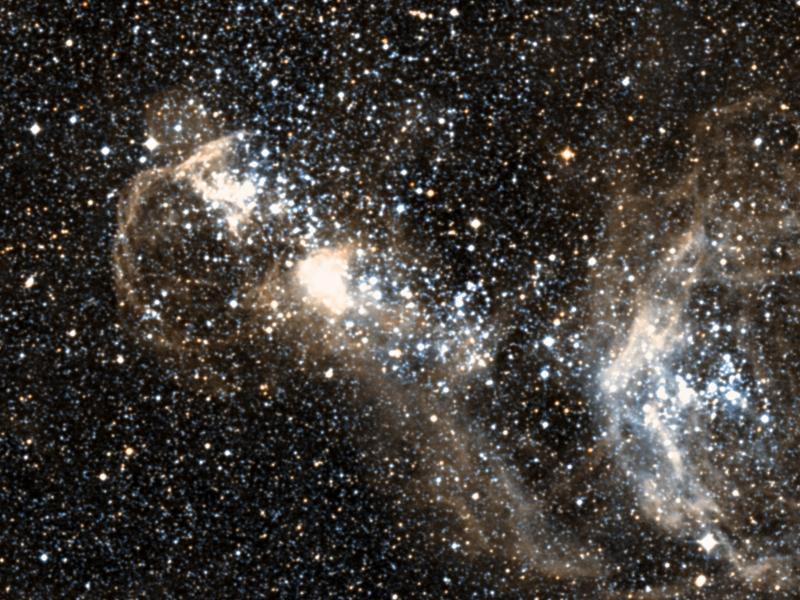
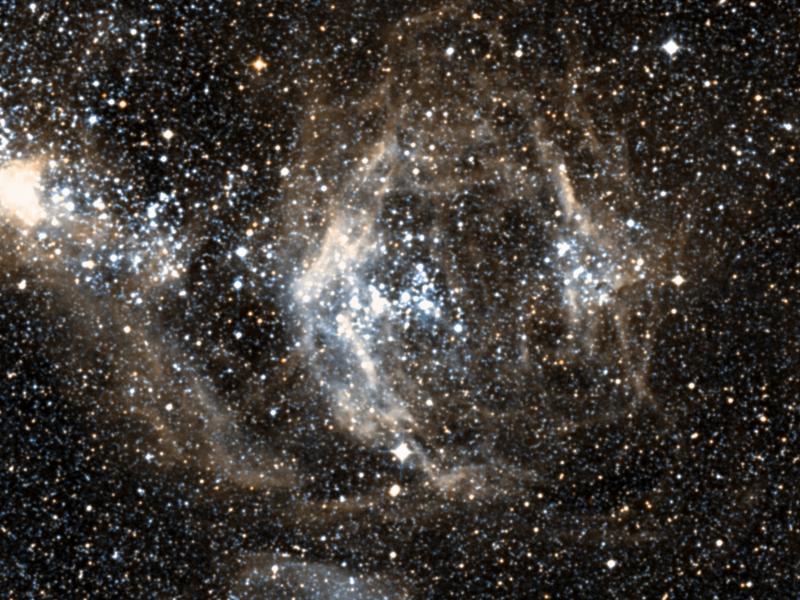
The Tarantula: a star-forming storm in the Large Magellanic Cloud so luminous that, set at the Orion Nebula's distance, it would cast shadows. The only extragalactic nebula plain to the naked eye; a telescope shows the spidery loops around the ferocious cluster R136. Nothing in our own galaxy comes close.La Tarentule : une tempête de formation stellaire dans le Grand Nuage de Magellan, si lumineuse qu'à la distance de la nébuleuse d'Orion elle jetterait des ombres. La seule nébuleuse extragalactique évidente à l'œil nu ; un télescope montre les boucles arachnéennes autour du féroce amas R136. Rien dans notre galaxie n'en approche.La Tarántula: una tormenta de formación estelar en la Gran Nube de Magallanes tan luminosa que, puesta a la distancia de la nebulosa de Orión, proyectaría sombras. La única nebulosa extragaláctica obvia a simple vista; un telescopio muestra los lazos arácnidos en torno al feroz cúmulo R136. Nada en nuestra galaxia se le acerca.Die Tarantel: ein Sternentstehungssturm in der Großen Magellanschen Wolke, so leuchtkräftig, dass sie in der Entfernung des Orionnebels Schatten würfe. Der einzige extragalaktische Nebel, der dem bloßen Auge offensichtlich ist; ein Teleskop zeigt die spinnenhaften Schleifen um den wilden Haufen R136. Nichts in unserer Galaxis kommt ihr nahe.
Surface brightnessBrillance de surfaceBrillo superficialFlächenhelligkeit
20.0 mag/arcsec²
DistanceDistanceDistanciaEntfernung
about 160 000 light-yearsenviron 160 000 années-lumièreunos 160 000 años luzetwa 160 000 Lichtjahre
A bright nebula-and-cluster complex on the Tarantula's southern flank — a second-tier wonder that would headline any constellation nearer home; here it is a footnote to the great spider, and a fine 200 mm knot.Un complexe brillant d'amas et de nébuleuse sur le flanc sud de la Tarentule — une merveille de second rang qui ferait la une de toute constellation plus proche ; ici c'est une note de bas de page de la grande araignée, et un beau nœud à 200 mm.Un complejo brillante de cúmulo y nebulosa en el flanco sur de la Tarántula — una maravilla de segunda fila que encabezaría cualquier constelación más cercana; aquí es una nota al pie de la gran araña, y un bonito nudo a 200 mm.Ein heller Nebel-Haufen-Komplex an der Südflanke der Tarantel — ein Wunder zweiten Ranges, das jedes heimatnähere Sternbild anführen würde; hier eine Fußnote zur großen Spinne, und ein feiner 200-mm-Knoten.
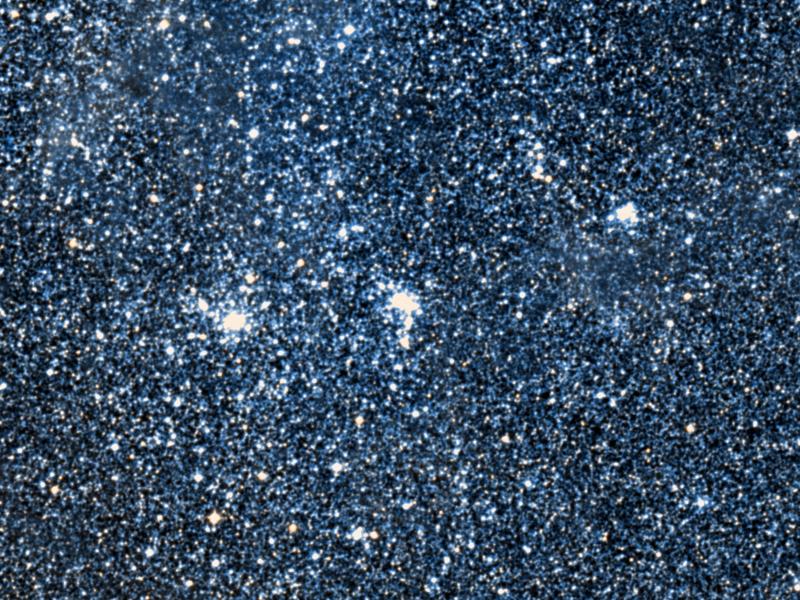
small telescopepetit télescopetelescopio pequeñokleines TeleskopDSS2 — STScI/NASA · CDS
TypeTypeTipoTyp
asterismastérismeasterismoAsterismus
ConstellationConstellationConstelaciónSternbild
Dorado
MagnitudeMagnitudeMagnitudHelligkeit
9.2
SizeTailleTamañoGröße
3′ × 2.4′
Surface brightnessBrillance de surfaceBrillo superficialFlächenhelligkeit
20.0 mag/arcsec²
DistanceDistanceDistanciaEntfernung
about 160 000 light-yearsenviron 160 000 années-lumièreunos 160 000 años luzetwa 160 000 Lichtjahre
A young stellar clump on the Tarantula Nebula's southern doorstep in the Large Magellanic Cloud — bag it while the great nebula holds your eye, one more city in that astonishing suburb.Un grumeau stellaire jeune au seuil sud de la nébuleuse de la Tarentule, dans le Grand Nuage de Magellan — attrapez-le pendant que la grande nébuleuse retient l'œil, une ville de plus dans cette banlieue stupéfiante.Un grumo estelar joven en el umbral sur de la nebulosa de la Tarántula, en la Gran Nube de Magallanes — cácelo mientras la gran nebulosa retiene el ojo, una ciudad más en ese asombroso suburbio.Ein junger Sternklumpen an der Südschwelle des Tarantelnebels in der Großen Magellanschen Wolke — mitnehmen, während der große Nebel das Auge hält, eine weitere Stadt in dieser erstaunlichen Vorstadt.
small telescopepetit télescopetelescopio pequeñokleines TeleskopDSS2 — STScI/NASA · CDS
TypeTypeTipoTyp
open clusteramas ouvertcúmulo abiertoOffener Sternhaufen
ConstellationConstellationConstelaciónSternbild
Dorado
MagnitudeMagnitudeMagnitudHelligkeit
9.4
SizeTailleTamañoGröße
4.4′
Surface brightnessBrillance de surfaceBrillo superficialFlächenhelligkeit
21.2 mag/arcsec²
DistanceDistanceDistanciaEntfernung
about 160 000 light-yearsenviron 160 000 années-lumièreunos 160 000 años luzetwa 160 000 Lichtjahre
A stellar association in the Large Magellanic Cloud's western reaches — a faint knot of another galaxy's young suns at 250 mm.Une association stellaire dans les marches occidentales du Grand Nuage de Magellan — un nœud discret de jeunes soleils d'une autre galaxie à 250 mm.Una asociación estelar en los confines occidentales de la Gran Nube de Magallanes — un nudo tenue de soles jóvenes de otra galaxia a 250 mm.Eine Sternassoziation in den Westbereichen der Großen Magellanschen Wolke — ein schwacher Knoten junger Sonnen einer anderen Galaxie bei 250 mm.
small telescopepetit télescopetelescopio pequeñokleines TeleskopDSS2 — STScI/NASA · CDS
TypeTypeTipoTyp
open clusteramas ouvertcúmulo abiertoOffener Sternhaufen
ConstellationConstellationConstelaciónSternbild
Dorado
MagnitudeMagnitudeMagnitudHelligkeit
9.6
SizeTailleTamañoGröße
4.5′
Surface brightnessBrillance de surfaceBrillo superficialFlächenhelligkeit
21.5 mag/arcsec²
DistanceDistanceDistanciaEntfernung
about 160 000 light-yearsenviron 160 000 années-lumièreunos 160 000 años luzetwa 160 000 Lichtjahre
A stellar association in the Large Magellanic Cloud — a loose bright patch at 200 mm, tens of thousands of suns filed under one number.Une association stellaire du Grand Nuage de Magellan — une tache lâche et brillante à 200 mm, des dizaines de milliers de soleils classés sous un seul numéro.Una asociación estelar de la Gran Nube de Magallanes — una mancha suelta y brillante a 200 mm, decenas de miles de soles archivados bajo un solo número.Eine Sternassoziation der Großen Magellanschen Wolke — ein lockerer heller Fleck bei 200 mm, Zehntausende Sonnen unter einer einzigen Nummer abgelegt.
small telescopepetit télescopetelescopio pequeñokleines TeleskopDSS2 — STScI/NASA · CDS
TypeTypeTipoTyp
open clusteramas ouvertcúmulo abiertoOffener Sternhaufen
ConstellationConstellationConstelaciónSternbild
Mensa
MagnitudeMagnitudeMagnitudHelligkeit
9.7
SizeTailleTamañoGröße
2.2′ × 2′
Surface brightnessBrillance de surfaceBrillo superficialFlächenhelligkeit
20.0 mag/arcsec²
DistanceDistanceDistanciaEntfernung
about 160 000 light-yearsenviron 160 000 années-lumièreunos 160 000 años luzetwa 160 000 Lichtjahre
A young cluster in the Large Magellanic Cloud's quieter Mensa reaches — a faint knot of extragalactic youth at 250 mm.Un amas jeune dans les parages plus calmes du Grand Nuage de Magellan, côté Table — un nœud discret de jeunesse extragalactique à 250 mm.Un cúmulo joven en los parajes más tranquilos de la Gran Nube de Magallanes, del lado de la Mesa — un nudo tenue de juventud extragaláctica a 250 mm.Ein junger Haufen in den ruhigeren Mensa-Bereichen der Großen Magellanschen Wolke — ein schwacher Knoten extragalaktischer Jugend bei 250 mm.
Surface brightnessBrillance de surfaceBrillo superficialFlächenhelligkeit
20.5 mag/arcsec²
DistanceDistanceDistanciaEntfernung
about 160 000 light-yearsenviron 160 000 années-lumièreunos 160 000 años luzetwa 160 000 Lichtjahre
A young blue cluster on the road from the Large Magellanic Cloud's bar to the Tarantula — one of the bright knots that make that sweep the richest low-power passage in the sky.Un amas bleu et jeune sur la route de la barre du Grand Nuage vers la Tarentule — l'un des nœuds brillants qui font de ce balayage le passage à faible grossissement le plus riche du ciel.Un cúmulo azul y joven en el camino de la barra de la Gran Nube hacia la Tarántula — uno de los nudos brillantes que hacen de ese barrido el pasaje a pocos aumentos más rico del cielo.Ein junger blauer Haufen auf dem Weg vom Balken der Großen Wolke zur Tarantel — einer der hellen Knoten, die diesen Schwenk zur reichsten Weitwinkelpassage des Himmels machen.
Surface brightnessBrillance de surfaceBrillo superficialFlächenhelligkeit
20.2 mag/arcsec²
DistanceDistanceDistanciaEntfernung
about 160 000 light-yearsenviron 160 000 années-lumièreunos 160 000 años luzetwa 160 000 Lichtjahre
A tight young cluster on the Tarantula Nebula's eastern edge, packed with supergiants — a bright grain beside the great spider at 150 mm, worth singling out of the overwhelming field.Un amas jeune et serré au bord oriental de la nébuleuse de la Tarentule, bourré de supergéantes — un grain brillant près de la grande araignée à 150 mm, qui mérite d'être isolé du champ écrasant.Un cúmulo joven y prieto en el borde oriental de la nebulosa de la Tarántula, repleto de supergigantes — un grano brillante junto a la gran araña a 150 mm, que merece aislarse del campo abrumador.Ein enger junger Haufen am Ostrand des Tarantelnebels, vollgepackt mit Überriesen — ein helles Korn neben der großen Spinne bei 150 mm, es wert, aus dem überwältigenden Feld herausgegriffen zu werden.
Surface brightnessBrillance de surfaceBrillo superficialFlächenhelligkeit
20.6 mag/arcsec²
DistanceDistanceDistanciaEntfernung
about 160 000 light-yearsenviron 160 000 années-lumièreunos 160 000 años luzetwa 160 000 Lichtjahre
A young massive cluster near the Large Magellanic Cloud's western end — a compact glow at 200 mm, twenty million years old where our globulars count twelve billion.Un amas massif et jeune près du bout occidental du Grand Nuage de Magellan — une lueur compacte à 200 mm, âgée de vingt millions d'années là où nos globulaires en comptent douze milliards.Un cúmulo masivo y joven cerca del extremo occidental de la Gran Nube de Magallanes — un resplandor compacto a 200 mm, de veinte millones de años donde nuestros globulares cuentan doce mil millones.Ein junger, massereicher Haufen nahe dem Westende der Großen Magellanschen Wolke — ein kompaktes Glimmen bei 200 mm, zwanzig Millionen Jahre alt, wo unsere Kugelhaufen zwölf Milliarden zählen.
small telescopepetit télescopetelescopio pequeñokleines TeleskopDSS2 — STScI/NASA · CDS
TypeTypeTipoTyp
asterismastérismeasterismoAsterismus
ConstellationConstellationConstelaciónSternbild
Dorado
MagnitudeMagnitudeMagnitudHelligkeit
9.9
SizeTailleTamañoGröße
4.2′ × 3′
Surface brightnessBrillance de surfaceBrillo superficialFlächenhelligkeit
21.3 mag/arcsec²
DistanceDistanceDistanciaEntfernung
about 160 000 light-yearsenviron 160 000 années-lumièreunos 160 000 años luzetwa 160 000 Lichtjahre
A knot of young giant stars in the Large Magellanic Cloud — what looks like a modest patch at 200 mm is an association of supergiants in another galaxy, each outshining anything in our neighbourhood.Un nœud de jeunes étoiles géantes dans le Grand Nuage de Magellan — ce qui semble une tache modeste à 200 mm est une association de supergéantes dans une autre galaxie, chacune surpassant tout ce que contient notre voisinage.Un nudo de jóvenes estrellas gigantes en la Gran Nube de Magallanes — lo que parece una mancha modesta a 200 mm es una asociación de supergigantes en otra galaxia, cada una superando cuanto contiene nuestro vecindario.Ein Knoten junger Riesensterne in der Großen Magellanschen Wolke — was bei 200 mm wie ein bescheidener Fleck aussieht, ist eine Assoziation von Überriesen in einer anderen Galaxie, jeder heller als alles in unserer Nachbarschaft.
Surface brightnessBrillance de surfaceBrillo superficialFlächenhelligkeit
20.0 mag/arcsec²
DistanceDistanceDistanciaEntfernung
about 160 000 light-yearsenviron 160 000 années-lumièreunos 160 000 años luzetwa 160 000 Lichtjahre
The brightest star cluster of the Large Magellanic Cloud after its globulars — a young, massive ball with no counterpart in our galaxy: a "blue globular" still forming. A condensed knot at 150 mm in the Cloud's bar.Le plus brillant amas stellaire du Grand Nuage de Magellan après ses globulaires — une boule jeune et massive sans équivalent dans notre galaxie : un « globulaire bleu » encore en formation. Un nœud condensé à 150 mm dans la barre du Nuage.El cúmulo estelar más brillante de la Gran Nube de Magallanes tras sus globulares — una bola joven y masiva sin equivalente en nuestra galaxia: un "globular azul" aún en formación. Un nudo condensado a 150 mm en la barra de la Nube.Der hellste Sternhaufen der Großen Magellanschen Wolke nach ihren Kugelhaufen — ein junger, massereicher Ball ohne Gegenstück in unserer Galaxis: ein noch entstehender "blauer Kugelhaufen". Ein verdichteter Knoten bei 150 mm im Balken der Wolke.
small telescopepetit télescopetelescopio pequeñokleines TeleskopDSS2 — STScI/NASA · CDS
TypeTypeTipoTyp
open clusteramas ouvertcúmulo abiertoOffener Sternhaufen
ConstellationConstellationConstelaciónSternbild
Dorado
MagnitudeMagnitudeMagnitudHelligkeit
10.0
SizeTailleTamañoGröße
1.5′ × 1.2′
Surface brightnessBrillance de surfaceBrillo superficialFlächenhelligkeit
19.3 mag/arcsec²
DistanceDistanceDistanciaEntfernung
about 160 000 light-yearsenviron 160 000 années-lumièreunos 160 000 años luzetwa 160 000 Lichtjahre
A compact young cluster in the Large Magellanic Cloud's crowded east — a faint spark at 250 mm, red supergiants and all.Un amas jeune et compact dans l'est encombré du Grand Nuage de Magellan — une étincelle discrète à 250 mm, supergéantes rouges comprises.Un cúmulo joven y compacto en el este abarrotado de la Gran Nube de Magallanes — una chispa tenue a 250 mm, supergigantes rojas incluidas.Ein kompakter junger Haufen im dichten Osten der Großen Magellanschen Wolke — ein schwacher Funke bei 250 mm, Rote Überriesen inklusive.
Surface brightnessBrillance de surfaceBrillo superficialFlächenhelligkeit
20.2 mag/arcsec²
DistanceDistanceDistanciaEntfernung
about 160 000 light-yearsenviron 160 000 années-lumièreunos 160 000 años luzetwa 160 000 Lichtjahre
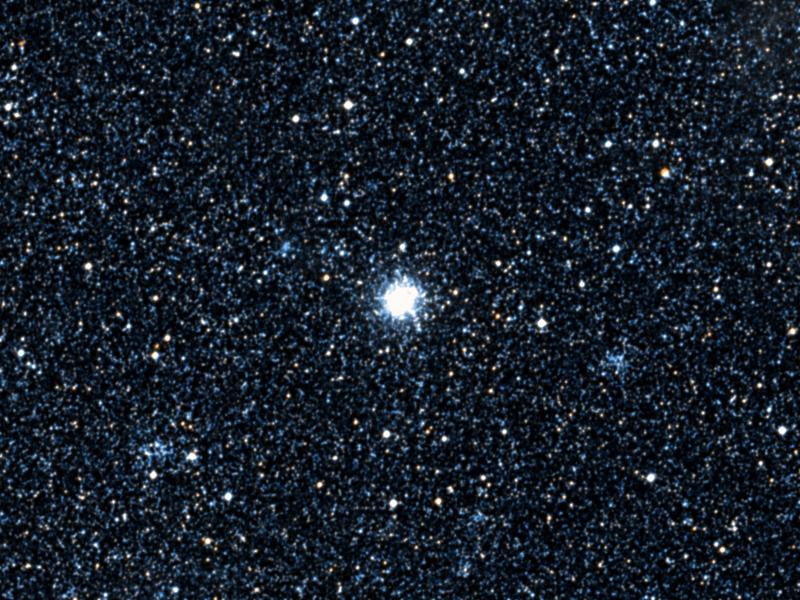
A genuinely old globular cluster of the Large Magellanic Cloud — a tiny condensed dot at 200 mm: another galaxy's ancient halo, in one point of light.Un globulaire authentiquement vieux du Grand Nuage de Magellan — un point minuscule et condensé à 200 mm : le halo ancien d'une autre galaxie, en un seul point de lumière.Un globular auténticamente viejo de la Gran Nube de Magallanes — un puntito condensado a 200 mm: el halo antiguo de otra galaxia, en un solo punto de luz.Ein wirklich alter Kugelhaufen der Großen Magellanschen Wolke — ein winziger verdichteter Punkt bei 200 mm: der uralte Halo einer anderen Galaxie, in einem Lichtpunkt.
Surface brightnessBrillance de surfaceBrillo superficialFlächenhelligkeit
20.4 mag/arcsec²
DistanceDistanceDistanciaEntfernung
about 160 000 light-yearsenviron 160 000 années-lumièreunos 160 000 años luzetwa 160 000 Lichtjahre
A cluster-and-nebula knot in the Large Magellanic Cloud's star-forming chain — one of the bright beads a low-power sweep strings together between the bar and the Tarantula.Un nœud d'amas et de nébuleuse dans la chaîne de formation stellaire du Grand Nuage de Magellan — l'une des perles brillantes qu'un balayage à faible grossissement enfile entre la barre et la Tarentule.Un nudo de cúmulo y nebulosa en la cadena de formación estelar de la Gran Nube de Magallanes — una de las cuentas brillantes que un barrido a pocos aumentos ensarta entre la barra y la Tarántula.Ein Haufen-Nebel-Knoten in der Sternentstehungskette der Großen Magellanschen Wolke — eine der hellen Perlen, die ein Schwenk bei schwacher Vergrößerung zwischen Balken und Tarantel auffädelt.
Surface brightnessBrillance de surfaceBrillo superficialFlächenhelligkeit
20.7 mag/arcsec²
DistanceDistanceDistanciaEntfernung
about 160 000 light-yearsenviron 160 000 années-lumièreunos 160 000 años luzetwa 160 000 Lichtjahre
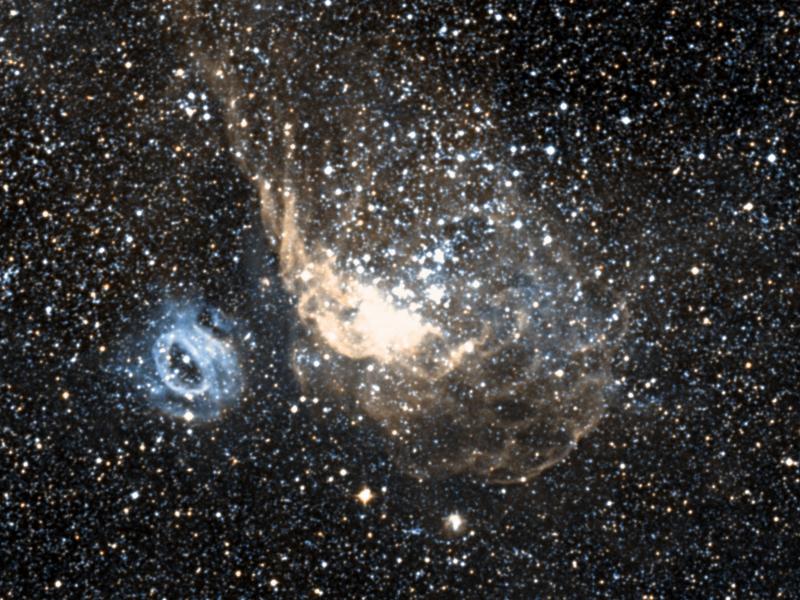
A glowing hydrogen patch beside blue NGC 2020 in the Large Magellanic Cloud — the "Cosmic Reef" of a famous Hubble anniversary image. In the eyepiece a soft bright knot; in the mind, a reef of newborn suns in another galaxy.Une tache d'hydrogène luminescent près de la bleue NGC 2020 dans le Grand Nuage de Magellan — le « Récif cosmique » d'une célèbre image d'anniversaire de Hubble. À l'oculaire un nœud doux et brillant ; en esprit, un récif de soleils nouveau-nés dans une autre galaxie.Una mancha de hidrógeno luminoso junto a la azul NGC 2020 en la Gran Nube de Magallanes — el "Arrecife Cósmico" de una célebre imagen de aniversario del Hubble. En el ocular un nudo suave y brillante; en la mente, un arrecife de soles recién nacidos en otra galaxia.Ein leuchtender Wasserstofffleck neben der blauen NGC 2020 in der Großen Magellanschen Wolke — das "Kosmische Riff" eines berühmten Hubble-Jubiläumsbildes. Im Okular ein weicher heller Knoten; im Geist ein Riff neugeborener Sonnen in einer anderen Galaxie.
small telescopepetit télescopetelescopio pequeñokleines TeleskopDSS2 — STScI/NASA · CDS
TypeTypeTipoTyp
asterismastérismeasterismoAsterismus
ConstellationConstellationConstelaciónSternbild
Dorado
MagnitudeMagnitudeMagnitudHelligkeit
10.4
SizeTailleTamañoGröße
4.7′ × 4′
Surface brightnessBrillance de surfaceBrillo superficialFlächenhelligkeit
22.2 mag/arcsec²
DistanceDistanceDistanciaEntfernung
about 160 000 light-yearsenviron 160 000 années-lumièreunos 160 000 años luzetwa 160 000 Lichtjahre
A small stellar knot in the Large Magellanic Cloud's crowded east, near the Tarantula's approaches — one grain among the dozens a low-power sweep of the Cloud pours through the field.Un petit nœud stellaire dans l'est encombré du Grand Nuage de Magellan, près des abords de la Tarentule — un grain parmi les dizaines qu'un balayage à faible grossissement du Nuage verse dans le champ.Un pequeño nudo estelar en el este abarrotado de la Gran Nube de Magallanes, cerca de los accesos de la Tarántula — un grano entre las docenas que un barrido a pocos aumentos de la Nube vierte en el campo.Ein kleiner Sternknoten im dichten Osten der Großen Magellanschen Wolke, nahe den Zugängen der Tarantel — ein Korn unter den Dutzenden, die ein Schwenk der Wolke bei schwacher Vergrößerung durchs Feld schüttet.
Both stars bright enough for a small telescope, wide enough to split.Deux composantes assez brillantes pour un petit télescope, assez écartées pour être séparées.Ambas componentes lo bastante brillantes para un telescopio pequeño y separables.Beide Komponenten hell genug für ein kleines Teleskop und weit genug zum Trennen.
Sep.Sép.Sep.Abstand
PAAPAPPW
MagsMagsMagsHelligkeiten
γ² Vol
14.5″
299°
3.9 / 5.4
ε Vol
5.7″
24°
4.4 / 7.3
HD 47973
12.9″
321°
5.1 / 7.4
ι Pic
12.7″
58°
5.6 / 6.2
HD 53705
21.3″
125°
5.6 / 6.7
κ² Vol
37.2″
30°
5.6 / 7.7
BN Hyi
15.2″
225°
5.7 / 7.7
HD 57852
9″
27°
6.0 / 6.5
θ Ret
4.1″
2°
6.0 / 7.7
HD 46273
11.7″
311°
6.0 / 8.0
θ Pic
38.2″
288°
6.2 / 6.7
HD 44120
32.5″
234°
6.5 / 7.6
HD 40665
55.6″
302°
6.6 / 7.6
HD 58017
22.8″
157°
6.8 / 7.7
04242-5704
5.1″
250°
6.9 / 7.2
HD 66066
5.5″
357°
7.1 / 7.7
04403-5857
3.8″
90°
7.3 / 7.5
V575 Pup
2.6″
132°
7.3 / 7.7
Also on this chartAussi sur cette carteTambién en esta cartaEbenfalls auf dieser Karte
55 · Everything else the chart plots, easiest first where a rank exists.Tout le reste de la carte, du plus facile au plus difficile quand un classement existe.Todo lo demás que traza la carta, de lo más fácil a lo más difícil cuando hay clasificación.Alles Übrige auf der Karte, wo möglich nach Schwierigkeit geordnet.